Moisture gradient planting
When planting in a bed or container, place the plant so its roots reach consistently moist soil while the crown sits slightly higher and drier, which reduces crown rot risk in this moisture-loving species.

Primrose leaved violet (Viola primulifolia) is a small, clumping perennial wildflower native to moist meadows, stream banks, and open woodlands in eastern North America. It typically forms low rosettes of rounded, primrose-like leaves with slender stems bearing delicate white flowers, often with faint purple or yellow markings. The plant spreads modestly by short runners, creating loose colonies where conditions stay cool and consistently damp. It is generally considered moderate in difficulty, as it dislikes drying out and needs steady moisture and protection from strong heat. Gardeners who care for Primrose leaved violet should provide humus-rich, slightly acidic soil and dappled or morning sun to mimic its natural habitat.

Care Difficulty
Moderate Care

Light Preference
Partial Shade

Water Requirements
Keep Soil Moist

Temperature Preference
Cold Hardy

Hardiness Zone
5–9

Soil Texture
Loamy, Silty, Organic-rich

Soil pH
Strongly acidic (4.5–5.5), Acidic (5.5–6.5)

Soil Drainage
Moist but well-drained

Fertilization
Minimal (feed rarely)
Scan your plant to receive care tips personalized for your specific plant
Available on iOS and Android
This woodland violet prefers soft light similar to a bright forest edge.
This species naturally grows in consistently moist, not stagnant, soils.
This violet prefers cool to mild conditions with protection from extremes.
This species prefers consistently moist air but adapts to typical household humidity if soil moisture is stable.
This species prefers moist, airy, organic-rich soil that never dries out completely.
This species adapts well to container growing when moisture and root space are carefully managed.
This native wild violet usually needs little feeding when grown in fertile, humus-rich soil.
Viola primulifolia benefits from light, targeted pruning to keep plants tidy and promote flowering.
This species is more often transplanted in garden beds than grown long term in containers.
Viola primulifolia is commonly propagated by division and seeds under suitable moisture and temperature conditions.
This violet is cold hardy in much of its native range and usually needs minimal winter care in garden beds.

Plant Health Check
Not sure what's wrong with your plant? Check your plant's health inside the app.
The species name primulifolia refers to its leaves, which resemble those of Primula species, with smooth margins and a simple, rounded to oval shape distinct from many other North American violets that have more heart-shaped foliage.
This violet is strongly associated with acidic, wet habitats such as bogs, seeps, wet savannas, and peaty shores, making it an indicator of relatively undisturbed, low-nutrient wetland ecosystems in parts of eastern North America.
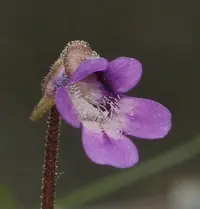
Its flowers are typically pure white with fine purple veins on the lower petal, a pattern that helps guide insect pollinators toward the nectar and distinguishes it from violet species with more uniformly colored petals.
This species spreads slowly by short stolons and self-seeding, forming small patches over time rather than large colonies. In garden settings it is generally not aggressive and is unlikely to become a nuisance groundcover.
Keep your plants happy and healthy with plant identification, disease detection, and easy care guidance.