narrow-leaf milkweed Care (Asclepias fascicularis)

Also known as: Mexican whorled milkweed, Narrow-leaved Milkweed
narrow-leaf milkweed

About narrow-leaf milkweed

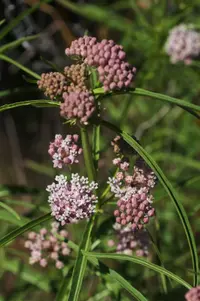
Narrow-leaf milkweed (Asclepias fascicularis) is a herbaceous perennial native to western North America, especially dry grasslands, roadsides, and open slopes. It forms upright stems with slender, linear leaves and clusters of pale pink to white flowers in summer. These flowers are an important nectar source for many pollinators and a host plant for monarch caterpillars. The plant has a deep root system and tolerates heat and seasonal drought once established, which makes it relatively low maintenance in suitable climates. It prefers full sun and well-drained soil, so understanding how to care for narrow-leaf milkweed starts with choosing a sunny, open site.

Main Plant Requirements

Care Difficulty

Easy Care

Light Preference

Full Sun

Water Requirements

Low Water

Temperature Preference

Cold Hardy

Hardiness Zone

6–10

Soil Texture

Sandy, Loamy, Rocky

Soil pH

Slightly acidic (6.5–7.0), Neutral (7.0)

Soil Drainage

Well-drained

Fertilization

Minimal (feed rarely)

Get Personalized Care Plan

Scan your plant to receive care tips personalized for your specific plant

Available on iOS and Android

How to Care for the narrow-leaf milkweed

This sun-loving perennial thrives in open, bright conditions typical of dry grasslands.

  • Provide 6–8 hours of direct sun daily; full sun promotes sturdy stems and abundant flowers for narrow-leaf milkweed.
  • Plant where it receives morning to early afternoon sun; light afternoon shade is acceptable in very hot inland sites to limit leaf scorch.
  • In partial shade (3–4 hours sun), expect taller, weaker growth and fewer blooms; avoid deep shade, which reduces vigor and attracts more pests.

This species prefers dry to moderately moist soil and is adapted to periods of drought once established.

  • Outdoor plants usually need deep watering only when the top 5–8 cm of soil are dry and stems start to look slightly limp.
  • Use well-drained, sandy or loamy soil; standing water or consistently soggy ground leads to root rot and yellowing lower leaves in Asclepias fascicularis.
  • Reduce or stop supplemental watering in fall and winter dormancy, resuming only when new spring growth appears and soil dries faster.

This hardy milkweed tolerates a wide temperature range suited to many temperate and warm-summer climates.

  • Active growth is strongest around 70–85°F (21–29°C); flowering is reliable in typical summer heat if soil is not waterlogged.
  • Established plants survive down to about 15–20°F (-9 to -6°C) when dormant, with top growth dying back but roots overwintering in the ground.
  • Short hot spells to 95–100°F (35–38°C) are tolerated if soil is allowed to dry slightly between waterings; prolonged heat with drought can cause temporary leaf drop.

This species is adapted to dry climates, so indoor humidity is rarely a concern for narrow-leaf milkweed.

This species prefers lean, well-drained soil that mimics its native dry habitats.

  • Use sandy or sandy-loam soil with low to moderate organic matter to prevent waterlogging.
  • Aim for slightly acidic to slightly alkaline pH around 6.0–7.5, which most native or cactus mixes provide.
  • Blend native garden soil with coarse sand and a small amount of compost to improve structure while keeping it fast-draining.
  • Avoid heavy clay, peat-heavy bagged mixes, or sites that stay wet for more than 24 hours after rain.

This species can be grown in containers if the pot is managed to stay free-draining and not overly moist.

  • Choose a deep container (at least 25–30 cm) to accommodate the taproot and reduce tipping in wind.
  • Use a very gritty mix, such as native soil with coarse sand or fine gravel, to keep drainage rapid in rainstorms.
  • Select a heavier pot material, like ceramic or thick plastic, to stabilize tall stems and prevent the container from blowing over.

This drought-tolerant native, including narrow-leaf milkweed, usually grows well with minimal fertilization in poor to average soils.

  • If soil is very sandy or depleted, apply a light top-dressing of compost in spring to support growth.
  • In containers, use a diluted balanced liquid fertilizer (around 10-10-10) at 1/2–1/4 strength every 4–6 weeks in the growing season.
  • Avoid high-nitrogen products, which encourage foliage over flowers and may reduce value for pollinators.
  • Do not feed in fall or winter, when growth slows or the plant is dormant.

Pruning Asclepias fascicularis is mainly used to tidy plants and encourage bushier growth and more blooms.

  • Cut back spent flower stems in mid to late summer to promote additional flowering and reduce seed spread.
  • In late winter or early spring, remove dead, broken, or weak stems at the base with clean, sharp pruners.
  • Lightly trim leggy or crowded stems to improve airflow and maintain a compact, upright shape.
  • Deadhead seed pods if self-seeding is not desired, leaving some if wildlife support is a priority.

This deep-rooted perennial is best transplanted carefully when young, as mature plants resent major root disturbance.

  • Transplant seedlings or young Asclepias fascicularis plants in spring after frost, when roots are established but not pot-bound.
  • Look for roots circling the pot drainage holes or very slow growth as signs a container plant needs a larger pot.
  • Shift up only 1 pot size, keeping the root ball intact to limit stress on the strong taproot.
  • Water thoroughly after transplanting, then keep soil lightly moist (not waterlogged) for 1–2 weeks to help roots re-establish.

Asclepias fascicularis is most commonly propagated from seeds, which maintain genetic diversity for pollinator gardens.

  • Collect ripe seed pods in late summer to early fall, then dry and clean seeds from the floss.
  • Provide a cool, moist stratification period of about 4–6 weeks in the refrigerator to improve germination.
  • Sow seeds on the surface of a well-draining mix, lightly cover, and keep at 65–75°F with even moisture until sprouting.
  • Allow seedlings to develop several true leaves before transplanting, handling the taproot gently to avoid damage.

This species is generally cold hardy in much of its range and needs only modest winter care in the ground.

  • After frost, stems usually die back; cut to near soil level once fully brown and dry.
  • In colder climates, add a 5–8 cm mulch layer over the root zone to buffer freeze–thaw cycles.
  • For container plants in regions with hard freezes, move pots to a sheltered, unheated but frost-free area until spring.

Care Tips

Deep taproot protection

Install a root zone marker or small ring of stones around young plants so the deep taproot is not damaged by accidental digging, transplanting attempts, or cultivation nearby.

Support for lanky stems

In windy or exposed sites, place low, unobtrusive ring supports or short bamboo canes early in the season so stems can lean on them as they elongate, reducing breakage during storms.

Targeted stem thinning

In late spring, remove a few of the weakest interior stems at ground level to improve air movement through the clump and reduce conditions that favor foliar disease.

Staggered seed collection

Check pods weekly as they swell and turn slightly dull, then bag or tie a breathable mesh over a few maturing pods so you can collect viable seed without it blowing away as they split.

Aphid wash routine

During warm months, inspect stems weekly and use a strong but controlled stream of water in the morning to wash off clusters of oleander or milkweed aphids before they build up, which is a simple routine that greatly helps when caring for narrow-leaf milkweed.

Common Pests and Diseases

Oleander aphids

These insects cluster on stems, buds, and leaf undersides, sucking sap and causing distorted growth and sticky honeydew that can attract sooty mold. This pest is especially common on milkweeds, including narrow-leaf types used as host plants for monarchs.

Solution

Control light infestations by spraying plants with a strong stream of water every few days to dislodge aphids, and pinch off heavily infested stem tips. For heavier pressure, use insecticidal soap or horticultural oil, applied in the evening and kept off monarch caterpillars by treating only unoccupied stems and rotating host plants if possible.

Milkweed bugs

These insects feed on seeds and young shoots, often gathering on pods and flower clusters, which can reduce seed production and weaken new growth. This pest is very common in naturalized stands of narrow-leaf milkweed.

Solution

Hand-pick and remove bugs and nymphs into soapy water, and remove heavily infested seed pods if seed harvest is not needed. Encourage natural predators by avoiding broad-spectrum insecticides, and plant multiple clumps so seed loss on one plant does not compromise the whole population when trying to grow Asclepias fascicularis for monarch habitat.

Spider mites

These pests create fine webbing on leaves and stems, causing stippled, yellowing foliage and a dry, stressed appearance, especially in hot, dry conditions. This pest is more frequent when plants grow in containers or very dry, sheltered spots.

Solution

Rinse plants thoroughly with water on both sides of leaves every few days to knock down mite numbers and raise local humidity. If needed, use insecticidal soap or horticultural oil directed at leaf undersides, and avoid water stress by keeping soil evenly moist but not saturated during heat waves.

Powdery mildew

This disease causes white, powdery patches on leaves and stems, which can lead to yellowing and premature leaf drop, especially in dense plantings with poor airflow. Symptoms include more severe coverage on older foliage while new growth appears stunted or distorted.

Solution

Improve air circulation by thinning crowded stems and spacing plants so foliage can dry quickly, and avoid frequent overhead watering. Remove and discard badly infected leaves and, in severe or recurrent cases, apply a labeled fungicidal spray such as sulfur or potassium bicarbonate, starting early when first spots appear.

Leaf spot

This disease produces brown to black spots or irregular lesions on leaves, sometimes with yellow halos, and can lead to partial defoliation during warm, humid periods. Symptoms include more damage on lower and older leaves, especially in beds with frequent overhead watering.

Solution

Remove and discard affected leaves and any fallen plant debris to reduce the source of infection, and water at soil level rather than over the foliage. If leaf spot recurs each season, increase spacing, improve airflow, and consider a preventive fungicide labeled for ornamental leaf spots, applied at the first signs of spotting.

Interesting Facts

Monarch specialist host

This species is one of the primary native milkweeds used by western North American monarch butterflies for egg-laying and caterpillar development, especially in California and adjacent regions.

Summer-dormant behavior

In hot, dry climates, the plant often dies back to the ground in late summer and survives as a deep root system, then resprouts with cooler temperatures and seasonal moisture.

Narrow leaves, deep roots

Its thin, linear leaves and relatively deep root system are adaptations to dry, open habitats, reducing water loss while allowing the plant to access moisture deeper in the soil.

Botan icon

Did you know?

Herbaria records and field observations show that this species naturally occupies an unusually wide range of habitats for a milkweed, from seasonally wet ditches and stream sides to dry roadsides and open chaparral, making it a key connector species across fragmented western landscapes.

FAQs about narrow-leaf milkweed

This species is highly attractive to monarch butterflies, other caterpillars, native bees, and many beneficial wasps and flies. Its nectar-rich flowers provide an important food source, especially in summer, supporting local pollinator populations.

Grow Healthy Plants with Botan Care

Keep your plants happy and healthy with plant identification, disease detection, and easy care guidance.

Botan plant care app — identify plants on mobile

Explore More Plants