bird's-eye gilia Care (Gilia tricolor)

bird's-eye gilia

About bird's-eye gilia

Bird's-eye gilia (Gilia tricolor) is a delicate, cool-season annual from western North America, especially California grasslands and open slopes. It forms low, branching plants topped with many small, cup-shaped flowers.

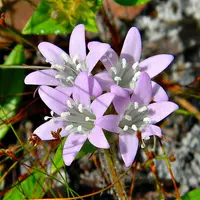
The blooms are typically pale lavender to white with a yellow throat and a dark purple center, giving a striking “bird’s eye” look. Fine, airy foliage adds a soft texture in mixed plantings.

This species prefers sunny, open sites with well-drained, often sandy or rocky soils and relatively low to moderate moisture. Once established, it shows good drought tolerance, which usually makes it easy to care for bird's-eye gilia in suitable climates.

Main Plant Requirements

Care Difficulty

Easy Care

Light Preference

Full Sun

Water Requirements

Low Water

Temperature Preference

Cool Climate

Hardiness Zone

6–10

Soil Texture

Sandy, Loamy, Rocky

Soil pH

Slightly acidic (6.5–7.0), Neutral (7.0)

Soil Drainage

Well-drained

Fertilization

Minimal (feed rarely)

Get Personalized Care Plan

Scan your plant to receive care tips personalized for your specific plant

Available on iOS and Android

How to Care for the bird's-eye gilia

This annual wildflower prefers bright, open conditions similar to its native California habitats.

  • Provide full sun for 6–8 hours per day; in hot inland areas, light afternoon shade helps prevent leaf scorch and faded blooms on bird's-eye gilia.
  • Choose a site with unobstructed morning sun and avoid deep shade; less than 4 hours of direct light leads to lanky, weak stems and sparse flowering.
  • In early spring, maximize sun exposure, but in midsummer heat, allow some filtered light from high, thin tree canopies to reduce stress.

This plant prefers dry to moderately moist soil and is sensitive to prolonged wet conditions.

  • Water only when the top 3–5 cm of soil is completely dry; in most climates this means infrequent but thorough soakings rather than light splashes.
  • Ensure sharply draining soil or a sandy mix so water runs freely from the root zone, which helps prevent root rot and yellowing from overwatering in Gilia tricolor.
  • During cool spring weather, reduce watering; in hot, dry spells, watch for wilting at midday that does not recover by evening as a sign to water.

This species is adapted to mild, dry climates with cool seasons and moderate summer heat.

  • Aim for active growth in 55–75°F (13–24°C); flowering is strongest in cool to mild conditions and often declines in sustained high heat.
  • Mature plants tolerate brief drops to about 25°F (−4°C), but hard freezes below this can damage foliage and buds, especially in exposed, windy sites.
  • In summer, Gilia tricolor handles up to about 90°F (32°C) if soil is not waterlogged; prolonged heat above this shortens blooming and may cause early dieback.

This annual thrives in relatively dry air and rarely needs special humidity management.

  • Target 30–50% humidity, similar to typical indoor and outdoor conditions in many temperate regions.
  • Bird's-eye gilia tolerates dry air well; leaves usually stay firm and flowers do not collapse unless drought-stressed.
  • If air is extremely arid and foliage tips brown despite adequate watering, group pots together or place near a shallow tray of water and pebbles to slightly raise local humidity.

This species prefers light, sharply drained soil that mimics sandy, open habitats.

  • Use a sandy or gritty mix, such as 50% potting soil with 50% coarse sand or fine gravel, to maintain structure and drainage.
  • Ensure very fast drainage; excess water should pass through within seconds to limit root rot risk in Gilia tricolor.
  • Aim for slightly acidic to neutral pH, around 6.0–7.0, avoiding strongly alkaline or highly amended peat-heavy mixes.
  • For heavy native clay, create raised beds with added coarse sand and small gravel to improve aeration and prevent waterlogging.

This species is well suited to container growing when provided with fast-draining conditions.

  • Choose a wide, shallow container at least 15–20 cm deep to accommodate its fibrous roots while allowing quick drainage.
  • Select terracotta or other porous materials if moisture tends to linger, as these help the mix dry between waterings.
  • Secure containers in windy sites, since the plant’s airy, branching stems can make small, lightweight pots unstable when in bloom.

Gilia tricolor grows well in lean soils and usually needs only light feeding to support flowering.

  • Use a balanced, low-dose granular or liquid fertilizer (for example 5-5-5 or 10-10-10) at half strength on well-established plants.
  • Feed once at planting, then every 4–6 weeks through the active spring–early summer growing season if soil is poor.
  • Skip high-nitrogen lawn products; excess nitrogen reduces blooms and encourages weak, leafy growth on bird's-eye gilia.
  • Stop feeding in late summer and do not apply fertilizer during fall–winter dormancy.

Pruning Gilia tricolor is simple and mainly helps maintain compact growth and prolonged flowering.

  • Use clean, sharp scissors or hand pruners to remove spent flower stems once most blooms on a stalk have faded.
  • Trim back lightly in late spring–early summer to encourage branching and a denser, bushier habit.
  • Snip off dead, damaged, or diseased stems whenever noticed to reduce disease risk and keep plants tidy.
  • Avoid cutting into the main crown; focus on individual stems so plants recover quickly and continue blooming.

This annual is more often transplanted outdoors from small pots or cell packs than routinely repotted.

  • Transplant seedlings in early–mid spring after frost risk passes and when roots just fill the plug but are not circling heavily.
  • Handle the root ball gently; disturb roots as little as possible to limit transplant shock and establish Gilia tricolor quickly.
  • Plant into well-drained soil at the same depth as in the container, then water thoroughly to settle soil around roots.
  • Container-grown plants rarely need a larger pot, but if roots circle tightly and growth stalls, shift up one size only.

Gilia tricolor is almost always propagated from seed rather than cuttings or division.

  • Sow seeds in late winter–early spring under cover, or direct-sow outdoors in early spring as soil becomes workable.
  • Provide bright light, good air circulation, and a well-drained, sandy seed mix kept lightly moist but not waterlogged.
  • Cover seeds very lightly or press into the surface, since they need light exposure for best germination.
  • Thin seedlings instead of crowding, spacing them so each plant has room to develop a strong, flowering rosette.

Gilia tricolor is usually grown as a cool-season annual and needs little winter care in mild climates.

  • In areas with mild, frost-light winters, fall-sown plants can overwinter outdoors without extra protection in well-drained soil.
  • Where repeated hard frosts occur, treat plants as annuals and reseed each year rather than attempting to overwinter them.
  • Containers left outside in cold regions may freeze solid; instead, empty pots after plants finish and store them dry.

Care Tips

Staggered Succession Sowing

Sow small batches of seed every 2–3 weeks in late winter to early spring so flowering is spread over a longer period instead of peaking all at once.

Low Support Netting

In windy sites, lay a sheet of soft pea netting 15–20 cm above the soil on short stakes so stems can grow through it and stay upright without needing individual staking.

Pinch for Bushiness

When seedlings reach 8–10 cm tall with several pairs of leaves, lightly pinch out the main growing tip to encourage branching and a denser, more floriferous plant.

Dry-Season Deadheading

During peak bloom, remove spent flower heads every few days to prolong flowering, then stop deadheading near the end of the season to allow seed to mature if you want natural reseeding when growing bird's-eye gilia.

Targeted Aphid Control

Inspect flower stems weekly for aphids and, at the first sign of clusters, wash them off with a firm jet of water in the morning or use a ready-to-use insecticidal soap, covering both leaf tops and undersides.

Common Pests and Diseases

Aphids

These insects cluster on new growth and flower stems, sucking sap and causing distortion, sticky honeydew, and reduced flowering.

Solution

Rinse colonies off Gilia tricolor with a strong but controlled stream of water, then spot-treat remaining clusters with insecticidal soap or a ready-to-use neem oil spray, repeating every 5–7 days until no new aphids appear and avoiding spraying during full sun or high heat.

Spider mites

These pests thrive in hot, dry conditions and cause fine stippling on leaves, bronzing, and very fine webbing between stems and buds.

Solution

Increase humidity around the plants with regular overhead misting in the morning, then wash foliage thoroughly and apply insecticidal soap or horticultural oil to both leaf surfaces, repeating at 5–7 day intervals while monitoring the undersides of leaves with a hand lens.

Powdery mildew

This disease appears as white, powdery patches on leaves and stems, leading to yellowing, curling, and reduced vigor, especially in crowded plantings.

Solution

Thin or space plants to improve air movement, water at soil level to keep foliage dry, remove heavily infected leaves, and use a sulfur-based or potassium bicarbonate fungicide labeled for ornamentals at the first sign of the white coating.

Botrytis blight

This disease produces soft, water-soaked spots on petals and stems that quickly develop gray, fuzzy mold in cool, damp weather, often starting on aging flowers.

Solution

Promptly remove spent blooms and any affected plant parts, avoid overhead watering, improve airflow around the plants, and, in persistent cases, apply a labeled fungicide for gray mold before extended cool, wet periods as part of broader Gilia tricolor care.

Interesting Facts

Distinct tricolor pattern

Each flower shows a clear three-color pattern: pale lavender petals, a dark purple ring, and a yellow throat, which is the basis for the species name tricolor.

California annual wildflower

This species is an annual native to California’s open grasslands and foothills, where it completes its entire life cycle from seed to seed within a single growing season.

Pollinator-guiding markings

The contrasting eye-like center and yellow throat act as nectar guides, helping native bees and other small pollinators quickly locate the nectar and pollen.

Botan icon

Did you know?

In its native California habitats, bird’s-eye gilia often appears in dense, natural drifts after winter rains, contributing to highly diverse spring wildflower displays that can change dramatically in pattern and abundance from year to year depending on rainfall timing and intensity.

FAQs about bird's-eye gilia

This species is typically grown as a cool-season annual. It germinates, flowers, sets seed, and dies within 1 year, even though in very mild climates some individuals may behave as short-lived perennials.

Grow Healthy Plants with Botan Care

Keep your plants happy and healthy with plant identification, disease detection, and easy care guidance.

Botan plant care app — identify plants on mobile

Explore More Plants