Ajuga integrifolia Care

Ajuga integrifolia

About Ajuga integrifolia

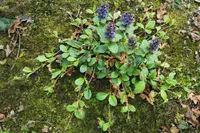
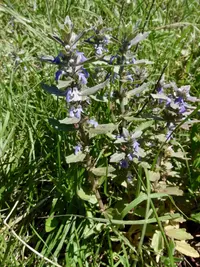
Ajuga integrifolia is a low-growing perennial herb in the mint family, valued for its spreading habit and dense foliage. It typically forms small clumps or mats topped with short spikes of blue to violet flowers.

This species occurs naturally in parts of East Africa and surrounding regions, often in grasslands and open, seasonally moist habitats. Its resilience and modest size make it suitable for groundcover use in mild climates.

It is generally easy to grow when given moderately moist, well-drained soil and at least bright indirect light or light sun. Gardeners who learn how to care for Ajuga integrifolia often appreciate its steady growth and low maintenance needs.

Main Plant Requirements

Care Difficulty

Moderate Care

Light Preference

Partial Shade

Water Requirements

Regular Water

Temperature Preference

Cool Climate

Hardiness Zone

5–8

Soil Texture

Loamy, Sandy, Organic-rich

Soil pH

Acidic (5.5–6.5), Slightly acidic (6.5–7.0)

Soil Drainage

Moist but well-drained

Fertilization

Minimal (feed rarely)

Get Personalized Care Plan

Scan your plant to receive care tips personalized for your specific plant

Available on iOS and Android

How to Care for the Ajuga integrifolia

This species prefers bright conditions with some protection from intense midday sun.

  • Provide 3–6 hours of direct morning or late-afternoon sun, with light shade at midday to prevent leaf scorch.
  • Tolerates partial shade and dappled light; in hotter regions, aim for shade from about 11 a.m.–3 p.m. to reduce stress.
  • In low light the plant becomes thin and flowers less; in very strong full sun, especially in summer, foliage may bleach or crisp, so adjust exposure seasonally.

Watering should keep the soil consistently moist but never saturated.

  • Before watering, let the top 2–4 cm of soil dry, then water thoroughly so moisture reaches the root zone without leaving standing water.
  • In cool seasons, reduce frequency as growth slows; in hot, dry weather, check soil every 1–2 days, especially in sandy or fast-draining sites.
  • Wilting, dull leaves, and very dry soil indicate underwatering, while yellowing leaves, soft stems, or a sour smell in the soil point to overwatering and poor drainage.

This groundcover prefers cool to mild temperatures and tolerates some seasonal extremes.

  • Optimal growth occurs around 55–75°F (13–24°C), with strongest vegetative growth in the cooler end of this range.
  • Established plants usually handle brief drops to about 20°F (-6°C); mulch can help protect roots in colder climates with freeze–thaw cycles.
  • Heat tolerance is moderate; during spells above 85°F (29°C), provide extra shade and soil moisture, and avoid planting in spots with reflected heat from pavement or walls.

This species handles typical outdoor humidity but grows best with moderate moisture in the air.

  • Aim for 40–60% humidity; it tolerates drier air but may grow more slowly in very arid conditions.
  • Dry air stress shows as browning leaf edges and slightly curled, dull foliage on Ajuga integrifolia.
  • In very dry climates, increase local humidity by grouping plants and using nearby mulch to reduce evaporation.

Ajuga integrifolia prefers loose, moist, well-structured soil that does not stay waterlogged.

  • Use a loamy mix with 40–60% garden soil, 20–30% compost, and 20–30% coarse sand or fine grit for structure.
  • Ensure sharp drainage; water should drain freely within a few minutes after thorough watering, without puddling on the surface.
  • Target a slightly acidic to neutral pH of 6.0–7.0, avoiding strongly alkaline or saline soils that limit nutrient uptake.
  • Improve aeration and root health by incorporating coarse materials such as pumice, perlite, or fine gravel rather than dense peat-only mixes.

This species can be grown successfully in containers when the pot supports its spreading habit.

  • Choose a wide, shallow container to accommodate surface runners and prevent crowding at the rim.
  • Use a heavier material such as ceramic or clay to stabilize the container as the plant spreads outward.
  • Elevate the pot slightly on feet or bricks so drainage holes remain clear and excess water escapes freely.

This species grows in modest soils but responds well to light feeding during active growth.

  • Use a balanced, slow-release fertilizer (for example 10-10-10) or thin compost layer in early spring to support growing Ajuga integrifolia.
  • Feed every 6–8 weeks through the growing season if soil is poor; skip if planted in rich garden beds.
  • Apply at half the label strength to avoid soft, weak growth and salt buildup in the root zone.
  • Stop feeding in late summer to early fall so plants harden off before winter dormancy.

Light pruning maintains a tidy mat and encourages fresh foliage and flowers.

  • Cut back spent flower spikes in late spring to early summer using clean hand pruners or scissors.
  • Remove dead, damaged, or diseased leaves whenever noticed to limit fungal problems and improve airflow.
  • Thin crowded patches by lifting and trimming congested runners, which encourages denser, healthier growth.
  • Edge or shear lightly along paths to keep spreading shoots within the desired area without scalping the crown.

Ajuga integrifolia is more often transplanted in beds than kept as a long-term container plant.

  • Transplant or divide in early spring or early fall when temperatures are mild and soil is workable.
  • Look for signs such as mats lifting from the soil, bare centers, or roots circling a container as clues it needs moving.
  • Plan on lifting and replanting clumps every 3–4 years to refresh crowded growth and restore vigor.
  • Water thoroughly before and after moving, keep roots shaded, and trim back some foliage to reduce stress and moisture loss.

This groundcover is commonly propagated to expand plantings or refresh older patches.

  • Divide established clumps in early spring or fall, lifting and separating sections with several shoots and roots each.
  • Root runners where they touch soil by lightly covering nodes; detach and replant once a firm root system forms.
  • Sow fresh seed in trays or prepared beds in fall or early spring, keeping the medium evenly moist until germination.
  • Provide bright, indirect light and cool to mild temperatures during establishment to reduce stress and support rooting.

This hardy perennial generally needs minimal winter care in temperate climates.

  • Tolerates light to moderate frost once established, especially in well-drained soil.
  • Apply a 3–5 cm layer of organic mulch around, but not over, crowns in late fall to buffer freeze–thaw cycles.
  • In very cold regions, move containers to a sheltered, unheated space or against a wall to reduce root freezing.

Care Tips

Control Early Spread

Edge beds or install a 5–8 cm deep physical barrier before planting to prevent this species from creeping into lawn or mixed borders where it can outcompete smaller perennials.

Use Living Mulch

Plant in a dense pattern and allow mats to knit together so they function as a living mulch, suppressing annual weeds and stabilizing soil on gentle slopes.

Monitor Crown Health

Inspect crowns in late winter and early spring, removing any soft, rotted, or heavily shaded central clumps to keep the planting vigorous and reduce fungal issues.

Divide For Renewal

Lift and divide older patches every 3–4 years, replanting only the outer, most vigorous rosettes to maintain dense growth and consistent flowering when growing Ajuga integrifolia.

Targeted Pest Checks

Check the undersides of leaves and along stolons every few weeks during the growing season so aphids, vine weevil larvae, and slugs can be treated at low levels before they damage large sections.

Common Pests and Diseases

Crown rot

This disease causes the central rosette and crown to soften, brown, and collapse, often starting where dense foliage stays wet. Symptoms include foul-smelling, mushy tissue at soil level and rapid dieback of affected clumps.

Solution

Remove and discard all affected plants and nearby heavily infected crowns, then improve drainage and airflow by thinning crowded patches and avoiding overhead watering. Replant only in well-drained soil, keep mulch thin around crowns, and water early in the day so foliage dries quickly as part of broader Ajuga integrifolia care instructions.

Powdery mildew

This disease appears as white, powdery patches on leaves and stems, often in humid, shaded spots with poor air circulation. Affected leaves may yellow, distort, and decline over time.

Solution

Remove and discard the worst-affected leaves to reduce spore levels, then increase light and airflow by thinning dense groundcover and avoiding overhead watering. In persistent cases, apply a labeled sulfur or potassium bicarbonate fungicide, coating both upper and lower leaf surfaces according to product directions.

Southern blight

This soilborne disease causes sudden wilting and collapse of plants in warm, moist conditions, with tan lesions at the crown and white fungal growth with small tan sclerotia at the soil line. Symptoms often appear in patches that spread through connected runners.

Solution

Pull and dispose of infected plants and surrounding soil where the white growth and sclerotia are visible, and avoid composting this material. Improve drainage, cut back watering, and, in high-pressure areas, consider raised beds or solarization of the soil before replanting with healthy divisions.

Aphids

These insects cluster on new shoots and undersides of leaves, sucking sap and causing curling, distortion, and sticky honeydew that can lead to sooty mold. This pest is more common on soft, vigorous growth after high nitrogen fertilization.

Solution

Dislodge colonies by spraying plants with a firm stream of water, focusing on stems and leaf undersides, and repeat every few days as needed. For persistent infestations, introduce or conserve natural predators like lady beetles, or use a horticultural soap or neem oil spray, applied in the early morning or evening to avoid leaf burn.

Spider mites

These pests are tiny sap-feeding arachnids that cause fine stippling, bronzing, and a dry, speckled look on leaves, sometimes with fine webbing in severe cases. This pest thrives in hot, dry conditions and can cause patches of Ajuga to thin and lose vigor.

Solution

Rinse foliage thoroughly with water, including undersides of leaves, and repeat regularly to knock back populations and raise humidity around the plants. In more serious cases, apply a horticultural oil or insecticidal soap labeled for mites, covering all plant surfaces, and reduce heat and drought stress with consistent but not excessive watering.

Interesting Facts

Alpine-rosette growth

This species naturally forms low rosettes in alpine and subalpine zones of East Africa, an adaptation that helps it withstand strong wind and intense sunlight at higher elevations.

High-altitude distribution

Ajuga integrifolia occurs from roughly montane grasslands up to afro-alpine regions, often growing among tussock grasses, where it contributes to ground-level plant diversity.

Bee-attracting flowers

Its blue to violet, two-lipped flowers are structured for insect pollination, especially by bees that can easily access nectar along the floral tube.

FAQs about Ajuga integrifolia

This species spreads gradually by short runners and self-seeding but is not usually aggressive in typical garden settings. In ideal conditions it can form dense patches, so edging or occasional thinning helps keep it within bounds.

Grow Healthy Plants with Botan Care

Keep your plants happy and healthy with plant identification, disease detection, and easy care guidance.

Botan plant care app — identify plants on mobile

Explore More Plants