Peppermint-scented geranium Care (Pelargonium tomentosum)

Also known as: Peppermint geranium, Peppermint Storksbill, peppermint-scented pelargonium, peppermint pelargonium
Peppermint-scented geranium

About Peppermint-scented geranium

Peppermint-scented geranium, Pelargonium tomentosum, is a tender, evergreen perennial grown mainly for its fragrant foliage. When brushed or lightly crushed, the soft, fuzzy leaves release a clear peppermint scent.

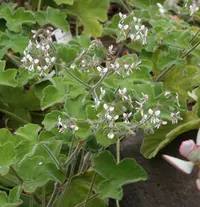
This plant forms a low, spreading mound and can trail over the edges of pots or hanging baskets. Small white flowers appear in clusters, but the leaves remain the main ornamental feature.

P. tomentosum originates from South Africa, where it grows in relatively dry, open habitats. Its drought tolerance, quick growth, and forgiving nature make it suitable for beginners who want to learn how to care for Peppermint-scented geranium.

It prefers bright light, moderate watering, and well-drained soil, which keeps the roots healthy and reduces the risk of rot.

Main Plant Requirements

Care Difficulty

Easy Care

Light Preference

Partial Sun

Water Requirements

Moderate Water

Temperature Preference

Tropical / Frost Sensitive

Hardiness Zone

10–11

Soil Texture

Sandy, Loamy, Organic-rich

Soil pH

Slightly acidic (6.5–7.0), Neutral (7.0)

Soil Drainage

Well-drained

Fertilization

Light (every 4–6 weeks)

Get Personalized Care Plan

Scan your plant to receive care tips personalized for your specific plant

Available on iOS and Android

How to Care for the Peppermint-scented geranium

Pelargonium tomentosum prefers bright, gentle light that mimics a sunny but not scorching garden edge.

  • Provide 4–6 hours of direct morning sun with bright, filtered light or light shade in the afternoon, especially in hot summer regions.
  • Tolerates light dappled shade, but very dense shade leads to leggy growth, fewer leaves, and weaker Peppermint-scented geranium scent release.
  • In very intense sun or heat, protect from harsh midday rays to avoid leaf scorch; shift slightly shadier in midsummer, brighter again in cooler seasons.

Pelargonium tomentosum prefers thorough but infrequent watering in free-draining soil.

  • Allow the top 3–5 cm of soil to dry before watering, then water until it drains from the base so roots are moistened but not left in standing water.
  • Reduce watering in cool seasons when growth slows, checking soil by touch rather than following a fixed calendar.
  • Watch for yellowing, mushy stems as signs of overwatering, and limp, curling leaves with very dry soil as signs of underwatering; adjust frequency accordingly.

This plant grows best in mild conditions without hard frost or extreme heat.

  • Aim for active growth in 60–75°F (16–24°C) with good air movement, which supports dense foliage and steady scented leaf production.
  • Protect from cold below 40°F (4°C); sustained exposure near 32°F (0°C) can damage leaves and stems, and hard frost may kill the plant to the roots.
  • In hot spells above 85°F (29°C), offer light shade and consistent soil moisture to limit heat stress, leaf scorch, and temporary growth slowdown.

Pelargonium tomentosum prefers fairly dry indoor air and does not require high humidity.

  • Aim for 30–50% humidity, similar to most heated or air-conditioned homes, for stable growth.
  • It tolerates dry air well; leaves only show stress when combined with heat, appearing limp or slightly curled at the edges.
  • If air is very dry above 25°C, place the Peppermint-scented geranium near a tray of water and pebbles rather than misting the foliage.

Pelargonium tomentosum grows best in light, fast-draining soil that dries quickly between waterings.

  • Use a loose, gritty mix such as 50–60% all-purpose potting mix with 20–30% perlite or pumice and 10–20% coarse sand for structure.
  • Aim for slightly acidic to neutral pH around 6.0–7.0, which supports nutrient availability without risking toxicity.
  • Include a small amount of well-rotted compost or leaf mold to improve water retention without making the medium heavy.
  • Avoid dense, peat-heavy or clay-based soils that stay wet for long periods, as these reduce root aeration and promote rot.

This species is well suited to container growing, both outdoors in warm seasons and indoors in bright light.

  • Choose a wide, shallow pot to match its spreading root system and keep the center from staying wet longer than the edges.
  • Select a breathable material such as terracotta if overwatering is a concern, since it allows faster evaporation from the root zone.
  • Use a pot with unobstructed drainage holes and raise it slightly on pot feet so runoff clears quickly and does not reabsorb into the mix.

Pelargonium tomentosum responds well to modest, consistent feeding during its active growing season.

  • Use a balanced liquid fertilizer (such as 10-10-10) at 1/4–1/2 strength every 2–4 weeks from spring to early fall for caring for Peppermint-scented geranium.
  • Choose either diluted balanced NPK feed or a thin topdressing of mature compost, not both at full rate.
  • Skip fertilizer in mid-late winter, or apply at most once every 6–8 weeks if growth continues indoors.
  • Water before applying any fertilizer to reduce root burn risk and ensure even nutrient uptake.

Pelargonium tomentosum benefits from light, planned pruning to maintain a compact, leafy shape.

  • Time main pruning for late winter or very early spring before strong new growth starts.
  • Use clean, sharp scissors or pruners to remove dead, damaged, and crossing or crowded stems.
  • Tip back leggy shoots by 2–5 in to encourage branching and denser foliage.
  • After flowering flushes, lightly trim spent stems to tidy the plant and stimulate fresh growth.

Pelargonium tomentosum grows well in containers and occasional repotting maintains healthy roots.

  • Look for roots circling the pot base, pushing through drainage holes, or persistent wilting as signs repotting is needed.
  • Plan to repot every 1–2 years in spring, choosing a container only 2–5 cm wider than the previous one.
  • Gently loosen root circling and remove a small amount of old soil, keeping most of the root ball intact to limit stress.
  • Water lightly after repotting, then keep in bright, indirect light for 3–7 days before returning to full sun.

New Pelargonium tomentosum plants are most commonly produced from stem cuttings under warm, bright conditions.

  • Take 7–10 cm non-flowering stem cuttings in late spring or summer and remove lower leaves.
  • Allow cut ends to dry for a few hours, then insert into a well-drained mix of perlite and peat or similar medium.
  • Maintain 65–75°F, bright indirect light, and lightly moist but not wet substrate to encourage rooting.
  • For seeds, sow on the surface of a fine mix, keep warm and evenly moist, and expect slower, less uniform results.

Pelargonium tomentosum is frost sensitive and needs protection in regions with freezing winters.

  • Move container plants indoors before temperatures drop below 40°F, providing bright light and reduced watering.
  • In mild climates, grow in pots so plants can be shifted to sheltered porches or cool, bright rooms.
  • If planted in the ground, treat as an annual or lift key plants into containers for overwintering.
  • Avoid heavy fertilization in winter to keep growth compact and reduce cold-related stress.

Care Tips

Encourage Bushy Shape

Pinch out the soft tips of stems every 3–4 weeks during active growth to keep the plant compact, encourage branching, and produce more fragrant foliage for light brushing or harvesting.

Strategic Foliage Harvest

When taking leaves for tea or crafts, always cut individual leaves with a clean tool close to a node rather than stripping bare sections, so the stem can quickly push new side shoots and stay dense.

Cool-Night Placement

Position containers where night temperatures are a few degrees cooler than daytime (for example a bright, slightly drafty window in winter) to strengthen stems and keep growth stocky instead of leggy.

Seasonal Pot Rotation

Rotate the pot by 90° every 7–10 days, especially from late winter to spring, to prevent the plant from leaning and to distribute new growth evenly around the container.

Targeted Pest Monitoring

Check the soft, velvety undersides of leaves and stem joints weekly for aphids, whitefly, or spider mites, and rinse infestations off with a firm stream of lukewarm water before they spread, which is a key step in Pelargonium tomentosum plant care.

Common Pests and Diseases

Geranium budworm

This pest is a small caterpillar that bores into flower buds, causing them to fail to open or appear chewed and brown. Symptoms include missing petals, hollow buds, and dark frass (droppings) on or around the flowers.

Solution

Handpick caterpillars in the evening, remove and discard damaged buds, and avoid leaving spent blooms on the plant. For heavier infestations, use a targeted biological control such as Bacillus thuringiensis (Bt) on buds and flowers, and encourage birds and predatory insects by avoiding broad-spectrum insecticides.

Aphids

These insects cluster on tender shoot tips and the undersides of leaves, sucking sap and causing curling, distortion, and sticky honeydew that can attract sooty mold. This pest is often encouraged by soft, lush growth from high nitrogen fertilization.

Solution

Rinse stems and leaves thoroughly with a firm stream of water, then treat remaining colonies with insecticidal soap or a light horticultural oil, covering leaf undersides. Reduce excess nitrogen fertilization and improve airflow so new growth hardens and becomes less attractive to aphids.

Botrytis blight

This disease is a fungal infection favored by cool, damp, low-light conditions and dense foliage, leading to soft brown lesions on leaves, stems, and flowers that develop a gray, fuzzy mold. Symptoms include collapsing stems at the base of leaves and rotting flower heads that cling to the plant.

Solution

Remove and discard all infected leaves, stems, and flowers and avoid overhead watering, especially late in the day. Space plants to improve airflow, keep foliage dry, and in severe or recurring cases apply a labeled fungicide while also adjusting growing conditions, which is a key part of Pelargonium tomentosum plant care.

Edema

This disorder occurs when roots absorb water faster than leaves can transpire it, causing water-soaked blisters or corky tan patches on the undersides of leaves. Symptoms include thickened, rough areas on older foliage, often after sudden shifts from cool, wet conditions to bright light.

Solution

Allow the potting mix to dry slightly between waterings and avoid keeping the soil saturated, especially in cool, low-light conditions. Increase light gradually, improve air circulation, and use a well-drained mix so roots are not sitting in water for extended periods.

Rust

This disease is caused by specialized rust fungi that target geranium relatives, producing yellow spots on upper leaf surfaces and orange-brown pustules on the undersides. Symptoms include premature leaf drop and a general decline in vigor if many leaves are affected.

Solution

Promptly remove and discard infected leaves and any debris around the plant, and avoid splashing water onto foliage. Improve spacing and airflow, keep leaves dry, and if the problem persists use a rust-labeled fungicide, applying according to instructions and rotating products to reduce resistance risk.

Interesting Facts

Peppermint scent chemistry

The strong peppermint aroma comes mainly from volatile monoterpenes such as menthone and menthol-like compounds produced in specialized leaf glandular hairs. Crushing or lightly rubbing the foliage ruptures these structures and rapidly releases the fragrance into the air.

Soft, hairy leaves

The leaves are densely covered with fine hairs (tomentum), which reduce water loss, scatter intense sunlight, and give the foliage a soft, felted texture. This adaptation reflects the plant’s origin in seasonally dry habitats of South Africa.

Night-scented flowers

Although the flowers are small and visually modest, they release more fragrance during the evening and night. This pattern helps attract twilight and nocturnal pollinators such as moths in its native range.

Botan icon

Did you know?

This species is one of the classic parent plants used in breeding scented-leaf geraniums, contributing both its cool peppermint fragrance and its soft, tomentose foliage to many modern cultivars that are popular in herb collections and for Peppermint-scented geranium indoor care.

FAQs about Peppermint-scented geranium

Lack of blooms usually comes from insufficient light, too much nitrogen fertilizer, or old, woody stems. Ensure strong light, use a balanced or low-nitrogen feed, and prune lightly to encourage fresh growth where flowers form.

Grow Healthy Plants with Botan Care

Keep your plants happy and healthy with plant identification, disease detection, and easy care guidance.

Botan plant care app — identify plants on mobile

Explore More Plants