Mexican pinyon Care (Pinus cembroides)

Also known as: Pinyon Pine, Mexican Nut Pine
Mexican pinyon

About Mexican pinyon

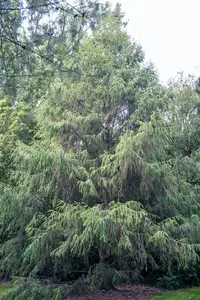
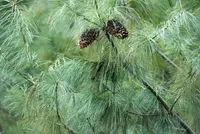
Mexican pinyon (Pinus cembroides) is a small to medium evergreen conifer known for its dense crown, short needles, and edible pine nuts. It usually forms a rounded, compact tree rather than a tall, narrow pine.

This species is native to Mexico and parts of the southwestern United States, where it grows in dry, rocky woodlands and open slopes. It is naturally adapted to drought, poor soils, and high light, which makes it relatively forgiving once established.

Gardeners who care for Mexican pinyon appreciate its slow to moderate growth, strong heat tolerance, and low water needs. It prefers full sun, well-drained soil, and minimal disturbance around its roots.

Main Plant Requirements

Care Difficulty

Moderate Care

Light Preference

Full Sun

Water Requirements

Low Water

Temperature Preference

Cold Hardy

Hardiness Zone

6–9

Soil Texture

Sandy, Loamy, Rocky

Soil pH

Slightly acidic (6.5–7.0), Neutral (7.0)

Soil Drainage

Well-drained

Fertilization

Minimal (feed rarely)

Get Personalized Care Plan

Scan your plant to receive care tips personalized for your specific plant

Available on iOS and Android

How to Care for the Mexican pinyon

This highland pine prefers strong sun but can adapt to some light variation once established.

  • Provide 6–8 hours of direct sun daily; full sun from morning through midafternoon promotes dense, compact growth for Mexican pinyon.
  • Allow light afternoon shade in very hot, dry climates to reduce needle scorch and excessive transpiration, especially on young trees.
  • Avoid deep, permanent shade; sparse needles, elongated shoots, and poor cone production indicate insufficient light, so choose an open, unobstructed planting site.

This species is drought-tolerant and prefers infrequent, deep watering over light, frequent applications.

  • For in-ground trees, water deeply when the top 5–8 cm of soil are dry, then allow soil to dry again to prevent root rot.
  • During the first 2–3 growing seasons, increase watering in summer heat and reduce it in cool or rainy periods, always checking soil dryness before watering.
  • Signs of overwatering include yellowing needles and dieback on lower branches, while prolonged needle browning and poor shoot extension suggest chronic underwatering in Pinus cembroides.

This pine thrives in climates with hot summers, cold winters, and pronounced temperature swings.

  • Optimal growth occurs around 65–85°F (18–29°C), though established trees handle short periods above 90°F (32°C) if soil is not waterlogged.
  • Mature plants tolerate winter lows near 0–10°F (-18 to -12°C), with brief dips below tolerated once wood is fully hardened by late autumn.
  • Young trees are more sensitive to sudden severe frosts; provide a sheltered site from harsh wind and avoid warm walls that trigger premature spring growth.

This species handles low humidity well, so air moisture is rarely a concern.

Pinus cembroides prefers mineral, sharply draining soil that mimics rocky slopes.

  • Use a sandy or gravelly mix with low organic matter, such as 50–60% coarse sand or grit blended with a lean potting base.
  • Aim for slightly acidic to neutral pH, around 6.0–7.2, avoiding highly alkaline or strongly acidic conditions.
  • Improve drainage and aeration by adding pumice or perlite so water drains within a few seconds of watering.
  • Avoid dense, clay-heavy, or peat-rich mixes that stay wet for long periods and suffocate roots.

This species can be grown in containers when kept as a small, slow-growing specimen.

  • Choose a deep, heavy container to provide root depth and prevent the plant from tipping in wind as the crown develops.
  • Use a very fast-draining, gritty mix so water exits quickly, reducing the risk of chronic root-zone moisture.
  • Elevate the pot slightly on feet or blocks so drainage holes stay clear and runoff does not pool under the container.

This drought-adapted pine needs modest feeding when grown in poor or artificial soils, but established in-ground Mexican pinyon usually manages without fertilizer.

  • Use a balanced slow-release fertilizer (around 10-10-10) or well-aged compost in early spring for container or young trees.
  • Apply once per year during the main growing season; a second, lighter dose in midsummer is enough in very lean soils.
  • Use half-strength products for container plants to limit salt buildup and root burn, and water well after application.
  • Stop feeding in late summer so growth hardens before winter and the tree enters dormancy with firm, mature tissues.

Pinus cembroides needs minimal structural pruning, mainly to keep the canopy healthy and safe.

  • Carry out any shaping or corrective work in late winter to early spring before active growth begins.
  • Remove only dead, diseased, storm-damaged, or rubbing branches, cutting back to the branch collar with clean bypass pruners or a sharp saw.
  • Thin crowded interior branches lightly to improve airflow and light penetration without opening large gaps in the canopy.
  • Avoid cutting into old bare wood or shortening branch tips heavily, as this pine does not reliably form new buds on older wood.

This pine is usually grown in the ground, so transplanting young trees correctly matters more than frequent repotting.

  • Transplant in late winter to early spring while the tree is dormant and soil is workable, avoiding hot, dry periods.
  • Look for circling roots at the container edge or water running straight through as signs a nursery plant needs a larger, deeper hole.
  • Set the root flare at soil level in a wide planting area of well-drained, gritty soil, spreading roots outward instead of downward spiraling.
  • Water deeply after planting, then taper to deep, infrequent watering to help roots anchor without encouraging shallow, surface growth.

Sexual propagation from seed is standard for this pine, while vegetative methods are rarely practical for home growers.

  • Collect mature cones of Pinus cembroides, extract seeds, and stratify them cold and moist for 6–8 weeks to break dormancy.
  • Sow in late winter to early spring in a very well-drained, sandy mix, barely covering seeds and keeping the medium evenly moist, not wet.
  • Provide bright light, good air movement, and temperatures around 60–70°F to encourage steady, compact seedling growth.
  • Transplant seedlings carefully once they develop several true needle whorls, minimizing root disturbance to maintain a strong taproot.

This species is quite cold hardy in its suitable climate range and generally needs little special winter care in the ground.

  • Mulch the root zone of young trees with a 5–8 cm layer of coarse organic material, keeping it slightly away from the trunk.
  • Avoid winter waterlogging by ensuring sharp drainage, especially on heavy soils that can stay saturated in cold weather.
  • Move container-grown plants to a sheltered, unheated but frost-free or slightly protected spot, and water lightly during prolonged dry spells.

Care Tips

Deep root establishment

During the first 2–3 years, water less often but for longer sessions to encourage a deep root system that will better tolerate drought and wind as the tree matures.


Windward staking strategy

In very open or windy sites, place 1–2 sturdy stakes on the prevailing-wind side only and use soft, flexible ties so the young tree can still sway slightly and develop a strong trunk.

Low-competition mulch ring

Maintain a 60–90 cm grass-free, lightly mulched ring around the base to reduce competition for water and nutrients and to protect the trunk from string trimmer damage.

Targeted cone thinning

On young or stressed trees producing heavy cone crops, selectively remove some immature cones by hand to reduce energy drain and support stronger vegetative growth.

Site-adapted seed sourcing

When starting from seed or selecting nursery stock, choose material sourced from climates similar to your own, which improves cold and heat resilience and simplifies caring for Mexican pinyon over the long term.

Common Pests and Diseases

Pinyon needle scale

This pest feeds on needles, causing yellowing, premature needle drop, and a thin crown on stressed trees. Symptoms include small dark, dome-shaped bumps on needles that stay attached even when rubbed.

Solution

Monitor young and drought-stressed trees closely and prune out heavily infested twigs. For significant infestations, apply horticultural oil during the crawler stage in late winter to early spring and support tree vigor with proper watering appropriate for growing Mexican pinyon in dry regions.

Pinyon needle cast

This disease causes browning and shedding of older needles, often starting in the lower crown and giving the tree a tufted look of only newer needles at branch tips. Symptoms include bands or spots on needles followed by premature needle drop.

Solution

Rake and remove fallen needles to reduce fungal spores and improve spacing and airflow around trees to allow faster drying of foliage. In high-value plantings with recurring issues, a preventive fungicide labeled for needle cast on pines can be applied in spring when new needles are emerging.

Pinyon needle scale–associated sooty mold

This condition develops when honeydew from heavy scale infestations coats needles and branches, leading to black, sooty fungal growth on surfaces. Symptoms include sticky residue, darkened needles, and reduced photosynthesis due to the fungal coating.

Solution

Focus on reducing the underlying scale population with timely horticultural oil treatments and by encouraging natural predators such as lady beetles. Once honeydew production declines, gently rinse affected foliage with water to remove sooty mold, taking care not to overwater the root zone.

Interesting Facts

High-elevation specialist

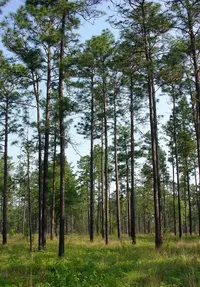
This Mexican pinyon naturally grows on dry, rocky slopes from roughly 1,600–2,800 m elevation, forming open woodlands that stabilize thin mountain soils and tolerate strong sun, wind, and periodic drought.

Nut-producing pine

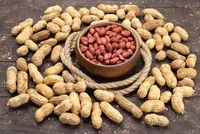
Its thick-shelled seeds are edible pine nuts that are locally harvested by humans and heavily used by birds and rodents, which also act as the main seed dispersers when they cache but do not recover all seeds.

Complex hybrid zones

In parts of Mexico and the U.S. Southwest, it forms natural hybrid zones with closely related pinyon pines, which makes field identification difficult and has been studied as an example of ongoing evolution within the pinyon group.

Botan icon

Did you know?

This species can begin producing substantial cone and seed crops at a relatively small size and young age compared with many other pines, allowing it to quickly reestablish after disturbance and maintain its role as a key food source in semi-arid mountain ecosystems.

FAQs about Mexican pinyon

This species grows slowly to moderately, often adding about 15–30 cm in height per year once established. Growth is faster in deep, well-drained soils with full sun and slower in shallow, very dry, or compacted sites.

Grow Healthy Plants with Botan Care

Keep your plants happy and healthy with plant identification, disease detection, and easy care guidance.


Botan plant care app — identify plants on mobile

Explore More Plants