Encourage Deep Rooting
During the first 2–3 years, avoid frequent shallow watering and instead provide less frequent, deeper soakings to encourage a strong taproot that will anchor the tree and improve drought resilience when growing Longleaf Pine.

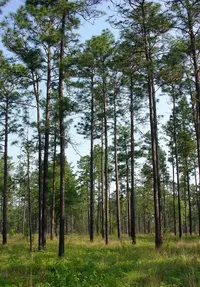
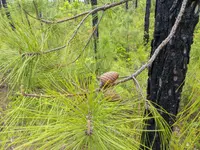
Longleaf pine, Pinus palustris, is a long-lived coniferous tree native to the southeastern United States. It naturally forms open, sun-filled pine savannas and woodlands.
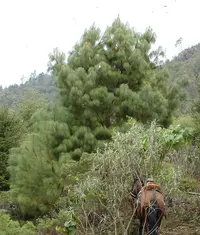
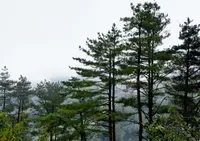
Young trees pass through a grass-like stage with dense needles, then develop tall, straight trunks with large, open crowns. Mature bark becomes thick and patterned, helping the tree tolerate periodic fire.
This species is adapted to sandy, well-drained soils and full sun, and it prefers relatively low to moderate moisture. In gardens or restoration projects, understanding how to care for Longleaf Pine starts with providing similar conditions to its native habitat.

Care Difficulty
Moderate Care

Light Preference
Full Sun

Water Requirements
Low Water

Temperature Preference
Cold Hardy

Hardiness Zone
7–10

Soil Texture
Sandy, Loamy, Rocky

Soil pH
Strongly acidic (4.5–5.5), Acidic (5.5–6.5)

Soil Drainage
Well-drained

Fertilization
Minimal (feed rarely)
Scan your plant to receive care tips personalized for your specific plant
Available on iOS and Android
This pine is a sun-demanding conifer that develops best with strong, direct light outdoors.
This species prefers dry to moderately moist, well-drained soil and is drought-tolerant once established.
This pine is adapted to warm, humid climates with mild winters and hot summers outdoors.
Humidity has little impact on Pinus palustris, which is adapted to dry, well-ventilated conditions.
Pinus palustris prefers sharply drained, sandy mineral soils that mimic its native coastal plain habitats.
This species can be grown in containers only for its early life stages and requires careful attention to stability and drainage.
This native pine usually grows well in poor, sandy soils and needs minimal fertilization once established.
Pruning Pinus palustris is usually limited to safety, health, and structural clarity rather than shaping.
Longleaf pine is rarely a long-term container plant, so guidance focuses on careful field transplanting of young stock.
Pinus palustris is propagated primarily from seed and is slow and specialized for home growers.
Established Pinus palustris is cold hardy in much of its range and usually needs little specific winter care.

Plant Health Check
Not sure what's wrong with your plant? Check your plant's health inside the app.
Longleaf pine seedlings spend several years in a grass stage, keeping buds at ground level while building a deep taproot, and this stage is adapted to survive and even benefit from frequent low-intensity fires in its native ecosystems.
Mature longleaf pine woodlands with an open canopy and rich ground-layer plants support high biodiversity, including specialist species such as the red-cockaded woodpecker and gopher tortoise that rely on this habitat structure.
Before large-scale logging and land conversion, longleaf pine dominated tens of millions of acres across the southeastern United States, forming one of North America’s most extensive temperate forest ecosystems.

Individual longleaf pines can live for several centuries, with some documented trees exceeding 300 years, making old-growth stands important archives of past climate and land-use patterns through their tree-ring records.
Growth is slow in the early grass stage, often only a few cm per year for several years. Once established, height growth can accelerate to roughly 30–90 cm per year under favorable conditions such as full sun and well-drained soil.
Keep your plants happy and healthy with plant identification, disease detection, and easy care guidance.