Plan for Fire
When planting, position trees away from buildings and leave a wide, vegetation-free mineral soil strip around trunks to reduce fire risk in this naturally fire-adapted species.

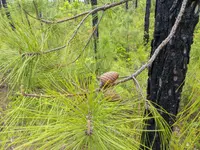
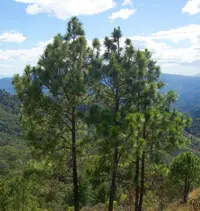
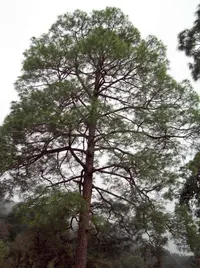
Pond pine, Pinus serotina, is an evergreen conifer native to the coastal plain of the southeastern United States. It commonly grows in wet, sandy, or boggy habitats. The tree has a narrow, often irregular crown, with clusters of long, slender needles and small to medium cones that may stay on the branches for many years. It is adapted to nutrient-poor, periodically flooded soils and often regenerates after fire, which shapes its rugged growth habit. For gardeners, how to care for Pond Pine depends on providing full sun, acidic sandy soil, and steady moisture without prolonged drought.

Care Difficulty
Moderate Care

Light Preference
Full Sun

Water Requirements
Regular Water

Temperature Preference
Warm Climate

Hardiness Zone
7–9

Soil Texture
Sandy, Loamy, Peaty

Soil pH
Strongly acidic (4.5–5.5), Acidic (5.5–6.5)

Soil Drainage
Waterlogged tolerant

Fertilization
Minimal (feed rarely)
Scan your plant to receive care tips personalized for your specific plant
Available on iOS and Android
This southeastern pine thrives in open, bright sites with long daily sun exposure.
This wetland pine prefers consistently moist, well-drained soil but withstands short dry spells once established.
This species is adapted to warm, humid climates with mild winters and hot summers.
Humidity is rarely limiting for Pond Pine when grown outdoors in its normal range.
Soil for Pinus serotina should be sandy, aerated, and consistently moist yet not stagnant.
This species is only marginally suitable for long-term container growing and is best kept as a temporary or juvenile container specimen.
Pond Pine in native or well-prepared soil usually needs little supplemental feeding once established.
Pruning Pinus serotina is mainly structural and corrective rather than decorative.
This species is rarely grown in long-term containers, so management focuses on careful transplanting of young trees.
Pinus serotina is usually propagated from seed rather than vegetative cuttings.
This pine is naturally cold hardy in much of its native range and usually needs little winter care in the ground.

Plant Health Check
Not sure what's wrong with your plant? Check your plant's health inside the app.
Pond pine cones are serotinous, meaning many remain tightly closed for years and only open widely after exposure to the high heat of wildfire, releasing large numbers of seeds onto freshly cleared soil.
This species often grows on poorly drained, acidic peat or sandy soils in the Atlantic and Gulf Coastal Plains, tolerating sites that are too wet and nutrient-poor for many other southern pines.
Pond pine is unusual among native southern pines because it commonly produces epicormic shoots, sprouting new branches directly from the trunk after damage or fire, which helps it recover canopy more quickly than many related species.

Pond pine forms important natural hybrids with pitch pine (Pinus rigida) and loblolly pine (Pinus taeda) in overlapping ranges, creating mixed genetic populations that help researchers study adaptation and gene flow among southern yellow pines.
This species grows at a moderate rate, usually adding about 30–60 cm of height per year in good conditions. Growth is slower on dry, nutrient-poor sites and faster in moist, acidic, sandy soils.
Keep your plants happy and healthy with plant identification, disease detection, and easy care guidance.