Chir Pine Care (Pinus roxburghii)

Also known as: Long-leaved Indian Pine, Indian Longleaf Pine, longleaf Indian pine, imodi pine, Cheer pine, Chir, Himalayan longleaf pine, Longifolia Pine
Chir Pine

About Chir Pine

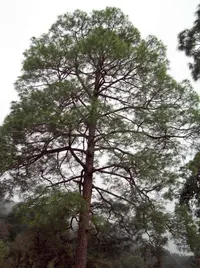
Chir pine, Pinus roxburghii, is a tall evergreen conifer known for its long, drooping needles and broad, open crown. It forms a strong central trunk with thick, rough bark.

This species is native to the Himalayan foothills, where it grows on dry, sunny slopes and poor, rocky soils. Its deep root system and drought tolerance make it relatively tough once established.

In cultivation, it prefers full sun, good air movement, and well-drained, slightly acidic soil. Understanding how to care for Chir Pine starts with providing strong light and avoiding waterlogged sites.

Main Plant Requirements

Care Difficulty

Moderate Care

Light Preference

Full Sun

Water Requirements

Low Water

Temperature Preference

Warm Climate

Hardiness Zone

8–11

Soil Texture

Sandy, Loamy, Rocky

Soil pH

Acidic (5.5–6.5), Slightly acidic (6.5–7.0)

Soil Drainage

Well-drained

Fertilization

Minimal (feed rarely)

Get Personalized Care Plan

Scan your plant to receive care tips personalized for your specific plant

Available on iOS and Android

How to Care for the Chir Pine

This Himalayan pine thrives in bright, open sites with long daily sun exposure.

  • Provide 6–8 hours of direct sun daily; full sun promotes dense, balanced growth in Chir Pine.
  • Tolerates light partial shade, especially in very hot inland areas, but extended shade causes thin, elongated shoots and sparse foliage.
  • In hot summers, prioritize strong morning sun with some relief from harsh late-afternoon exposure, and keep young trees out of highly reflective heat traps near walls or pavement.

This drought-tolerant pine prefers deep, infrequent watering and very well-drained soil.

  • For established landscape trees, water only when the top 5–8 cm of soil is dry and recent weather has been hot or very dry.
  • During the first 2–3 years after planting, water deeply until the root zone is moist 20–30 cm down, then allow soil to dry between waterings to prevent root rot in Pinus roxburghii.
  • Reduce or stop supplemental watering in cool, rainy seasons; watch for yellowing, soft needles as a sign of overwatering and browning, brittle needles as a sign of drought stress.

This pine is adapted to warm-temperate to subtropical climates with mild winters and hot summers.

  • Best growth occurs around 65–85°F (18–29°C), with steady warmth promoting faster shoot and needle development.
  • Mature trees tolerate brief drops to about 20°F (-6°C), but young plants benefit from protection from hard freezes and drying winter winds.
  • Handles high heat up to about 100°F (38°C) if soil is not waterlogged; avoid planting in low frost pockets where cold air collects in winter.

This pine tolerates a wide humidity range and rarely needs special humidity management outdoors.

This species prefers freely draining, mineral-rich soil that mimics its native mountain slopes.

  • Use sandy or sandy-loam soil with coarse texture to keep roots aerated and prevent waterlogging.
  • Aim for slightly acidic to neutral pH, around 6.0–7.0, avoiding strongly alkaline or compacted ground.
  • Blend sharp sand or fine gravel into native soil to improve percolation on heavier sites.
  • Avoid dense clay, standing water, or heavily peat-based mixes that hold prolonged moisture around the roots.

This pine can be grown in containers only for the short to medium term, as it becomes large and top-heavy.

  • Choose a deep, heavy pot that resists tipping as the trunk thickens and canopy catches wind.
  • Fill with a gritty, fast-draining mix and raise the container on feet so drainage holes stay clear.
  • Position the pot where it will not dry out extremely fast from reflected heat off walls or pavement.

This pine usually grows well in poor soils, but container or landscape specimens benefit from light feeding.

  • In spring, apply a balanced slow-release NPK fertilizer at about half the label rate around the drip line, avoiding trunk contact.
  • For Chir Pine in pots, use a diluted balanced liquid feed (1/2 strength) every 4–6 weeks during the growing season.
  • Stop feeding in late summer so new growth hardens before winter, and do not fertilize during winter dormancy.
  • In sandy or depleted soils, top-dress with a thin layer of well-rotted compost once a year to maintain nutrients.

Pruning Pinus roxburghii is mainly corrective and structural rather than heavy shaping.

  • Carry out light pruning in late winter or very early spring, before active growth starts.
  • Remove dead, diseased, crossing, or storm-damaged branches using clean, sharp bypass pruners or a pruning saw.
  • Limit shaping to reducing or shortening overly vigorous shoots to maintain a strong central leader and stable structure.
  • Avoid cutting back into old bare wood; focus cuts on smaller, green shoots where some needles remain.

This pine is usually grown in the ground, so care focuses on correct planting and early transplanting rather than frequent repotting.

  • Transplant young trees in late winter or early spring while dormant, when soil is workable but not waterlogged.
  • Choose a sunny site with well-drained soil; avoid low, wet spots that cause root stress and poor establishment.
  • Move container-grown plants only when roots circle the pot or growth slows, stepping up 1 pot size with a gritty, free-draining mix.
  • Reduce transplant shock by watering deeply before and after planting, keeping the original root ball intact, and mulching lightly around the base.

Pinus roxburghii is propagated almost exclusively from seed, as vegetative methods are unreliable for most growers.

  • Collect ripe cones, then extract seeds and store cool and dry until sowing.
  • Sow in late winter to early spring in a well-drained, sandy medium, just barely covering the seeds.
  • Provide bright light, good air circulation, and even moisture; avoid waterlogging, which rots young seedlings.
  • Once seedlings develop several true needle clusters, gradually acclimate them to outdoor conditions before planting out.

Mature Pinus roxburghii is moderately cold tolerant in mild climates and usually needs little winter attention.

  • In areas near its hardiness limit, apply a 5–8 cm layer of mulch over the root zone, keeping it away from the trunk.
  • Shelter young trees from drying winter winds with a windbreak or temporary screen.
  • For container-grown plants, move pots to a sheltered, unheated but frost-free area or wrap containers with insulating material.

Care Tips

Formative crown training

In the first 5–8 years, select a single straight leader and remove competing upright shoots annually during late winter to build a strong, wind-stable crown when growing Chir Pine.

Manage lower branches

Delay removal of lower branches until they begin to die back naturally, then prune a few each year to gradually lift the canopy without stressing the tree or exposing the trunk too quickly to sun scorch.

Wind and slope positioning

On sloped or windy sites, plant on the upper or mid-slope rather than in frost pockets and orient the strongest side of the young tree toward prevailing winds to reduce leaning and root rock over time.

Resin and wound care

Avoid cutting large branches; when removal is necessary, prune cleanly at the branch collar so the tree can seal the wound with resin efficiently, and do not apply wound paints or sealants, which can trap moisture.

Fire and debris management

Regularly remove dense dry needle litter and dead twigs from around the base and between closely spaced trees in fire-prone areas to reduce fuel load while leaving a light mulch layer to protect surface roots.

Common Pests and Diseases

Pine needle blight

This disease causes browning from the needle tips inward, with premature needle drop that can thin the canopy on young or stressed trees.

Solution

Prune and dispose of affected needles and small twigs, improve spacing and airflow around trees, and avoid overhead irrigation; in high‑value or nursery stock, apply a copper‑based or labeled systemic fungicide in late winter to early spring just before new needle growth, following local Pinus roxburghii care instructions and product labels carefully.

Bark beetles

These insects bore into the trunk and larger branches, leading to pitch tubes on the bark, scattered boring dust, crown yellowing, and progressive dieback.

Solution

Promptly remove and destroy heavily infested or dead trees to reduce beetle populations, avoid debarking or wounding the trunk, irrigate during extended drought to reduce stress, and where permitted use pheromone traps or targeted trunk sprays applied by a licensed professional during peak flight periods.

Pine caterpillars

These insects feed in groups on needles, causing defoliation, thinning foliage, and sometimes visible nests or silken webbing on branches.

Solution

Inspect trees regularly, prune and destroy infested shoots or nests, encourage natural predators by maintaining plant diversity nearby, and if feeding is heavy on young trees use a biological insecticide containing Bacillus thuringiensis (Bt) directed at the foliage in the early larval stages.

Pine needle scale

This pest appears as small white or grayish, oval scales on needles, leading to a dull, yellowed appearance and gradual weakening of young trees or branches.

Solution

On small trees, prune and discard heavily infested shoots and hose down needles to dislodge crawlers; for persistent problems, use horticultural oil or insecticidal soap during crawler emergence, coating needles thoroughly while avoiding application during very high heat.

Rust canker

This disease produces swollen or sunken cankers on young stems and branches, which may ooze resin and cause dieback beyond the infected point.

Solution

Prune out cankered branches 10–15 cm below visible symptoms during dry weather and destroy them, disinfect pruning tools between cuts, reduce crowding to improve light and air movement, and avoid high‑nitrogen fertilization that pushes very soft, susceptible new growth.

Interesting Facts

Three-needle leaf bundles

This species has long, slender needles arranged in bundles of three, typically 20–35 cm long, which helps distinguish it from many other Asian pines with shorter or fewer needles per bundle.

Resin-rich trunk

The bark and wood contain abundant resin that has traditionally been tapped in the Himalayas for use in torches, waterproofing, and as a raw material in the resin and turpentine industry.

Fire-adapted regeneration

Its thick bark and high canopy crown allow mature trees to survive surface fires, and the species often regenerates well after periodic burning in its native Himalayan habitat.

Botan icon

Did you know?

This Himalayan pine can dominate entire slopes from roughly 450–2,300 m elevation, forming extensive mono-dominant forests that strongly influence local microclimates, soil conditions, and water regulation across large parts of Nepal, India, and Pakistan.

FAQs about Chir Pine

This species is generally fast-growing, often adding 60–90 cm in height per year in suitable conditions. Growth is quicker in deep, well-drained soil and full sun, and slows in compacted, waterlogged, or very poor sites.

Grow Healthy Plants with Botan Care

Keep your plants happy and healthy with plant identification, disease detection, and easy care guidance.


Botan plant care app — identify plants on mobile

Explore More Plants