European Hop-hornbeam Care (Ostrya carpinifolia)

Also known as: Hop Hornbeam
European Hop-hornbeam

About European Hop-hornbeam

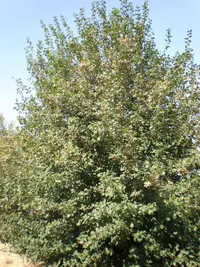
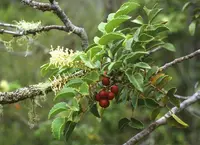
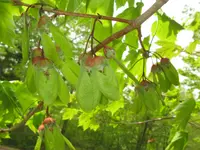
European hop-hornbeam, Ostrya carpinifolia, is a medium-sized deciduous tree grown mainly as an ornamental and shade tree in temperate landscapes. It belongs to the birch family and has a balanced, oval crown. The tree shows finely serrated, hop-like leaves that turn yellowish in autumn, and it produces distinctive hop-shaped fruit clusters that add seasonal interest. Ostrya carpinifolia is native to southern and central Europe and parts of western Asia, where it typically grows on rocky slopes and mixed woodlands. It is generally considered a resilient tree, moderately slow-growing but long-lived, and is not demanding if planted in reasonably fertile, well-drained soil. Understanding how to care for European Hop-hornbeam starts with choosing a site with good light and stable moisture.

Main Plant Requirements

Care Difficulty

Moderate Care

Light Preference

Full Sun

Water Requirements

Moderate Water

Temperature Preference

Cold Hardy

Hardiness Zone

5–7

Soil Texture

Loamy, Sandy, Clay

Soil pH

Acidic (5.5–6.5), Slightly acidic (6.5–7.0)

Soil Drainage

Well-drained

Fertilization

Minimal (feed rarely)

Get Personalized Care Plan

Scan your plant to receive care tips personalized for your specific plant

Available on iOS and Android

How to Care for the European Hop-hornbeam

This deciduous tree prefers bright outdoor conditions with a balance of sun and light shade.

  • Provide 4–6 hours of direct sun daily, ideally with morning sun and light afternoon shade to reduce leaf scorch in hot summers.
  • Site European Hop-hornbeam in an open position with dappled or filtered light during the hottest part of the day in warm climates.
  • Young trees benefit from a bit more shade, while mature trees tolerate more sun; in dense shade, expect sparse growth and thinner crowns.

This species prefers evenly moist but not saturated soil, especially while establishing.

  • Allow the top 3–5 cm of soil to dry between deep waterings during the first 2–3 growing seasons, focusing on slow, thorough soaking of the root zone.
  • Reduce supplemental watering in autumn and usually stop in winter once rainfall is sufficient, unless there is prolonged drought and soil becomes very dry and cracked.
  • Watch for yellowing, soft leaves as a sign of overwatering and very dry, curling leaves or premature leaf drop as signs that Ostrya carpinifolia needs more moisture.

This hardy tree tolerates a wide range of outdoor temperatures once established.

  • Optimal growth occurs around 60–77°F (16–25°C) during the main growing season, with stable spring and early summer temperatures promoting strong shoot and leaf development.
  • Mature trees tolerate winter lows down to about 0°F (−18°C), though young plants benefit from protection against severe frost and drying winter winds.
  • In hot summers, it withstands short periods up to about 95°F (35°C) if soil moisture is maintained; prolonged heat with drought can cause leaf scorch and early leaf drop.

This species is tolerant of a wide humidity range and usually does not need special humidity control outdoors.

Ostrya carpinifolia prefers stable, moderately moist mineral soils with strong structure and reliable drainage.

  • Use a deep, loamy soil with a mix of clay, silt, and sand to support the extensive root system.
  • Aim for a slightly acidic to neutral pH of about 6.0–7.5 for optimal nutrient availability.
  • Incorporate 10–20% well-rotted compost to improve structure, but avoid very peat-heavy or spongy mixes.
  • On compact or heavy sites, add coarse sand or fine gravel to enhance drainage and prevent prolonged saturation.

This tree is generally unsuitable for long-term container growing except as a short-term specimen or training plant.

  • Choose a very heavy, wide-based container to prevent tipping as the trunk thickens and the canopy gains mass.
  • Use a deep pot that allows a downward-tapping root to develop before it begins to circle and stress the plant.
  • Position the container where wind exposure is reduced, since a tall, leafed-out crown in a pot is more vulnerable to rocking.

This tree usually thrives in average garden soil with minimal feeding once established.

  • For young or stressed European Hop-hornbeam, use a balanced slow-release fertilizer (e.g., 10-10-10) in early spring.
  • Apply a light rate only, following label instructions rather than exceeding them.
  • In richer soils, use compost as a thin top-dressing instead of synthetic products.
  • Do not feed in late fall or winter, when the tree is dormant.

Ostrya carpinifolia benefits from light, structured pruning to maintain a healthy, balanced crown.

  • Carry out main pruning in late winter or very early spring before budbreak.
  • Remove dead, diseased, crossing, or storm-damaged branches with clean, sharp bypass pruners or a pruning saw.
  • Thin congested interior shoots to improve airflow and light penetration, avoiding heavy canopy removal.
  • Limit cuts to smaller branches to preserve the tree’s natural form and reduce stress.

This species is usually grown in the ground, so focus on careful transplanting rather than frequent repotting.

  • Shift young trees when dormant in late fall or early spring, before vigorous growth starts.
  • Look for signs such as circling roots in nursery containers or stunted growth indicating the need to move up a size.
  • Dig a wide planting hole, keep the rootball intact, and set the tree at the same soil level as before.
  • Water thoroughly after planting, apply a 5–8 cm mulch ring, and keep soil evenly moist to limit transplant shock.

Propagation of Ostrya carpinifolia is possible but slow, mainly done from seed under controlled conditions.

  • Collect ripe seed in fall and store dry and cool until treatment.
  • Provide cold stratification at about 34–41°F for several weeks to break dormancy, then sow in a free-draining mix.
  • Keep trays evenly moist and in bright, indirect light until germination and early growth stabilize.
  • Grow seedlings on in containers for 1–2 years before planting out, hardening off gradually.

This tree is generally cold hardy in suitable climates and needs only modest winter care once established.

  • Young trees benefit from a 5–8 cm mulch layer over the root zone, keeping mulch away from the trunk.
  • In very exposed sites, use a windbreak or burlap wrap around stakes to limit drying winds on young stems.
  • Container-grown plants should be moved to a sheltered, unheated area where the rootball does not freeze solid.

Care Tips

Early leader selection

In the first 3–5 years, choose one strong central leader and remove competing upright shoots during late winter to build a stable, wind‑resistant crown.

Windward staking strategy

On exposed sites, place 2–3 low stakes on the windward side only and use flexible ties so the young tree can move slightly, which encourages stronger trunk and root development.

Root flare inspection

When planting or mulching, expose the root flare at the base of the trunk and keep mulch pulled back 5–8 cm to reduce risk of rot and girdling roots over time.

Soil compaction management

Avoid regular vehicle or heavy foot traffic under the canopy and lightly topdress with compost every 1–2 years to improve structure in compacted soils and support fine root health when growing European Hop-hornbeam.

Catkin and fruit cleanup

Plan planting away from gutters, paved areas, and pond filters, or use seasonal ground nets or rakes in late spring to manage dropped catkins and hop-like fruits that can clog drainage systems.

Common Pests and Diseases

Leaf spot fungi

Symptoms include small brown to purplish spots on leaves that may merge into larger blotches, sometimes with a yellow halo. This disease appears more often in humid, shaded sites with poor air movement.

Solution

Remove and dispose of heavily spotted leaves and thin nearby vegetation to improve airflow and light penetration. Avoid overhead watering, keep foliage dry where possible, and if severe defoliation recurs, apply a copper- or chlorothalonil-based fungicide in early spring according to label directions as part of broader Ostrya carpinifolia care instructions.

Powdery mildew

This disease causes a white to gray powdery coating on the upper leaf surfaces, which can lead to leaf distortion and premature yellowing. Symptoms usually become more visible in late summer, especially in warm days and cool nights with high humidity.

Solution

Prune to open the canopy and reduce shade, then remove and discard the most affected leaves to reduce spore levels. In recurring cases, use a sulfur or potassium bicarbonate fungicide early in the season and avoid excess nitrogen fertilization that promotes soft, susceptible growth.

Leaf-mining insects

These insects create pale, winding tunnels or blotches inside the leaf tissue, often turning brown as the damaged tissue dies. This pest usually affects scattered leaves rather than the entire canopy but can be unsightly on young trees.

Solution

Prune off and dispose of heavily mined leaves early in the season to remove larvae before they mature. Encourage natural predators by avoiding broad-spectrum insecticides; if damage is severe on young trees, consider a targeted systemic insecticide applied by a certified arborist.

Aphids

These insects feed on sap from young shoots and leaf undersides, causing curling, distortion, and sticky honeydew that can lead to sooty mold on leaves and bark. This pest is more common on vigorous new growth, especially in spring and early summer.

Solution

Rinse colonies from shoots and leaf undersides with a strong stream of water and repeat as needed. For persistent infestations, use insecticidal soap or a light horticultural oil, applied in the early morning or evening to avoid leaf burn, and encourage beneficial insects such as lady beetles by minimizing chemical sprays.

Bacterial leaf scorch

Symptoms include marginal leaf browning that progresses inward, often with a narrow yellow band between green and dead tissue, leading to early leaf drop on individual branches. This disease is more likely in hot, dry conditions and can gradually thin the crown over several years.

Solution

Prune out and destroy affected branches during dry weather, sterilizing tools between cuts to limit spread. Reduce drought stress with deep, infrequent watering, maintain a mulch layer over the root zone, and avoid excessive pruning or fertilization; severely affected trees may require assessment and long-term management planning by an arborist.

Interesting Facts

Hard hop-like fruits

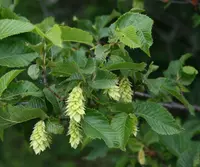
The tree produces small inflated papery bracts that hang in clusters and resemble hops, which is why it is commonly called European hop-hornbeam.

Extremely hard wood

Its very dense, tough wood was traditionally used for tool handles, cart wheels, and other applications where resistance to wear and mechanical stress was critical.

Indicator of ancient woodland

In parts of southern Europe, stable populations of this species often indicate long-continuous, relatively undisturbed woodland, so ecologists sometimes use it as a clue to forest history.

Botan icon

Did you know?

Charcoal made from this species has a particularly high energy content and was historically valued for specialist uses such as metallurgical processes, where steady, hot fires were needed.

FAQs about European Hop-hornbeam

This tree grows slowly to moderately, often adding 20–30 cm of height per year in good conditions. Over several decades it can reach about 10–18 m tall with a rounded, 8–12 m wide crown.

Grow Healthy Plants with Botan Care

Keep your plants happy and healthy with plant identification, disease detection, and easy care guidance.

Botan plant care app — identify plants on mobile

Explore More Plants