Andira coriacea Care

Andira coriacea

About Andira coriacea

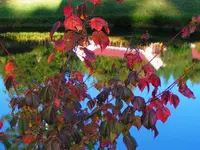
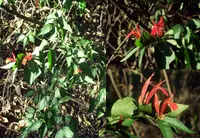
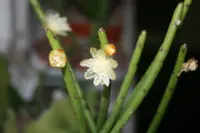
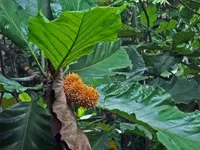
Andira coriacea is a medium to large tropical tree from the legume family, native to coastal and lowland forests of Central and South America. It is sometimes grown as an ornamental in warm climates. The tree forms a rounded to spreading crown, with dense, glossy compound leaves and clusters of purple to pinkish flowers, followed by hard, rounded fruits. Its strong wood and deep root system reflect its adaptation to windy, sandy, and seasonally dry habitats. For gardeners, the main considerations in how to care for Andira coriacea are its need for a frost-free climate, full sun, and well-drained soil, along with ample space for its mature size.

Main Plant Requirements

Care Difficulty

Moderate Care

Light Preference

Full Sun

Water Requirements

Moderate Water

Temperature Preference

Tropical / Frost Sensitive

Hardiness Zone

10–12

Soil Texture

Sandy, Loamy, Organic-rich

Soil pH

Acidic (5.5–6.5), Slightly acidic (6.5–7.0)

Soil Drainage

Well-drained

Fertilization

Minimal (feed rarely)

Get Personalized Care Plan

Scan your plant to receive care tips personalized for your specific plant

Available on iOS and Android

How to Care for the Andira coriacea

This sun-loving tropical tree needs strong light to fuel growth and flowering.

  • Provide 6–8 hours of direct sun daily; full sun is ideal, especially in open, frost-free landscapes where Andira coriacea is typically grown.
  • Tolerates light partial shade, such as 3–4 hours of morning sun plus bright, filtered light for the rest of the day, but flowering and canopy density may decrease.
  • In hot, low-latitude sites, protect young plants from harsh late-afternoon sun with light shade cloth or neighboring vegetation to reduce leaf scorch.

This species prefers evenly moist, well-drained soil once established in the ground.

  • Water deeply only when the top 5–8 cm of soil feel dry, allowing moisture to reach the deeper root zone without leaving the soil soggy.
  • Use fast-draining soil and avoid standing water; yellowing, soft leaves and a sour soil smell indicate overwatering, while dull, folding leaves and dry, cracked soil indicate underwatering.
  • During hot, dry seasons increase frequency slightly and mulch the root zone 5–8 cm deep; in cooler or rainy periods reduce watering to prevent root rot.

This tropical tree requires warm, frost-free conditions for healthy growth.

  • Optimal growth occurs at 70–90°F (21–32°C), with stable warmth supporting root activity, leaf production, and flowering.
  • Avoid temperatures below 50°F (10°C); foliage and young shoots can be damaged near 45°F (7°C), and freezing conditions can kill branches or entire plants.
  • Mature trees tolerate short heat spikes up to about 95–100°F (35–38°C) if soil moisture is adequate, but prolonged extreme heat with dry soil stresses the plant and slows growth.

This species tolerates a broad humidity range but grows best with moderate air moisture.

  • Aim for 40–60% humidity in cultivation, similar to average outdoor conditions in warm regions.
  • Leaves may curl, brown at the tips, or drop early if air stays very dry and hot.
  • Increase humidity with nearby vegetation, mulched soil surface, or grouping containers rather than misting foliage directly.

Provide deep, well-drained, slightly acidic to neutral soil to support long-term root development.

  • Use a loamy, sandy mix with 30–40% coarse sand plus organic matter such as compost to balance drainage and nutrient retention.
  • Target pH 6.0–7.0; amend very alkaline sites with composted organic material to reduce nutrient lockout.
  • Ensure rapid drainage; on compact or clayey ground, plant on a raised mound or berm to prevent waterlogging and root decline.
  • For container use, choose a chunky mix of compost, pine bark, and sand or perlite to maintain aeration around the taproot of Andira coriacea.

This tree is only moderately suitable for containers and is best kept potted for limited years or as a juvenile specimen.

  • Select a tall, heavy container to stabilize the developing taproot and reduce the risk of the pot tipping in wind.
  • Use a deep pot that is at least 2–3 times the height of the root ball to allow vertical root growth.
  • Place large containers on sturdy pot caddies or stands so they can be moved without disturbing the root system.

This species is a nutrient-efficient tropical tree that benefits from modest, targeted feeding in poor soils or containers.

  • Use a balanced slow-release fertilizer (around 10-10-10) or well-rotted compost in spring to support new growth.
  • Apply light doses every 8–10 weeks during the warm growing season in low-fertility sites or pots.
  • Reduce or stop feeding in cooler months when growth slows, especially outside its native climate range.
  • For container-grown Andira coriacea, dilute liquid fertilizer to 1/2 strength and apply to moist soil to avoid root burn.

Pruning is mainly used to maintain structure and remove damaged material on this medium to large tree.

  • Carry out light structural pruning at the end of the dry or cool season, before vigorous new growth starts.
  • Remove dead, diseased, crossing, or storm-damaged branches first to improve airflow and reduce decay.
  • Thin congested inner branches to develop a single strong leader and balanced canopy shape.
  • Use clean, sharp bypass pruners or a pruning saw, making smooth cuts just outside the branch collar.

This species is typically field-grown, so management focuses on transplanting young trees rather than long-term container culture.

  • Shift seedlings from nursery bags or pots once roots reach the drainage holes or circle the container walls.
  • Plan transplanting for the early rainy season or mild weather period to reduce water stress and encourage establishment.
  • Move trees every 1–2 years while young, stepping up only 1–2 pot sizes or into a permanent ground position.
  • Handle the root ball gently, keep roots shaded and moist, water deeply after planting, and use a temporary stake to limit movement.

Propagation of this tree is usually done by seed, and it requires patience and warm conditions.

  • Collect fully ripe seeds from healthy Andira coriacea trees and sow them fresh for best viability.
  • Scarify hard seed coats lightly with sandpaper and soak 12–24 hours to speed and even out germination.
  • Sow in a deep, well-drained, sterile mix, then keep at 75–85°F with consistently moist but not waterlogged conditions.
  • Provide bright, indirect light and good air circulation; transplant seedlings carefully once several true leaves have formed.

This tropical tree is not frost hardy and needs protection in regions with cool or freezing winters.

  • In USDA zones cooler than 10–11, grow Andira coriacea in large containers that can be moved indoors before frost.
  • Overwinter container plants in a bright, frost-free space kept ideally above 55°F with reduced watering.
  • For in-ground trees in marginal climates, apply a 5–8 cm organic mulch layer over the root zone, keeping it off the trunk.

Care Tips

Deep root establishment

During the first 2–3 years, use fewer but very deep waterings to encourage a strong taproot, applying water slowly over 30–40 minutes so it penetrates at least 30–40 cm into the soil profile.

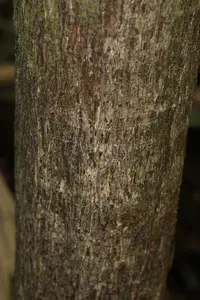
Wind-hardening young trees

In exposed sites, install low, flexible staking that allows slight trunk movement, then remove or loosen it annually so the trunk thickens and the tree develops good wind resistance.

Mulch management

Maintain a 5–8 cm organic mulch ring that stays 5–10 cm away from the trunk to stabilize soil moisture, reduce weed competition, and prevent bark rot at the base.

Nitrogen-fixation support

Because this species is a legume, avoid heavy nitrogen fertilizers and instead maintain soil health with compost and minimal disturbance so its root nodules can fix atmospheric nitrogen effectively.

Salt and spray protection

In coastal or roadside sites, periodically hose down foliage after strong salt-laden winds and use a slightly raised planting area to improve drainage and reduce salt accumulation when growing Andira coriacea.

Common Pests and Diseases

Seed-boring beetles

This pest targets stored or newly harvested seeds, tunneling inside and destroying the seed embryo. Symptoms include hollow or powdery seeds, small exit holes, and poor germination.

Solution

Discard infested seed lots, store viable seeds in airtight containers in cool, dry conditions, and if appropriate, briefly freeze small seed batches (sealed in bags) to kill remaining larvae. For living trees, collect and destroy heavily infested fallen pods and avoid long-term on-site seed storage to reduce local beetle populations when growing Andira coriacea for propagation or restoration projects.

Wood-boring beetles

These insects attack the trunk and larger branches, boring galleries in the wood that can weaken the tree and open pathways for secondary infections. Symptoms include small round exit holes, frass (sawdust-like material), and branch dieback.

Solution

Prune and remove dead or heavily infested branches, making clean cuts back to healthy wood, and destroy the prunings away from the site. Keep the tree vigorous with proper watering and soil management, avoid trunk injuries, and in higher-value plantings consider professional monitoring for borers and targeted trunk or systemic treatments if infestation is advanced.

Leaf spot

This disease causes small to medium brown or dark lesions on leaf surfaces, often with yellow halos, leading to premature leaf drop in humid conditions. Symptoms include scattered spots coalescing into larger patches on older foliage.

Solution

Collect and dispose of fallen, spotted leaves to reduce fungal spores, and improve air movement around the canopy by avoiding overcrowding and controlling competing vegetation. If the problem is recurrent and severe, use a registered copper-based or broad-spectrum fungicide during the early rainy season, following label directions and focusing on young, expanding foliage as part of Andira coriacea care instructions.

Powdery mildew

This disease forms a white or grayish powdery coating on young leaves and shoots, which can reduce photosynthesis and distort new growth. Symptoms include dull, pale foliage and slow growth during warm, humid, but not overly wet periods.

Solution

Increase light exposure where possible, reduce dense understory vegetation around young trees, and avoid overhead irrigation that keeps foliage moist for long periods. At early signs, remove heavily infected shoots on small specimens and, in persistent cases, apply a sulfur or potassium bicarbonate fungicide labeled for ornamental trees, coating both upper and lower leaf surfaces.

Interesting Facts

Toxic pink seeds

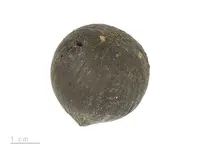
The tree produces hard, pink seeds that are highly toxic due to alkaloids and other secondary metabolites, which can poison livestock and humans if ingested.

Deep taproot strategy

This species develops a strong, deep taproot that allows it to access water from deeper soil layers, helping it tolerate the long dry seasons typical of parts of its native range in Brazil and neighboring regions.

Nitrogen‑fixing legume

As a member of the legume family (Fabaceae), this tree forms symbiosis with nitrogen‑fixing bacteria in its roots, enriching poor tropical soils with bioavailable nitrogen and supporting surrounding vegetation.

Botan icon

Did you know?

The dense, durable wood of this species has been locally valued and used in Brazil for heavy construction and rural structures, which has contributed to regional extraction pressure and localized population declines in some areas.

FAQs about Andira coriacea

This species is a slow to moderate-growing tropical tree, often adding 20–40 cm of height per year when young. In suitable outdoor conditions it can eventually reach 8–15 m tall with a broad canopy.

Grow Healthy Plants with Botan Care

Keep your plants happy and healthy with plant identification, disease detection, and easy care guidance.

Botan plant care app — identify plants on mobile

Explore More Plants