Rhipsalis floccosa Care

Rhipsalis floccosa

About Rhipsalis floccosa

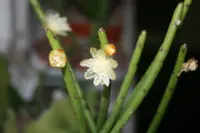
Rhipsalis floccosa is an epiphytic cactus from tropical forests in South America, where it grows on trees rather than in desert soil. It forms long, thin, branching stems with a soft, shaggy look that can trail elegantly from pots and hanging baskets.

This species prefers bright, filtered light and steady, moderate moisture, reflecting its understory rainforest origins. It suits indoor spaces well because it tolerates typical home temperatures and is more forgiving of irregular watering than many desert cacti. For anyone learning how to care for Rhipsalis floccosa, its flexible light needs and relatively slow growth make it a manageable, low-stress plant.

Main Plant Requirements

Care Difficulty

Moderate Care

Light Preference

Bright Indirect Light

Water Requirements

Moderate Water

Temperature Preference

Tropical / Frost Sensitive

Hardiness Zone

11–12

Soil Texture

Sandy, Loamy, Organic-rich

Soil pH

Acidic (5.5–6.5), Slightly acidic (6.5–7.0)

Soil Drainage

Moist but well-drained

Fertilization

Light (every 4–6 weeks)

Get Personalized Care Plan

Scan your plant to receive care tips personalized for your specific plant

Available on iOS and Android

How to Care for the Rhipsalis floccosa

This epiphytic cactus prefers bright, indirect light that mimics dappled forest conditions.

  • Provide 6–8 hours of bright, filtered light each day, such as near an east- or north-facing window or under light tree canopy outdoors.
  • Tolerates partial shade, but in very low light stems become pale, thin, and stretched, so move Rhipsalis floccosa gradually to a brighter spot if growth is weak.
  • Avoid harsh midday and afternoon sun; strong west or unshaded south exposure can cause yellow patches, scorched tips, and overall stress, especially in summer.

This species prefers lightly moist, fast-draining substrate rather than the very dry conditions of desert cacti.

  • Water thoroughly when the top 2–4 cm of the mix feels dry, allowing excess to drain; frequency may range from every 7–14 days depending on light, temperature, and pot size.
  • Reduce watering in winter when growth slows, keeping the mix just barely moist and avoiding long periods of saturation in cool conditions.
  • Watch for signs: limp, wrinkled stems suggest underwatering, while blackened stem bases, a sour smell, or fungus gnats often indicate overwatering and poor drainage.

This forest cactus prefers mild, stable temperatures without frost or extreme heat.

  • Aim for 65–80°F (18–27°C) for best growth, with gentle air movement but no strong drafts from doors, heaters, or air conditioners.
  • Protect from cold; growth slows below about 55°F (13°C), and exposure near or below 40°F (4°C) can cause tissue damage, especially if the soil is wet.
  • In hot spells above 86°F (30°C), increase shade and ventilation, and avoid placing the plant against heat-reflective surfaces that can overheat stems.

This epiphytic cactus prefers moderate indoor humidity and usually adapts well to typical home conditions.

  • Aim for 40–60% humidity; it tolerates brief dips lower but sustained very dry air can slow growth.
  • Crisping stem tips or dull, wrinkled segments can signal humidity stress combined with underwatering.
  • Increase humidity by grouping plants, placing the pot on a pebble tray with water below the pot base, or running a small humidifier nearby.

Use a loose, fast-draining, organic-rich mix that mimics an airy forest floor for Rhipsalis floccosa.

  • Combine roughly 40% fine orchid bark, 30% cactus mix or sandy potting mix, and 30% perlite or pumice for both drainage and moisture retention.
  • Ensure the mix feels springy and open; roots should have air spaces, not a compact, heavy mass that stays wet for days.
  • Aim for slightly acidic to neutral pH around 5.5–7.0, avoiding strongly alkaline mixes that can limit nutrient availability.
  • Avoid dense garden soil, straight peat, or mixes that form clumps, and add extra perlite or bark if water does not drain through within a few seconds.

This species is very suitable for container growing, especially in hanging baskets or elevated pots.

  • Choose a wide, shallow pot that matches its spreading, cascading root system instead of a deep, narrow container.
  • Use a lightweight mix and secure hanging containers firmly to support the plant’s increasing trailing mass over time.
  • Prefer breathable materials like terracotta if you tend to overwater, as they allow faster moisture loss from the sides of the root zone.

Light feeding supports steady growth without overloading this epiphytic cactus.

  • Use a balanced liquid cactus or houseplant fertilizer (around 10-10-10 or 20-20-20) diluted to 1/4–1/2 strength.
  • Feed Rhipsalis floccosa every 4–6 weeks in spring and summer only, on already moist soil.
  • Skip or greatly reduce feeding in fall and winter when growth slows.
  • Avoid organic compost in pots; choose clean, low-salt, synthetic or specialized cactus formulas.

Pruning is mainly used to keep this hanging cactus tidy and to control length.

  • Best time for light pruning is late spring to early summer after main growth starts.
  • Remove dead, shriveled, or damaged stems with clean, sharp scissors or bypass snips.
  • Thin out crowded or tangled segments to improve air flow and show the plant’s form.
  • Shortening long stems slightly can encourage branching and a fuller Rhipsalis floccosa outline.

Repotting is infrequent and aims to refresh the loose, airy potting mix.

  • Check for roots circling the container, pushing through drainage holes, or slow growth as signs to move Rhipsalis floccosa up 1 pot size.
  • Plan repotting every 2–3 years in spring, when new growth begins and stress is lowest.
  • Use a shallow pot with drainage and a very airy mix such as cactus soil blended with extra perlite or bark.
  • Water lightly after repotting and keep in bright, indirect light for 1–2 weeks to limit root shock.

Propagation is most successful from stem cuttings taken in the warm months.

  • Take 5–10 cm healthy segments of Rhipsalis floccosa in late spring or summer using clean scissors.
  • Let cut ends dry and callus for 1–2 days to reduce rot risk before planting.
  • Set callused ends into a slightly moist, airy cactus mix and keep at 70–80°F in bright, indirect light.
  • Maintain lightly moist, not wet, substrate and good air flow until roots form in 3–6 weeks.

This cactus is not frost hardy and needs mild, stable conditions in winter.

  • Keep Rhipsalis floccosa indoors or in a heated space when outdoor temperatures drop near 40°F.
  • Aim for a cool to moderate room, around 60–70°F, with bright, indirect light.
  • Water less often in winter, allowing most of the potting mix to dry before rewatering to prevent root rot.
  • Keep away from cold drafts, uninsulated windows, and heating vents that cause rapid temperature swings.

Care Tips

Stabilize Hanging Pots

Use a wide, heavy cachepot or add weight (such as small stones) to the outer pot or basket to keep long, trailing stems from tipping lightweight containers as they gain length and mass.

Rotate For Even Trails

Rotate the pot 90° every 2–3 weeks so the stems receive light from all sides, which encourages uniform trailing rather than all growth leaning toward one direction.

Support With Soft Ties

If stems tangle or snag in high-traffic areas, gently gather sections and secure them to a hoop, trellis, or hanging ring using soft plant ties or strips of fabric to prevent breakage at the stem base.

Dust-Free Stems

Periodically clean the stems with a soft brush or a gentle burst of air from a hand blower so the fine, bristly surfaces stay free of dust that can harbor pests and reduce light absorption.

Quarantine New Plants

Always isolate newly purchased or gifted plants for 10–14 days before placing them nearby, as a simple quarantine greatly lowers the risk of mealybugs or scale spreading when caring for Rhipsalis floccosa.

Common Pests and Diseases

Mealybugs

This pest feeds on the segmented stems, often hiding in crevices and between hanging joints, where it sucks sap and weakens the plant. Symptoms include cottony white clusters, sticky honeydew, and gradual stem yellowing or collapse.

Solution

Remove visible colonies with a cotton swab dipped in 70% isopropyl alcohol, then rinse the plant gently with lukewarm water, allowing it to dry in bright, indirect light. For heavier infestations, repeat alcohol swabbing every 5–7 days and use a ready-to-use insecticidal soap, ensuring good coverage of joints and undersides of stems.

Scale insects

These insects appear as small, flat or dome-shaped brown bumps on stems, often blending with the plant’s branching structure while feeding on sap. Symptoms include patchy yellowing, reduced growth, and sticky residue near the pot or on nearby surfaces.

Solution

Gently scrape or peel off individual scales with a fingernail or soft tool, then wipe stems with a cloth lightly moistened with 70% isopropyl alcohol. Follow up with 2–3 treatments of horticultural oil or insecticidal soap at 7–10 day intervals, and increase light and air movement to help the plant recover.

Spider mites

This pest thrives on thin, hanging stems in warm, dry indoor conditions, puncturing tissue and causing a fine speckling or dull, grayish cast. Symptoms include very fine webbing between joints and at stem tips, along with leafless segments that look dusty or tired.

Solution

Shower the plant with a gentle but thorough stream of lukewarm water, focusing on stem joints and undersides, then let it dry with good airflow. If mites persist, apply insecticidal soap or a neem oil spray every 5–7 days for several cycles and maintain higher humidity and slightly cooler temperatures to discourage reinfestation.

Soft stem rot

This disease affects overwatered or poorly drained plants, causing water-soaked, translucent, and mushy stem segments that may develop a foul odor. Symptoms include sudden collapse of hanging chains from the affected point downward, even while upper parts may still look green.

Solution

Immediately cut away all soft, discolored segments back to firm, healthy tissue and discard infected material, including any fallen pieces in the pot. Allow the plant and soil surface to dry, improve drainage, and water only when the upper mix is fully dry; healthy uninfected segments can be rooted in fresh, well-draining cactus mix as a backup plant.

Edema

This disorder occurs when roots take up water faster than stems can transpire it, especially in cool, low-light indoor conditions. Symptoms include small corky spots, blisters, or rough patches along stems, without the soft, wet feel of rot.

Solution

Reduce watering frequency, ensuring the potting mix dries well between waterings, and provide brighter indirect light along with better air circulation. Keep the plant in a stable, warm environment and use a very free-draining cactus or epiphytic cactus mix to prevent future water imbalance, which supports more stable Rhipsalis floccosa indoor care.

Interesting Facts

Epiphytic rainforest cactus

This species naturally grows as an epiphyte, anchoring itself on tree branches in humid forests rather than rooting in soil on the ground, which is why its roots are shallow and adapted to airy, organic substrates.

Woolly areoles and stems

The species name floccosa refers to the distinctive woolly, cotton-like tufts that form in its areoles, giving the slender segmented stems a slightly fuzzy appearance compared with many other Rhipsalis species.

Small white berry fruits

After pollination, it produces small, globose white berries that resemble tiny translucent pearls and serve as food for birds that help disperse the seeds in its native range.

Botan icon

Did you know?

This species belongs to one of the very few cactus lineages that evolved naturally outside the Americas, with some populations of related Rhipsalis taxa extending into parts of Africa and islands in the Indian Ocean, which makes its biogeographic history notable among cacti.

FAQs about Rhipsalis floccosa

Growth is generally moderate. New segments appear mainly in spring and summer, with noticeable length gain each year. In good conditions, stems may extend 10–20 cm annually, slowing in low light, cool temperatures, or when rootbound.

Grow Healthy Plants with Botan Care

Keep your plants happy and healthy with plant identification, disease detection, and easy care guidance.

Botan plant care app — identify plants on mobile

Explore More Plants