Early stem training
While stems are still flexible, lightly stake and tie the main shoots to encourage a single sturdy trunk or a balanced multi-stem form, using soft ties that do not cut into the bark.

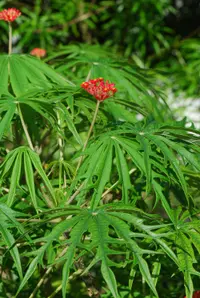
Coralbush, Jatropha multifida, is a tropical shrub or small tree known for its deeply cut, palmate leaves and bright coral-red flower clusters. It has an airy, architectural look that suits warm gardens and bright indoor spaces. Native to Mexico and Central America, it is commonly grown in frost-free regions and as a container plant that can be moved indoors. The plant prefers strong light, warm temperatures, and well-drained soil, which makes it relatively easy to manage if kept dry between waterings. Understanding how to care for Coralbush starts with providing stable warmth and avoiding excess moisture around the roots.

Care Difficulty
Moderate Care

Light Preference
Full Sun

Water Requirements
Low Water

Temperature Preference
Tropical / Frost Sensitive

Hardiness Zone
10–11

Soil Texture
Sandy, Loamy, Organic-rich

Soil pH
Acidic (5.5–6.5), Slightly acidic (6.5–7.0)

Soil Drainage
Well-drained

Fertilization
Light (every 4–6 weeks)
Scan your plant to receive care tips personalized for your specific plant
Available on iOS and Android
Jatropha multifida prefers bright, warm conditions that mimic its native tropical habitat.
This drought-tolerant shrub prefers deep but infrequent watering in fast-draining soil.
This species thrives in consistently warm climates and reacts poorly to cold or sudden temperature drops.
This species tolerates typical indoor humidity but benefits from slightly raised levels in very dry homes.
Jatropha multifida prefers a very well-drained, gritty growing medium that mimics dry, rocky soils.
This plant adapts well to container culture when given stable, well-drained conditions.
Jatropha multifida benefits from light, controlled feeding during the warm growing season.
Pruning helps maintain structure and flowering performance in Jatropha multifida.
Container-grown Jatropha multifida needs infrequent repotting but responds well to careful handling when moved.
Jatropha multifida is commonly propagated from semi-woody stem cuttings or seeds under warm conditions.
This tropical shrub is frost-sensitive and requires specific winter care in cooler climates.

Plant Health Check
Not sure what's wrong with your plant? Check your plant's health inside the app.
This species has deeply divided, lacy leaves that look similar to a fern, but anatomically they are thick, water-storing succulent leaves adapted to withstand drought in its native dry tropical habitats.
All parts of this plant contain a white latex rich in diterpene esters, which are irritant compounds; the sap can cause skin irritation and is toxic if ingested by humans or pets.
It produces small, bright red to coral-colored flowers in branched clusters that provide abundant nectar and are particularly attractive to butterflies in tropical and subtropical gardens.

In some regions, this species is occasionally used as a living fence or boundary plant because its rapid growth, drought tolerance, and toxicity to browsing animals help protect property lines and other more vulnerable plantings.
Lack of flowering usually comes from insufficient light, cool temperatures, or excessive nitrogen fertilizer. Old, exhausted potting mix and a pot that is too large also reduce blooms. Moderate feeding and bright, warm conditions support reliable flowering.
Keep your plants happy and healthy with plant identification, disease detection, and easy care guidance.