Wind exposure management
In very windy coastal sites, use temporary windbreak fabric or plant on the leeward side of a fence or dune to reduce sandblasting and prevent desiccation of young shoots during the first 2–3 years.


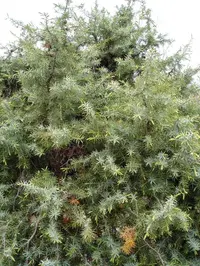
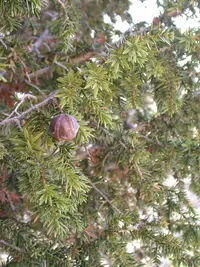
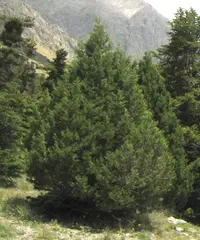
Large-fruited juniper, Juniperus macrocarpa, is a coastal evergreen conifer known for its dense, rounded form and unusually large, fleshy cones that resemble berries. It typically grows as a low shrub or small, wind-shaped tree on sandy dunes and rocky shores around the Mediterranean. The plant is adapted to harsh, dry, and salty conditions, which makes it tough but slow-growing in cultivation. Its tolerance of poor, well-drained soils and wind exposure can make it a resilient choice for coastal or xeric gardens. Understanding how to care for Large-fruited Juniper starts with providing strong light, good drainage, and avoiding consistently wet soil.

Care Difficulty
Moderate Care

Light Preference
Full Sun

Water Requirements
Low Water

Temperature Preference
Cold Hardy

Hardiness Zone
7–9

Soil Texture
Sandy, Loamy, Rocky

Soil pH
Slightly acidic (6.5–7.0), Neutral (7.0)

Soil Drainage
Well-drained

Fertilization
Minimal (feed rarely)
Scan your plant to receive care tips personalized for your specific plant
Available on iOS and Android
This coastal juniper thrives in strong light and benefits from several hours of direct sun daily.
This drought-tolerant shrub prefers infrequent, deep watering once established.
This Mediterranean native tolerates a wide temperature range but grows best in mild, coastal-type conditions.
This coastal juniper is adapted to dry air and usually does not need special humidity control.
Juniperus macrocarpa prefers mineral, fast-draining soil that mimics its native coastal sands.
This species can be grown in containers outdoors if the pot setup supports its spreading, woody root system.
Juniperus macrocarpa usually needs minimal feeding, especially in the ground on reasonably fertile soil.
Light, careful pruning keeps Juniperus macrocarpa dense and healthy without spoiling its natural form.
This coastal juniper is usually grown in the ground; transplant only when clearly necessary.
Juniperus macrocarpa is typically propagated by cuttings, which root slowly but give true-to-type plants.
This species is quite cold hardy and usually needs little winter care in most temperate coastal climates.

Plant Health Check
Not sure what's wrong with your plant? Check your plant's health inside the app.
This species is naturally restricted to coastal sand dunes around the central and eastern Mediterranean, where it stabilizes loose sand and helps build dune structure over time.
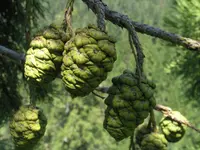
Its berry-like seed cones are among the largest of any juniper, often reaching 1–1.5 cm across, which is why it is commonly called large-fruited juniper.
Populations grow within reach of strong sea winds and salt spray, and the foliage shows morphological adaptations such as thick, leathery scale leaves that help limit water loss and salt damage.
Genetic and ecological studies have shown that this species often forms low, sprawling shrubs rather than tall trees, a growth form that reduces wind exposure and sand abrasion in its exposed dune habitats and distinguishes it from many inland junipers.
This species is an evergreen conifer, keeping its scale-like foliage year-round. Older inner shoots may brown and shed gradually, but the plant does not have a pronounced leaf-drop season like deciduous shrubs and trees.
Keep your plants happy and healthy with plant identification, disease detection, and easy care guidance.