Prickly Juniper Care (Juniperus oxycedrus)

Also known as: cade juniper, western prickly juniper
Prickly Juniper

About Prickly Juniper

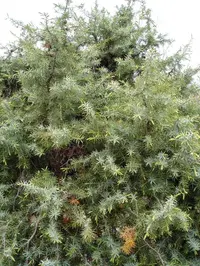
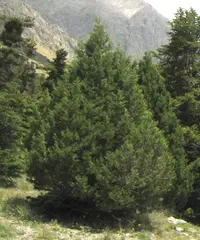
Prickly juniper, Juniperus oxycedrus, is an evergreen coniferous shrub or small tree known for its sharp, needle-like foliage and dense, bushy form. It often develops multiple stems and can become a rugged, sculptural plant with age.

This species is native to dry, rocky slopes and coastal areas around the Mediterranean region. Its tough leaves and deep root system make it highly tolerant of drought, wind, and poor, stony soils.

These natural adaptations mean it is generally low-maintenance once established, though slow growth and sharp needles require thoughtful placement and handling. It prefers full sun, well-drained soil, and minimal summer watering, which guides how to care for Prickly Juniper in gardens or large containers.


Main Plant Requirements

Care Difficulty

Easy Care

Light Preference

Full Sun

Water Requirements

Low Water

Temperature Preference

Cold Hardy

Hardiness Zone

6–9

Soil Texture

Sandy, Loamy, Rocky

Soil pH

Slightly acidic (6.5–7.0), Neutral (7.0)

Soil Drainage

Well-drained

Fertilization

Minimal (feed rarely)

Get Personalized Care Plan

Scan your plant to receive care tips personalized for your specific plant

Available on iOS and Android

How to Care for the Prickly Juniper

This sun-loving shrub thrives in open, bright conditions from an early age.

  • Provide full sun for 6–8 hours daily; Prickly Juniper develops denser foliage, better color, and stronger wood in open exposure.
  • Tolerates light partial shade, especially with morning sun and light afternoon shade, but too much shade causes sparse, elongated growth and reduced vigor.
  • In hot summers, young plants benefit from light afternoon shade and mulch to reduce root stress, while older plants handle intense sun if soil is not waterlogged.

This drought-tolerant shrub prefers infrequent, deep watering in well-drained soil.

  • Before watering, let the top 5–8 cm of soil dry; in the ground this often means waiting until the soil feels dry and loose, not cool and sticky.
  • During the first 1–2 growing seasons, water slowly and deeply, then allow soil to dry; a mature Juniperus oxycedrus usually needs supplemental water only in extended droughts.
  • Overwatering shows as yellowing, dropping foliage and a sour soil smell, while chronic underwatering leads to browning tips; amend heavy clay with grit to improve drainage.

This hardy shrub tolerates a wide temperature range once established.

  • Optimal growth occurs around 60–80°F (16–27°C), with steady root development and balanced shoot growth in these conditions.
  • Tolerates winter cold down to about 0°F (−18°C) once established, though young plants benefit from protection from harsh wind and rapid freeze–thaw cycles.
  • In hot climates with summer highs above 90°F (32°C), provide mulch and avoid reflected heat from walls or pavement to limit root stress and foliage scorch.

This species thrives in relatively dry air and usually does not need special humidity management.

  • Target 30–50% humidity, similar to typical indoor air, when growing Prickly Juniper in pots.
  • Dry air is well tolerated, but constantly damp foliage can raise disease risk.
  • If air is extremely dry and hot, stress may show as browning tips; improve airflow rather than misting to reduce fungal issues.

Juniperus oxycedrus prefers lean, mineral soils that drain quickly and never stay waterlogged.

  • Use a gritty mix such as 50–60% coarse sand or fine gravel with 40–50% loam or low-peat potting soil for structure.
  • Ensure very sharp drainage; add extra perlite or pumice if water sits on the surface for more than a few minutes.
  • Aim for slightly acidic to neutral pH around 6.0–7.5, avoiding strongly acidic or alkaline extremes that reduce nutrient availability.
  • Avoid heavy clay, high-peat, or constantly moist mixes, which limit aeration and promote root rot in this drought-adapted conifer.

This species can be grown in containers if the pot is chosen and managed for stability and fast drainage.

  • Select a deep, heavy pot that resists tipping as the woody top growth becomes taller and more wind-exposed outdoors.
  • Choose unglazed clay or porous stone containers to allow faster evaporation from the sides in wet climates.
  • Raise the pot slightly on feet or blocks so drainage holes stay clear and excess water leaves the root zone quickly after rain.

This drought-tolerant conifer needs only light feeding in most garden soils, so fertilization is modest for Prickly Juniper.

  • Use a balanced, slow-release granular fertilizer (for example 10-10-10) or a thin layer of compost on established plants.
  • Apply once in spring during active growth; avoid midsummer and late-fall applications to prevent soft, frost-prone growth.
  • Use 1/2–3/4 of the label rate on in-ground plants, especially in poor, dry sites.
  • Container-grown specimens benefit from a diluted balanced liquid feed at 1/4–1/2 strength every 4–6 weeks in spring–summer.

Juniperus oxycedrus needs only light, strategic pruning to maintain health and natural form.

  • Best time is late winter to early spring before new growth starts, avoiding very hard frosts.
  • Remove dead, diseased, or storm-damaged branches first, cutting back to healthy wood with clean, sharp bypass pruners or a small saw.
  • Thin crowded inner branches slightly to improve airflow and light, which reduces fungal problems.
  • Limit cuts to green, younger shoots; avoid heavy cuts into old, brown wood, which rarely resprouts and can deform shape.

This species is usually grown in the ground, so focus on careful transplanting rather than frequent repotting.

  • Transplant young plants in early spring or early fall, when temperatures are mild and soil is workable.
  • Look for signs like slow growth, roots circling a container, or plants drying out quickly as cues to shift to a larger pot or ground site.
  • Transplant every 3–5 years at most, choosing a sunny, well-drained spot with gritty or sandy soil.
  • Reduce root stress by watering deeply the day before, handling the root ball gently, backfilling with native soil, and watering well afterward.

Juniperus oxycedrus is most often propagated from semi-hardwood cuttings, which root slowly but reliably under the right conditions.

  • Take semi-hardwood cuttings in late summer to early fall from healthy, non-flowering shoots 7–10 cm long.
  • Remove lower foliage, lightly wound the base, and dip in rooting hormone to encourage root formation.
  • Insert cuttings into a very free-draining mix (for example 50% perlite, 50% coarse sand or grit) and keep just slightly moist.
  • Provide bright, indirect light and cool, stable temperatures; expect rooting to take several months before potting on.

This juniper is naturally cold hardy and usually needs minimal winter care in the ground across most temperate climates.

  • In colder areas, apply a 5–8 cm mulch layer around the root zone, keeping it slightly away from the trunk to limit rot.
  • Container plants are more exposed; move pots to a sheltered spot, such as against a south-facing wall, to moderate temperature swings.
  • Brush off heavy, wet snow from branches to reduce the risk of breakage while allowing normal frost exposure.

Care Tips

Wind exposure management

Site plants where they receive good air movement but are protected from the strongest prevailing winter winds, or use a temporary windbreak (such as shade cloth or slatted fencing) for young specimens in very exposed locations to reduce desiccation and breakage.

Root flare protection

Keep mulch and soil pulled back 5–8 cm from the trunk to expose the root flare and prevent bark rot, which is especially important for long-term health in heavy or irrigated landscapes.

Low-input weed control

Use a 5–8 cm layer of coarse, inert mulch such as gravel or crushed stone around the drip line to suppress weeds without holding excess moisture near the crown, which suits this species’ preference for drier conditions.

Targeted pest monitoring

Inspect foliage several times during spring and early summer for spider mites and scale insects, tapping branches over white paper and treating early with a directed horticultural oil spray if populations start to build.

Form-shaping training

While plants are young, selectively tie flexible branches to discreet, sturdy stakes to guide their outline and create a stable framework, rather than relying on heavy pruning later to control shape when growing Prickly Juniper.

Common Pests and Diseases

Juniper rust

This disease causes orange to rust-brown swellings or galls on young stems and sometimes orange, jelly-like spore masses during wet weather. Symptoms include dieback of affected twigs and reduced vigor in heavily infected plants.

Solution

Prune out and discard infected twigs and galls during dry weather, cutting several cm below visible symptoms, and disinfect pruning tools between cuts. Improve air circulation around plants, avoid overhead watering, and in high-pressure areas consider a registered fungicide labeled for juniper rust, applied at bud break and repeated as directed.

Phomopsis tip blight

This disease affects young shoots, which turn dull green, then reddish-brown and die back from the tip inward, often in spring or early summer. Symptoms include scattered dead tips while older interior foliage remains green.

Solution

Clip off and discard blighted tips, cutting back into healthy wood, and keep the shrub thinned to improve airflow. Avoid wetting foliage late in the day and, in landscapes with a history of tip blight, use a labeled protective fungicide at the start of new growth and after prolonged wet periods, following label directions carefully.

Cypress aphids

These insects feed on sap of young shoots, causing yellowing, bronzing, and premature needle drop, often along sections of stems. This pest also produces sticky honeydew that can lead to sooty mold on nearby surfaces.

Solution

Inspect inner shoots regularly and, at early signs, wash colonies off with a strong but controlled stream of water, focusing on undersides of shoots. For heavier infestations, introduce or conserve natural predators such as lady beetles and, if needed, apply a horticultural soap or light horticultural oil thoroughly to affected areas, repeating as the product label recommends.

Juniper scale

This pest appears as small, gray-white, oyster-shaped bumps on needles and twigs, leading to overall dulling of foliage, yellowing, and gradual decline. This pest weakens plants by removing sap and can make them more susceptible to other stressors.

Solution

Prune out heavily infested branches and dispose of them, then target the crawler stage (young mobile insects) with horticultural oil or insecticidal soap, ensuring full coverage of needles and twigs. Maintain plant vigor with correct watering and avoid high-nitrogen fertilizer, which can favor scale outbreaks in the context of Juniperus oxycedrus plant care.

Spider mites

These pests thrive in hot, dry conditions and cause fine stippling, bronzing, and eventual browning of needles, often with delicate webbing between shoots. Symptoms include a dusty appearance to foliage and leaf drop when populations are high.

Solution

Rinse foliage thoroughly with water, including inner branches, once or twice per week during hot, dry weather to reduce mite numbers. For persistent infestations, use horticultural oil or a miticidal soap labeled for conifers, applied in cooler parts of the day, and keep the plant adequately watered to reduce drought stress without creating waterlogged soil.

Interesting Facts

Mediterranean fire survivor

This species is native to dry, rocky slopes around the Mediterranean Basin and often colonizes fire-prone scrub, showing strong resilience to heat, drought, and recurrent wildfires in its natural habitat.

One of the prickliest junipers

It is distinguished from many other junipers by its very sharp, rigid needles arranged in whorls of three, with each needle bearing a conspicuous pale band on the upper surface.

Large reddish cones

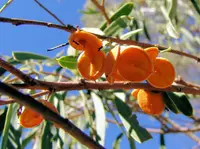
Its seed cones mature into relatively large, reddish to orange-brown, berry-like structures that take about 18 months to ripen and are readily eaten and dispersed by birds in Mediterranean ecosystems.

Botan icon

Did you know?

The wood of this species is notably dense and resinous, with a characteristic aroma, and has been traditionally valued in parts of the Mediterranean region for small turnery objects, fence posts, and charcoal due to its durability and slow combustion.

FAQs about Prickly Juniper

This species can adapt well to containers if given a deep pot, very sharp drainage, and full sun. Use gritty, low-organic soil, avoid overwatering, and protect pots from prolonged freezing to support growing Prickly Juniper successfully.

Grow Healthy Plants with Botan Care

Keep your plants happy and healthy with plant identification, disease detection, and easy care guidance.

Botan plant care app — identify plants on mobile

Explore More Plants