Root zone protection
Apply a 5–8 cm ring of coarse gravel or woody mulch outside the trunk flare to reduce soil compaction, but always keep a 10–15 cm bare collar around the base to prevent rot in this desert-adapted tree.

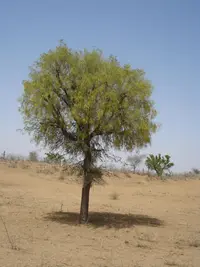
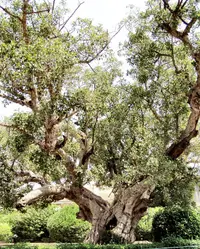
Jand, Prosopis cineraria, is a drought-tolerant desert tree valued for its resilience and shade. It has a deep root system, fine feathery leaves, and thorny branches. Mature trees form a broad, light canopy that filters strong sun rather than creating dense shade. Small yellowish flower spikes and seed pods appear seasonally. This species is native to arid regions of South Asia and the Middle East, where it grows in very dry, sandy or gravelly soils. Its strong tolerance of heat, drought, and poor soil makes it hardy, but it dislikes waterlogged conditions. In cultivation, understanding how to care for jand starts with providing high light, low to moderate moisture, and sharply draining soil.

Care Difficulty
Easy Care

Light Preference
Full Sun

Water Requirements
Low Water

Temperature Preference
Warm Climate

Hardiness Zone
9–11

Soil Texture
Sandy, Loamy, Rocky

Soil pH
Neutral (7.0), Slightly alkaline (7.0–7.5)

Soil Drainage
Well-drained

Fertilization
Minimal (feed rarely)
Scan your plant to receive care tips personalized for your specific plant
Available on iOS and Android
Prosopis cineraria thrives in strong sun typical of arid and semi-arid climates.
This desert-adapted tree prefers deep, infrequent watering and dry conditions between irrigations.
This species is highly heat tolerant but sensitive to prolonged cold and frost.
This desert tree tolerates very dry air and humidity management is rarely necessary indoors or outdoors.
This species prefers very well-drained, lean, sandy soil that mimics arid habitats.
This species can be grown in containers when young, mainly in dry, sunny outdoor settings.
Prosopis cineraria, or jand, usually needs minimal fertilization when grown in the ground with reasonably healthy soil.
Pruning Prosopis cineraria is mainly done to maintain a safe, open structure and remove damaged material.
This species is usually grown in the ground, so focus on careful transplanting rather than frequent container repotting.
Prosopis cineraria is most commonly propagated from seed, which suits its deep-rooting, drought-tolerant habit.
Prosopis cineraria is adapted to hot, arid climates and may suffer in regions with prolonged freezing winters.

Plant Health Check
Not sure what's wrong with your plant? Check your plant's health inside the app.
This species forms the structural backbone of many arid woodland ecosystems in northwestern India and surrounding regions, providing shade, leaf litter, and habitat that allow less drought-tolerant plants and animals to survive in extreme heat.
It hosts symbiotic bacteria in its root nodules that convert atmospheric nitrogen into plant-available forms, gradually improving soil fertility in very poor, sandy or degraded soils.
Mature trees can develop exceptionally deep taproots that allow access to groundwater far below the surface, which is why this species remains green and productive through long dry seasons when many other trees defoliate.

This tree is legally protected as the state tree of Rajasthan (India), where cutting or severely damaging mature specimens is heavily restricted because of its central role in traditional agroforestry, sand dune stabilization, and rural livelihoods in the Thar Desert.
Yes, this desert tree is usually propagated from seed. Pods must be fully ripe, seeds cleaned, and hard coats scarified or soaked in warm water. Sow in deep containers with very well-draining sandy mix and full sun.
Keep your plants happy and healthy with plant identification, disease detection, and easy care guidance.