Palma China yucca Care (Yucca filifera)

Also known as: St Peter's palm, tree yucca, Mexican tree yucca
Palma China yucca

About Palma China yucca

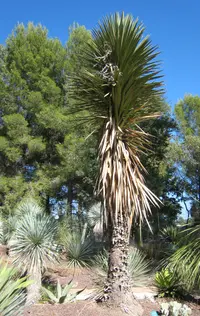
Palma China yucca (Yucca filifera) is a large, tree-forming yucca known for its tall trunk and dense crown of stiff, sword-like leaves. It has a strong architectural presence and is often used as a focal point in dry landscapes.

This species is native to arid and semi-arid regions of northern and central Mexico, where it thrives in rocky, well-drained soils. It is naturally adapted to strong sun, low rainfall, and high temperatures.

Yucca filifera is generally slow-growing but long-lived, and it becomes easier to manage once established due to its drought tolerance and low nutrient needs. It suits plant owners who prefer sturdy, low-maintenance specimens and want to learn how to care for Palma China yucca in warm, bright conditions.

Main Plant Requirements

Care Difficulty

Easy Care

Light Preference

Full Sun

Water Requirements

Low Water

Temperature Preference

Warm Climate

Hardiness Zone

8–11

Soil Texture

Sandy, Loamy, Rocky

Soil pH

Slightly acidic (6.5–7.0), Slightly alkaline (7.0–7.5)

Soil Drainage

Well-drained

Fertilization

Minimal (feed rarely)

Get Personalized Care Plan

Scan your plant to receive care tips personalized for your specific plant

Available on iOS and Android

How to Care for the Palma China yucca

Yucca filifera thrives in strong light and is best suited to bright outdoor exposure.

  • Provide 6–10 hours of direct sun daily; full sun is ideal, with morning and midday sun especially beneficial for Palma China yucca in open, unshaded sites.
  • In hotter regions, give light afternoon shade or filtered sun to reduce leaf scorch, particularly on young plants or those recently transplanted.
  • In winter, maximize exposure by avoiding shade from buildings or trees; sparse, stretched growth and pale leaves indicate insufficient light.

Yucca filifera prefers dry, fast-draining conditions and is highly drought tolerant.

  • Allow soil to dry deeply between waterings; in most climates, wait until the top 5–10 cm are completely dry before adding water.
  • During hot, dry seasons, water thoroughly but infrequently, letting excess drain away; in cool or rainy periods, withhold irrigation unless leaves begin to curl or wrinkle.
  • Watch for yellowing, mushy leaves or a soft trunk as signs of overwatering, and crisp, browning leaf tips as a sign the plant has stayed dry too long.

This desert-adapted species handles heat well but has clear limits for cold tolerance.

  • Aim for active growth in 70–90°F (21–32°C); the plant also tolerates brief spikes up to about 100°F (38°C) with adequate soil drainage.
  • Yucca filifera can survive short drops to around 20–25°F (-6 to -4°C), but tissue damage increases as temperatures approach the lower end of this range.
  • Protect from hard frosts by using overhead cover or planting in a sheltered microclimate, and avoid low-lying frost pockets where cold air settles in winter.

This species is highly tolerant of dry indoor air and rarely needs special humidity management.

Yucca filifera needs very fast-draining, mineral-heavy soil to prevent root rot.

  • Use a sandy or gritty mix with coarse texture, such as 50–70% mineral components and 30–50% organic material.
  • Combine cactus mix with extra pumice or perlite plus coarse sand to increase drainage and air spaces around roots.
  • Keep pH slightly acidic to neutral (pH 6.0–7.2), avoiding strongly acidic or salty soils that stress roots.
  • Do not use dense, peat-heavy, or water-retentive mixes, which hold moisture around the root crown and promote decay.

This species can be grown in containers if the pot is stable and drainage is excellent.

  • Choose a deep, heavy pot (ceramic or concrete) to counterbalance the tall, top-heavy growth and reduce tipping risk outdoors.
  • Fill the base with a coarse drainage layer only if the whole mix is very fast-draining, to avoid perched water at the root zone.
  • Position the container where wind exposure is limited so the tall stem does not rock in the pot and damage anchoring roots.

Yucca filifera grows well in lean soil but accepts light feeding to support container or landscape growth.

  • Use a balanced slow-release fertilizer (for example 10-10-10) or well-aged compost mixed into the topsoil in spring.
  • Apply once at the start of the growing season; container plants may receive a second light dose in midsummer.
  • For liquid feeds, use at 1/4–1/2 strength to avoid salt buildup and water deeply afterward.
  • In winter or dormancy, stop feeding Palma China yucca to prevent weak, elongated growth.

Yucca filifera benefits from modest, targeted pruning to maintain a clean trunk and safe structure.

  • Best time is late winter to early spring before strong new growth begins.
  • Remove dead, diseased, or storm-damaged leaves and any crossing or hazardous stems with clean, sharp loppers or a pruning saw.
  • Trimming lower, spent leaves gradually exposes the trunk and refines the architectural shape.
  • Avoid heavy canopy removal in a single season to limit stress and preserve flowering potential.

This species is usually a landscape plant, so focus on careful transplanting rather than frequent repotting.

  • Transplant in late spring or early summer when soil is warm and Yucca filifera is actively growing.
  • Look for roots circling the container, slowed growth, or the plant tipping as signs it has outgrown its pot or nursery bag.
  • Move up only 1 pot size, keep the root ball intact, and set at the same depth in sharply draining soil.
  • Water thoroughly once, then keep soil barely moist and shaded for 7–10 days to reduce transplant shock.

Yucca filifera is commonly propagated from offsets and stem cuttings, with seed used less often in home settings.

  • Take stem cuttings or remove offsets in late spring–summer when temperatures are consistently warm.
  • Allow cut surfaces to callus for several days, then plant in a gritty, fast-draining mix kept just lightly moist.
  • Provide bright light, 70–80°F warmth, and good air circulation to encourage rooting and prevent rot.
  • For seeds, use fresh seed, a sandy mix, and warm conditions, noting that germination is slow and uneven.

Mature Yucca filifera shows good cold tolerance in warm and mild climates but young or potted plants need some winter attention.

  • In regions with brief light frosts, a well-drained site is usually sufficient for established plants.
  • Apply a 5–8 cm dry mulch around the root zone in colder areas, keeping it away from the trunk base.
  • Wrap the growing point and upper stem of young plants with breathable frost cloth during hard freezes.
  • Move container plants into a bright, cool, frost-free space and reduce watering so the mix stays almost dry.

Care Tips

Wind hardening outdoors

In windy regions, install temporary windbreaks and gradually expose the plant to stronger winds over several weeks so the trunk and root system can strengthen without snapping or rocking loose in the soil.

Rock mulch collar

Create a 10–20 cm wide collar of coarse gravel or rocks around the base instead of organic mulch to keep the crown dry, reduce weed competition, and prevent rot at the trunk base.

Controlled multi-stemming

If a branched silhouette is desired, top the plant only once it has a sturdy trunk, then select 2–4 well-placed new shoots and promptly remove extra ones so energy goes into building a balanced, storm-resistant crown.

Safe winter drainage

In climates with cool, wet winters, plant on a low mound or raised bed and keep surrounding soil slightly graded away from the trunk so rain and snowmelt drain off instead of pooling around the roots.

Low-maintenance weed control

Use a breathable landscape fabric covered with gravel in the root zone to suppress weeds, reduce root disturbance from frequent hand-weeding, and stabilize soil moisture when growing Palma China yucca in open ground.

Common Pests and Diseases

Yucca weevil

This pest tunnels into the stem and crown, causing internal damage that leads to yellowing, wilting, and sudden collapse of rosettes or whole heads.

Solution

Remove and destroy heavily infested stems or collapsed heads, cutting back into clean, solid tissue. Keep the crown area dry and free of old leaf bases, monitor for fresh frass (sawdust-like debris), and, where allowed, drench the crown and upper stem with a systemic insecticide labeled for ornamental yuccas at the first signs of boring activity.

Scale insects

These insects attach along leaves and stems, sucking sap and leaving yellow spots, sticky honeydew, and sometimes black sooty mold on the stiff foliage.

Solution

Manually remove scales from the rigid leaves using a cotton pad or soft brush dipped in isopropyl alcohol, then wash foliage with a strong but non-damaging stream of water. For persistent infestations, apply a horticultural oil or insecticidal soap thoroughly to all leaf surfaces, repeating every 7–10 days until no new scales appear.

Mealybugs

This pest appears as white, cottony clusters in leaf bases and between stiff leaves, weakening plants through sap feeding and promoting honeydew and sooty mold.

Solution

Inspect leaf axils and crown regularly and remove visible mealybugs with alcohol-dampened cotton swabs, then hose down the plant to dislodge hidden insects. For larger infestations, use insecticidal soap or horticultural oil directed deep into leaf bases and repeat treatments as needed, keeping the plant in a bright, well-ventilated spot to reduce reinfestation risk while following general Yucca filifera plant care guidelines.

Leaf spot

This disease causes small brown, tan, or dark water-soaked lesions on the stiff leaves, sometimes with yellow halos and gradual cosmetic decline of the foliage.

Solution

Prune and discard affected leaves that show extensive spotting, cutting cleanly near the trunk without injuring healthy tissue. Improve air circulation, avoid wetting the foliage, water at the soil level, and if spotting progresses, apply a copper-based or other labeled ornamental fungicide, ensuring coverage along both sides of the long leaves.

Interesting Facts

Columnar tree form

In its native range of northeastern Mexico, this species develops a tall, single-trunked, tree-like form that can branch with age, unlike many smaller, clumping yucca relatives.

Arid limestone specialist

It naturally grows on dry, rocky limestone slopes and plains, showing a strong preference for high-calcium, freely draining soils in semi-desert habitats.

Drought survival strategy

The thick trunk and dense leaf rosettes help store water and reduce evaporation, allowing the plant to survive long dry periods typical of its native semi-arid environment.

Botan icon

Did you know?

Mature specimens of this species can reach heights around 10–15 m, making it one of the tallest yuccas and giving old plants a stature similar to small desert trees.

FAQs about Palma China yucca

This species usually flowers only after many years, once the trunk is tall and mature. Lack of flowering is normal in young or container-grown plants and does not mean it is unhealthy or poorly cared for.

Grow Healthy Plants with Botan Care

Keep your plants happy and healthy with plant identification, disease detection, and easy care guidance.

Botan plant care app — identify plants on mobile

Explore More Plants