


Use long-handled tools
When planting, pruning, or removing segments, use long-handled tongs and thick, smooth gloves to handle stems so that spines and tiny barbed glochids do not lodge in skin or regular fabric gloves.

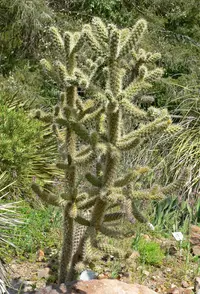
Munz's cholla (Cylindropuntia munzii) is a branching desert cactus known for its upright, many-stemmed form and dense armor of sharp spines. The stems are cylindrical, jointed, and often form thickets in suitable habitats.
This species is native to arid regions of the southwestern United States and northern Mexico, where it grows on rocky slopes and desert flats. Its succulent tissue stores water, making it highly drought-tolerant but also sensitive to prolonged wet conditions.
Spines, glochids (small barbed bristles), and a strong drought adaptation define how to care for Munz's cholla. It generally prefers full sun, low humidity, very well-drained mineral soil, and minimal supplemental watering.

Care Difficulty
Easy Care

Light Preference
Full Sun

Water Requirements
Low Water

Temperature Preference
Warm Climate

Hardiness Zone
8–10

Soil Texture
Sandy, Loamy, Rocky

Soil pH
Slightly acidic (6.5–7.0), Slightly alkaline (7.0–7.5)

Soil Drainage
Well-drained

Fertilization
Minimal (feed rarely)
Scan your plant to receive care tips personalized for your specific plant
Available on iOS and Android
This desert cactus needs intense, direct sun to maintain compact, healthy growth.
This species is highly drought-adapted and must be kept on the dry side to prevent root problems.
This cactus is adapted to hot, arid climates and experiences a wide annual temperature range in habitat.
This desert cactus thrives in very dry air and rarely needs humidity adjustment.
This cactus requires very fast-draining, mineral-rich soil to prevent root rot.
This species can be grown in containers if the pot is prepared for its dry, top-heavy growth habit.
This desert cactus performs well in lean soils, so fertilizing Munz's cholla should be light and infrequent.
Pruning needs for Cylindropuntia munzii are minimal and mainly corrective.
This species is rarely container-grown, so care focuses on careful outdoor transplanting when necessary.
Cylindropuntia munzii is most commonly propagated from stem cuttings, with seed used less often.
This cactus is fairly cold hardy in dry conditions and often needs little special winter care in suitable climates.

Plant Health Check
Not sure what's wrong with your plant? Check your plant's health inside the app.
This species is naturally restricted to arid mountain and desert regions of southern California and northern Baja California, often forming sparse stands on rocky slopes rather than broad valley-floor populations.
Field studies in its native range have documented natural hybridization between this species and closely related chollas, which can blur species boundaries and create intermediate forms in areas where their distributions meet.
Its cylindrical stems carry dense, sheathed spines that not only reduce water loss and sun damage but also provide strong mechanical protection from browsing mammals in open desert habitats.
Yes. The spring to early-summer flowers produce nectar and pollen that attract native bees, honeybees, and some butterflies. The resulting fruits also provide food for wildlife, helping support arid-land pollinator communities.
Keep your plants happy and healthy with plant identification, disease detection, and easy care guidance.

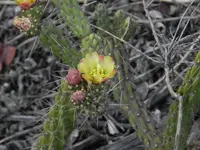
California cholla
Cylindropuntia californica
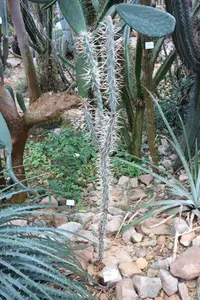
Long-spine Cholla
Cylindropuntia molesta
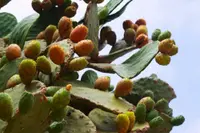
Stenocereus pruinosus
Stenocereus pruinosus
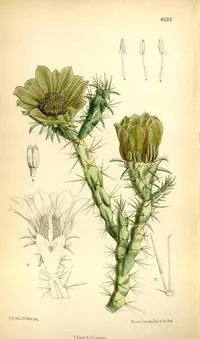
thistle cholla
Cylindropuntia davisii
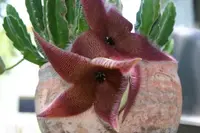
Starfish Cactus
Stapelia grandiflora
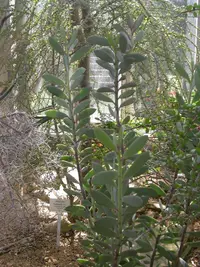
Lavender Steps
Senecio crassissimus
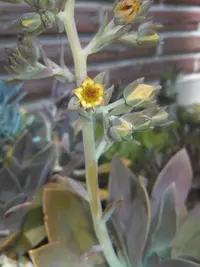
Graptoveria
× Graptoveria 'Fred Ives'
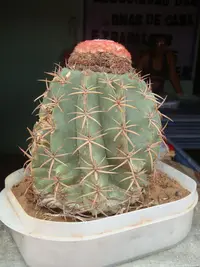
Melocactus zehntneri
Melocactus zehntneri