Encourage Offsets
Rotate the pot a quarter turn every 2–3 weeks during active growth so all sides receive similar light, which encourages even clumping and prevents the plant from leaning to one side.


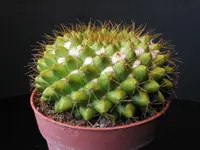
Mammillaria magnimamma, commonly called Mexican pincushion cactus, is a small, clustering cactus known for its rounded stems covered in neat rows of tubercles and spines. Mature plants often form dense mounds topped with rings of small pink to reddish flowers.
This species is native to central Mexico, where it grows in rocky, well-drained habitats with strong sun and infrequent rain. It is generally considered easy to grow as long as excess moisture is avoided and the soil drains quickly.
Because of its compact size and slow to moderate growth, it suits containers and windowsills. Understanding how to care for Mexican pincushion cactus mainly involves balancing bright light with careful, sparse watering.

Care Difficulty
Easy Care

Light Preference
Full Sun

Water Requirements
Low Water

Temperature Preference
Warm Climate

Hardiness Zone
9–11

Soil Texture
Sandy, Loamy, Rocky

Soil pH
Slightly acidic (6.5–7.0), Neutral (7.0)

Soil Drainage
Well-drained

Fertilization
Minimal (feed rarely)
Scan your plant to receive care tips personalized for your specific plant
Available on iOS and Android
This cactus prefers bright, direct light but needs protection from extreme afternoon sun in hot climates.
This drought-tolerant cactus needs infrequent, deep watering and fast drainage.
This species prefers warm conditions and is sensitive to hard frost.
This cactus prefers dry air and typical indoor humidity without special adjustment.
This cactus needs a very fast-draining, mineral-rich substrate to prevent root and stem rot.
This species is very suitable for container growing, including small dish gardens and windowsill pots.
This cactus thrives on lean conditions but benefits from light feeding during active growth in spring and summer.
Mammillaria magnimamma needs minimal pruning, mainly for cleanliness and plant health rather than shaping.
This cactus grows slowly and prefers slightly tight pots, so repotting is infrequent but still important.
New Mammillaria magnimamma plants are most often produced from offsets, with seeds as a slower alternative.
This cactus prefers cool, very dry winter conditions and has limited frost tolerance.

Plant Health Check
Not sure what's wrong with your plant? Check your plant's health inside the app.
This species typically forms tight rings of hooked central spines around each tubercle, creating a distinctive star-like pattern that helps distinguish it from many other Mammillaria species with straight spines.
Its pronounced, conical tubercles act as water-storage units and also space the spines in a way that shades the stem surface, an adaptation to the seasonally dry slopes of central Mexico where it naturally occurs.
After flowering, it often produces numerous pale pink to whitish, club-shaped fruits that can form visible chains around the stem, a characteristic feature used by botanists to help confirm identification.

In habitat, this cactus often grows in dense, cushion-like colonies on rocky limestone slopes, where many individual stems together can stabilize thin soils and create small microhabitats for insects and other small organisms.
Yes, this species suits bright indoor spaces. It stays compact, forms attractive clumps, and produces showy flowers. Good drainage, strong light, and restrained watering are the main priorities for successful Mexican pincushion cactus indoor care.
Keep your plants happy and healthy with plant identification, disease detection, and easy care guidance.