Mammillaria marksiana Care

Mammillaria marksiana

About Mammillaria marksiana

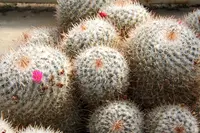
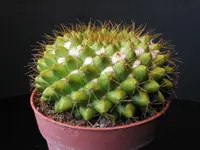
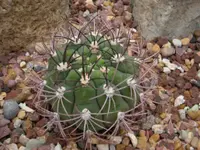
Mammillaria marksiana is a small, globular cactus known for its neat, symmetrical form and dense covering of short, pale spines. Mature plants often develop offsets, slowly forming a clustered mound over time.

This species is native to arid regions of northern Mexico, where it grows in rocky, well-drained soils with intense sun and low rainfall. Its slow growth, drought tolerance, and compact size make it suitable for containers and indoor windowsills when light is strong.

Understanding how to care for Mammillaria marksiana is straightforward for most growers, as it prefers bright light, minimal watering, and a gritty, fast-draining cactus mix that prevents root rot.

Main Plant Requirements

Care Difficulty

Easy Care

Light Preference

Full Sun

Water Requirements

Low Water

Temperature Preference

Tropical / Frost Sensitive

Hardiness Zone

10–11

Soil Texture

Sandy, Loamy, Rocky

Soil pH

Slightly acidic (6.5–7.0), Neutral (7.0)

Soil Drainage

Well-drained

Fertilization

Minimal (feed rarely)

Get Personalized Care Plan

Scan your plant to receive care tips personalized for your specific plant

Available on iOS and Android

How to Care for the Mammillaria marksiana

This small cactus thrives in bright, direct light but needs protection from extreme midday sun in hot climates.

  • Provide 4–6 hours of direct morning sun plus bright, filtered light in the afternoon for compact growth and good flowering of Mammillaria marksiana.
  • In very hot, dry regions, give light shade during the harshest midday hours to prevent yellowing or corky sunburn patches on the stem.
  • If grown in partial shade (2–3 hours direct sun), rotate the plant and watch for stretching or leaning, which indicates insufficient light.

This desert cactus prefers thorough but infrequent watering with time to dry between soakings.

  • Water only when the top 3–5 cm of soil are completely dry, then soak through and let excess drain away fully.
  • In active growth (spring–early fall), this may mean watering every 10–21 days; in winter rest, reduce to very light sips monthly or keep dry if kept cool.
  • Signs of overwatering include soft, yellowing tissue and blackened roots, while severe wrinkling and shrinking ribs indicate the plant needs water.

This species prefers warm, dry conditions and does poorly in prolonged cold or damp weather.

  • Aim for 70–85°F (21–29°C) in the growing season for steady growth, with good airflow to avoid heat buildup around the stem.
  • Protect from temperatures below 40°F (4°C); short dips to 35°F (2°C) are usually survivable if the plant is dry, but any frost can scar or kill tissue.
  • For a cooler, drier winter rest, keep around 50–60°F (10–16°C), which supports bud formation while reducing the risk of rot.

This species prefers dry air and rarely reacts to typical indoor humidity levels.

  • Aim for 30–50% humidity, similar to average home conditions, without deliberate humidifying.
  • Dry air is well tolerated; rot from excess moisture around the stem is a greater risk than low humidity stress.
  • Avoid misting; if air is extremely dry and hot, improve airflow and reduce heat rather than adding humidity.

This cactus needs a very fast-draining, mineral-rich soil to prevent root and stem rot.

  • Use a gritty mix such as 50–70% mineral components (pumice, coarse sand, fine gravel, perlite) with 30–50% cactus potting substrate.
  • Target a slightly acidic to neutral pH around 6.0–7.0, which supports nutrient availability without encouraging rot organisms.
  • Ensure the soil structure is loose and airy; avoid compaction by using coarse particles rather than fine peat-heavy mixes.
  • Avoid moisture-retentive garden soil, clay, or unmixed compost, which hold water and reduce oxygen around the roots of Mammillaria marksiana.

This species is very suitable for container growing due to its compact, shallow root system.

  • Choose a wide, shallow pot so the root zone fills the container without leaving a deep column of unused, wet substrate.
  • Prefer unglazed terracotta if extra evaporation is needed, as it helps the mix dry faster between waterings.
  • Add a heavy top dressing of gravel to stabilize the plant body and reduce splashing that can keep the stem base damp.

Feeding supports compact, healthy growth for Mammillaria marksiana in containers, but only in moderation.

  • Use a dilute balanced liquid cactus fertilizer (around 10-10-10 or similar) at 1/4–1/2 strength.
  • Apply every 4–6 weeks during the warm growing season when the plant is actively producing new tissue.
  • Avoid compost-rich mixes; instead rely on a low-organic, gritty substrate plus light feeding.
  • Stop feeding in late fall and winter to respect the plant’s natural rest period and prevent soft, weak growth.

Pruning needs are minimal, mainly to maintain health and remove damaged tissue on Mammillaria marksiana.

  • Carry out any pruning at the start of the warm growing season so wounds heal quickly.
  • Remove dead, shriveled, or diseased stems with clean, sharp scissors or a small knife.
  • Gently twist or cut off dried flower remains and spent fruits if they attract pests or mold.
  • Avoid cutting healthy green tissue, since heavy pruning can distort the natural clumping form and slow growth.

Repotting is infrequent but important to keep this slow-growing cactus healthy in containers.

  • Plan to repot every 3–4 years, or when roots circle the pot drainage holes or growth becomes noticeably slower.
  • Choose late spring as the best time, when Mammillaria marksiana is entering active growth and recovers fastest.
  • Use a slightly larger pot with excellent drainage and a gritty cactus mix to limit water retention.
  • Gently loosen the root ball, remove old soil, let roots dry for 1–2 days if damaged, then replant and keep dry for a week.

Propagation is usually done from offsets or seeds, allowing new plants with similar traits.

  • Detach small offsets in late spring or summer, letting cut surfaces callus for several days before planting.
  • Set offsets on a dry, gritty cactus mix and keep in bright, indirect light with very light, infrequent watering.
  • For seeds, sow on the surface of a sterile, fine mix and keep slightly moist and warm at 70–80°F.
  • Provide strong light but avoid intense midday sun until young plants are well rooted and showing new growth.

Winter care focuses on keeping this cactus cool, dry, and above freezing temperatures.

  • Maintain indoor or sheltered temperatures around 45–55°F, never below about 40°F to prevent tissue damage.
  • Keep soil almost completely dry in winter to avoid root rot during the plant’s rest period.
  • Place containers in the brightest possible spot indoors, such as a south-facing window, for Mammillaria marksiana indoor care.
  • Avoid cold drafts and sudden temperature swings, which can stress stems and increase rot risk.

Care Tips

Rotate for symmetry

Turn the pot 90° every 2–3 weeks during active growth so the stem stays evenly round instead of leaning or flattening toward the light.

Encourage compact spines

Provide the brightest safe light and avoid off-season watering so new spine growth forms tight, even rings rather than stretched, weak segments that are more prone to damage.

Use mineral top-dressing

Add a 0.5–1 cm layer of coarse grit or small decorative stones on the soil surface to keep the stem base dry, reduce algae growth, and make it easier to spot early rot or pests.

Seasonal rest period

From late fall to late winter, keep the plant cool, very dry, and in bright light to induce a proper dormancy that helps trigger stronger flowering the following warm season, which is key when growing Mammillaria marksiana.

Inspect wool and areoles

Check the woolly crown and areoles (the small spine pads) every few weeks with a bright light for mealybugs or scale, using a cotton swab dipped in 70% isopropyl alcohol to remove any pests before they spread.

Common Pests and Diseases

Mealybugs

This pest often hides in the woolly areoles and between stem ribs, feeding on plant sap and weakening the cactus over time. Symptoms include white cottony clusters, sticky residue, and slow, shriveled growth.

Solution

Isolate the plant, then dab visible insects with cotton swabs dipped in 70% isopropyl alcohol, repeating weekly until no new clusters appear. Improve light and airflow, and for heavier infestations use a labeled systemic insecticide for cacti, following package rates carefully.

Spider mites

These insects favor hot, dry conditions around clustered spines and can cause a dull, rusty, or speckled appearance on the green stem surface. Symptoms include very fine webbing near the areoles and a general loss of healthy, glossy green color.

Solution

Rinse the plant thoroughly with a firm but gentle stream of water, concentrating on the spine bases and crevices, then let it dry in bright, airy conditions. If mites persist, apply a horticultural miticide or insecticidal soap labeled for cacti, repeating as directed and avoiding treatments during intense midday sun.

Scale insects

This pest appears as small, hard, brown or gray bumps along the ribs and at the base of spines, sucking sap and weakening the plant. Symptoms include patchy yellowing, reduced growth, and a sticky or sooty surface around the affected areas.

Solution

Manually remove scales with a soft brush or cotton swab dipped in 70% isopropyl alcohol, working carefully around the spines. After mechanical removal, monitor closely and, if needed, use a systemic insecticide suitable for succulents to control remaining or hidden individuals.

Corky scab lesions

This disease is often triggered by minor mechanical damage, sun stress, or past pest feeding on the stem surface, leading to dry, tan to brown corky patches between tubercles. Symptoms include hard, rough areas that do not rub off and may slowly expand but usually stay superficial.

Solution

Protect the plant from sudden shifts in light and avoid physical injury to the stem, keeping it in stable bright light conditions. No chemical treatment is usually required; maintain good watering discipline and airflow so damaged tissue stays dry and firm rather than soft or infected, which supports long-term Mammillaria marksiana care.

Fusarium stem rot

This disease usually enters through wounds or overly wet tissue, causing localized soft, sunken, often reddish-brown areas that can expand through the stem. Symptoms include a foul smell and internal discoloration when affected tissue is cut.

Solution

At the first sign, cut away all soft, discolored tissue with a sterile blade until only firm, healthy green tissue remains, then allow the wound to dry and callus in a warm, bright, dry place. Reduce watering to light, infrequent amounts, ensure a very fast-draining mineral substrate, and discard severely affected plants to protect nearby cacti.

Interesting Facts

High-altitude specialist

This species is native to central Mexico, where it typically grows on rocky volcanic slopes at relatively high elevations, often above 1,600 m, tolerating large day–night temperature swings and intense sunlight.

Distinct woolly areoles

The plant forms tight clusters of tubercles with small, rounded tips, and its areoles often produce dense white wool in the crown area, especially around flower buds, giving a striking contrast to the yellow-green stem.

Golden-yellow flowering ring

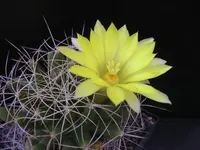
It produces bright golden-yellow flowers in a circular ring near the stem apex, a typical flowering pattern in Mammillaria that in this species creates a vivid halo effect against the green body.

Botan icon

Did you know?

Mammillaria marksiana has a relatively limited natural distribution in central Mexico and is considered vulnerable in the wild due to habitat loss and overcollection, leading to its inclusion in international trade regulations under CITES Appendix II to help protect wild populations.

FAQs about Mammillaria marksiana

Flowering is often reduced by insufficient light, overly rich soil, or winter warmth. This species needs strong light, a cool, drier winter rest, and moderate feeding so flower buds can form and open normally in spring or summer.

Grow Healthy Plants with Botan Care

Keep your plants happy and healthy with plant identification, disease detection, and easy care guidance.

Botan plant care app — identify plants on mobile

Explore More Plants