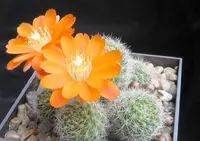
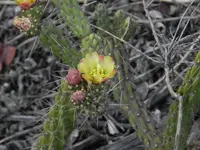
thistle cholla Care (Cylindropuntia davisii)

Also known as: Davis' Cholla
thistle cholla

About thistle cholla

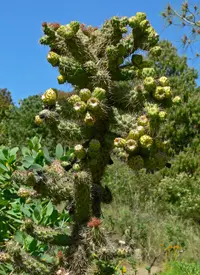
Thistle cholla (Cylindropuntia davisii) is a small, branching desert cactus known for its dense clusters of cylindrical stems covered in sharp, barbed spines. It often forms low, thicket-like clumps that provide shelter for wildlife in its native arid habitats of the southwestern United States and northern Mexico.

This species is highly drought-adapted and prefers intense sun, very fast-draining mineral soils, and minimal water. Its spines and segmented joints make handling and transplanting challenging, which is the main difficulty in how to care for thistle cholla.

For growers in suitable climates, it can be a long-lived, low-maintenance landscape cactus when given dry conditions and excellent drainage.

Main Plant Requirements

Care Difficulty

Moderate Care

Light Preference

Full Sun

Water Requirements

Low Water

Temperature Preference

Warm Climate

Hardiness Zone

8–10

Soil Texture

Sandy, Rocky, Loamy

Soil pH

Slightly acidic (6.5–7.0), Slightly alkaline (7.0–7.5)

Soil Drainage

Well-drained

Fertilization

Minimal (feed rarely)

Get Personalized Care Plan

Scan your plant to receive care tips personalized for your specific plant

Available on iOS and Android

How to Care for the thistle cholla

This desert cactus needs strong, direct sun to stay compact and healthy.

  • Provide 6–10 hours of full sun daily; open, south- or west-facing exposures suit thistle cholla best in most US climates.
  • It tolerates light afternoon shade in very hot regions, but too much shade causes weak, stretched growth and fewer spines and flowers.
  • Newly planted specimens benefit from 1–2 weeks of filtered light before full exposure to prevent sunscald, especially after nursery or indoor conditions.

This species is highly drought tolerant and must dry well between waterings.

  • In the ground, water only when the top 5–10 cm of soil are completely dry and pads look slightly less firm, then soak and allow to drain fully.
  • During hot, dry seasons, this may mean watering every 2–4 weeks; in cool or rainy periods, natural rainfall is often enough for Cylindropuntia davisii.
  • Overwatering shows as soft, yellowing segments or blackened bases; improve drainage, use gritty soil, and avoid standing water around the roots.

This cactus thrives in hot, arid conditions but has good cold tolerance when kept dry.

  • Active growth occurs around 70–95°F (21–35°C), with strong sun and low humidity, typical of desert and semi-desert climates.
  • Mature plants often tolerate brief drops to about 10–15°F (-12 to -9°C) if soil is very well drained and dry, but young plants are less hardy.
  • Extended frost with wet soil greatly increases rot risk, while extreme heat above 105°F (41°C) may require light afternoon shade in exposed sites.

Humidity is rarely a concern for Cylindropuntia davisii, which thrives in dry air.

This cactus needs very fast-draining, mineral-based soil to prevent root rot.

  • Use a gritty mix such as 60–70% coarse sand or pumice with 30–40% cactus potting mix for structure.
  • Ensure the substrate feels loose, never compacted, so air reaches the roots and water drains within minutes.
  • Aim for slightly alkaline to neutral pH around 7.0–8.0, avoiding peat-heavy, acidic blends that hold moisture.
  • For growing thistle cholla outdoors, raise beds or plant on a slope or mound to improve drainage in wet climates.

This species is suitable for container growing in sunny, dry locations.

  • Choose a heavy clay or ceramic pot to reduce tipping as the segmented stems become tall and side-weighted.
  • Select a wide, shallow container that allows lateral root spread while keeping the fast-draining mix relatively thin.
  • Lift the container slightly on pot feet or bricks so drainage holes stay clear and water escapes quickly after rainfall or irrigation.

This desert species needs minimal feeding, but light fertilization can support growth in containers or poor soils.

  • Use a dilute balanced cactus fertilizer (around 10-10-10) or low-nitrogen slow-release granules at 1/2–1/4 strength.
  • Feed once at the start of active growth in spring; a second light dose in midsummer is enough for thistle cholla.
  • Avoid fertilizing in fall and winter when growth is dormant to prevent weak, frost-sensitive tissue.
  • Always water lightly before and after feeding to reduce root burn risk, especially in fast-draining sandy mixes.

Pruning Cylindropuntia davisii is mainly corrective and for safety, not for heavy shaping.

  • Best time is late winter to early spring before strong new growth, using long-handled, sharp pruners or loppers.
  • Remove dead, diseased, storm-damaged, or collapsing joints, cutting back to a healthy segment junction.
  • Thin overcrowded or hazardous stems to improve airflow, reduce breakage, and manage overall spread.
  • Handle segments with tongs or thick gloves, and dispose of cut pieces so they do not root where unwanted.

This species is usually grown in the ground; container plants or young specimens need infrequent but careful transplanting.

  • Consider transplanting when growth slows, roots circle the pot, or the plant becomes unstable or top-heavy.
  • Choose late spring to early summer, when soils are warm and the plant is actively growing, to reduce transplant stress.
  • For containers, move up only 1 pot size every 3–4 years, using a very gritty, fast-draining cactus mix.
  • Lift plants with tongs or padding, keep roots as intact as possible, then keep soil slightly dry for 7–10 days to allow wounds to heal.

Cylindropuntia davisii is most commonly propagated from stem cuttings, though seeds are also possible.

  • Take firm, healthy stem segments in late spring or early summer, cutting at a joint with clean, sharp tools.
  • Let cut segments dry and callus in bright, indirect light for 5–10 days before planting.
  • Insert callused pieces into a sterile, gritty cactus mix; keep barely moist and provide bright light and warm temperatures (70–80°F).
  • For seed, sow on the surface of a well-draining mix, maintain even slight moisture, and provide steady warmth for slow germination.

This cholla is fairly cold hardy but still benefits from thoughtful winter management in colder climates.

  • Established plants in-ground usually tolerate light freezes; young or container plants are more vulnerable to deep cold.
  • Add a light gravel or rock mulch around the base to insulate the root zone while keeping the crown dry.
  • Move containers into a cold, bright, frost-free area, keeping soil almost dry to prevent rot.
  • Avoid late-season fertilization or heavy watering so stems harden off before sustained freezing weather.

Care Tips

Stabilize Heavy Stems

Drive a short, sturdy stake into the soil on the windward side and loosely tie top-heavy joints with UV‑stable twine to prevent rocking that can damage the shallow root system.

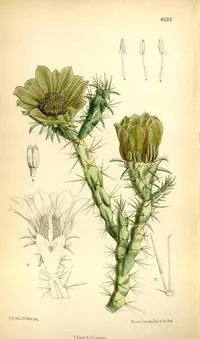
Use Protective Tongs

Handle pads and joints only with long barbecue tongs or specialized cactus tools when repotting or pruning to avoid breaking segments and to keep spines and glochids out of skin and gloves.

Gravel Collar Barrier

Apply a 5–8 cm wide ring of coarse mineral gravel around the base to keep stems dry at soil contact, reduce slug activity, and make hand-watering easier to direct away from the crown.

Segment Propagation Method

To grow Cylindropuntia davisii efficiently, detach a healthy segment, let the cut end callus in a dry shaded spot for 5–10 days, then set it upright in dry, gritty mix and delay watering for at least 10–14 days.

Winter Rain Shield

In wet winter climates, place a simple clear plastic or polycarbonate cover over the plant that is open at the sides, so stems stay dry from direct rain while air circulation and cold-hardening are maintained.

Common Pests and Diseases

Cochineal scale

This pest forms white, cottony clusters on pads and stems, often with bright red staining when crushed. Symptoms include sticky honeydew and patches of yellowing, weakened tissue.

Solution

Physically remove colonies with a strong jet of water or by wiping with cotton pads dipped in 70% isopropyl alcohol, repeating weekly until no new insects appear. For larger outdoor clumps, prune heavily infested segments and dispose of them, then apply a horticultural soap or light horticultural oil on cool, overcast days to avoid sunburn on the stems.

Cactus longhorn beetle

This pest bores into stems, causing hollow segments, sudden yellowing, and structural weakening that can lead to collapse of entire joints. Symptoms include dark entry holes and internal tunneling filled with frass (insect waste).

Solution

Cut out and destroy any infested segments well below visible damage, sterilizing cutting tools between cuts, and remove fallen joints that can harbor larvae. In areas where this beetle is common, reduce planting density, keep the base of plants free of debris, and monitor at dusk to hand-pick adult beetles when numbers are still low.

Fusarium stem canker

This disease causes sunken, reddish-brown or dark lesions on stems that may expand along the joint, sometimes leading to shriveling above the affected area. Symptoms include internal brown streaking when the stem is cut open.

Solution

Prune out affected segments at least 5–10 cm below visible discoloration and discard them, avoiding compost. Improve air circulation, avoid overhead watering, and keep stems dry, and when planting or transplanting to grow Cylindropuntia davisii, use clean tools and a fast-draining mineral substrate to reduce infection risk.

Sooty mold

This disease appears as a black, soot-like coating on stems, growing on the honeydew produced by sap-feeding insects such as cochineal scale. Symptoms include dull, dirty-looking pads and reduced photosynthesis, which can slow growth.

Solution

First control the underlying honeydew-producing insects through washing, alcohol swabs, or horticultural soap. Once insect pressure is reduced, gently scrub stems with a soft brush and mild soapy water, then rinse well and allow good air circulation and full sun so the plant surface dries quickly.

Interesting Facts

Restricted desert range

This species is native to a very limited area of the Chihuahuan Desert in northern Mexico, where it occurs on rocky, arid slopes and desert scrub rather than across a broad geographic range like many other chollas.

Slender, fragile joints

Compared with many related chollas, it has relatively thin, delicate stem segments that can detach easily, an adaptation that aids vegetative spread when segments fall and root in favorable microsites.

Spine-sheathed stems

Its stems carry spines with papery, translucent sheaths that help reflect sunlight and slightly reduce water loss, an important feature for survival in high-radiation, low-moisture desert habitats.

FAQs about thistle cholla

Growth is generally slow to moderate. In suitable dry, sunny conditions it often extends 5–15 cm per year. Young plants may establish roots first with little visible top growth, then gradually form a low, branching clump over several years.

Grow Healthy Plants with Botan Care

Keep your plants happy and healthy with plant identification, disease detection, and easy care guidance.

Botan plant care app — identify plants on mobile

Explore More Plants