

Rotate for symmetry
Turn the pot 90° every 2–3 weeks during the growing season so light hits all sides evenly, which keeps the ribs straight and prevents the plant from leaning toward the window.

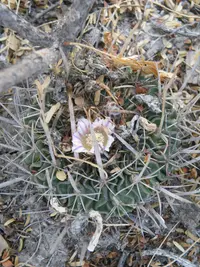
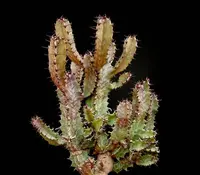
Stenocactus phyllacanthus is a small desert cactus known for its many narrow, strongly wavy ribs and prominent spines that form a tight, rounded body. It usually stays compact, which makes it suitable for containers and small indoor collections.
This species is native to arid regions of Mexico, where it experiences strong sun, high temperatures, and very limited rainfall. Its slow growth and drought tolerance make it relatively easy to keep alive, but rot is a risk if soil stays wet.
For those learning how to care for Stenocactus phyllacanthus, it responds best to strong light, infrequent but deep watering, and a very fast-draining, gritty soil mix.

Care Difficulty
Moderate Care

Light Preference
Full Sun

Water Requirements
Low Water

Temperature Preference
Tropical / Frost Sensitive

Hardiness Zone
10–11

Soil Texture
Sandy, Loamy, Rocky

Soil pH
Slightly acidic (6.5–7.0), Neutral (7.0)

Soil Drainage
Well-drained

Fertilization
Minimal (feed rarely)
Scan your plant to receive care tips personalized for your specific plant
Available on iOS and Android
This cactus prefers bright, direct light but benefits from some protection in the harshest hours.
This species needs infrequent, thorough watering with time to dry between soakings.
This cactus prefers warm, dry conditions with a cool but not freezing rest period in winter.
This cactus handles low humidity well and rarely needs adjustment indoors.
This species needs a very fast-draining, mineral-rich cactus mix that does not stay wet.
This species is well suited to container growing due to its compact root system.
This desert cactus benefits from light feeding but grows well in lean, well-drained soil.
Stenocactus phyllacanthus needs almost no pruning, as it maintains a compact shape naturally.
This small cactus prefers a snug pot and only occasional repotting in very well-drained mix.
Stenocactus phyllacanthus is most often propagated from seeds, as offsets are uncommon.
This species needs a cool, very dry rest period and cannot tolerate sustained freezing.

Plant Health Check
Not sure what's wrong with your plant? Check your plant's health inside the app.
This species forms a small, flattened globe with 20–40 narrow, strongly undulating ribs, giving the plant a brain-like appearance that is more pronounced than in many other Stenocactus species.
It shows notable variation in spine length and curvature between populations, from short and bristly to longer, slightly hooked spines, which helps botanists distinguish local forms in its native Mexican range.
The pale cream to whitish flowers, often with darker midstripes, open in the warmer months and release a stronger fragrance in the evening, attracting night-active pollinators in its arid habitat.

This cactus naturally occurs on limestone-rich soils in central Mexico, and its roots are adapted to exploit narrow fissures in rocky slopes, allowing the plant to anchor itself securely and access scarce moisture in habitats that experience high sun exposure and irregular rainfall.
This cactus usually blooms in spring to early summer, producing small funnel-shaped flowers from the crown. Blooms are often cream, pale yellow, or whitish with darker central stripes, and individual flowers usually last only a few days.
Keep your plants happy and healthy with plant identification, disease detection, and easy care guidance.

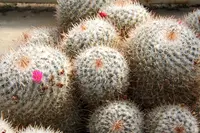
twin spined cactus
Mammillaria geminispina
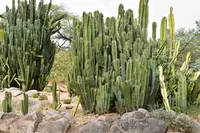
Apple Cactus
Cereus repandus
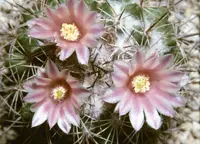
Mammillaria johnstonii
Mammillaria johnstonii
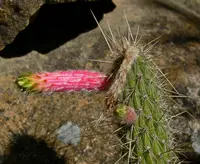
Firecracker Cactus
Cleistocactus smaragdiflorus
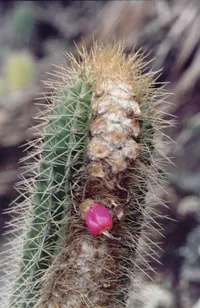
Coleocephalocereus fluminensis
Coleocephalocereus fluminensis
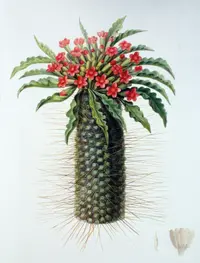
elephants trunk
Pachypodium namaquanum
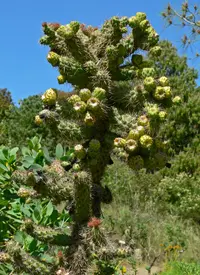
coastal cholla
Cylindropuntia prolifera
Lebombo Naboom
Euphorbia confinalis