Stake Tall Stems
Install a sturdy bamboo or metal stake when the plant is still under 30–40 cm tall and loosely tie the main stem every 15–20 cm to prevent toppling or stem kinking as it gains height and weight.

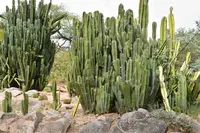
Apple cactus, Cereus repandus, is a tall, columnar cactus grown for its sculptural stems and large, night-blooming white flowers. In nature it occurs in arid and semi-arid regions of South America. Stems are blue-green with pronounced ribs and short spines, and older plants can branch to form a striking, tree-like shape. In suitable climates it may produce edible, apple-shaped fruit. This species is generally tough and forgiving, which makes it accessible for beginners who want to care for Apple Cactus. It prefers strong light, low to moderate watering, and sharply draining, sandy or gritty soil.

Care Difficulty
Easy Care

Light Preference
Full Sun

Water Requirements
Low Water

Temperature Preference
Tropical / Frost Sensitive

Hardiness Zone
9–11

Soil Texture
Sandy, Loamy, Rocky

Soil pH
Slightly acidic (6.5–7.0), Neutral (7.0)

Soil Drainage
Well-drained

Fertilization
Minimal (feed rarely)
Scan your plant to receive care tips personalized for your specific plant
Available on iOS and Android
This cactus thrives in strong light that mimics full desert sun while avoiding extreme afternoon scorch in very hot climates.
Watering for this cactus should imitate desert rain patterns: deep but infrequent, with thorough drying between soakings.
Stable warmth supports strong growth, while this cactus tolerates brief temperature extremes when kept dry.
This cactus handles low household humidity well and rarely needs special adjustment.
Use a fast-draining, mineral-heavy mix that dries quickly between waterings.
This species is well suited to container growing, especially in cooler climates or small spaces.
Cereus repandus benefits from light, infrequent feeding during its active warm-season growth.
Pruning Cereus repandus is mainly done to manage size, remove damage, and keep stems structurally sound.
Container-grown plants benefit from occasional repotting to maintain root health and stability.
Cereus repandus is commonly multiplied from stem cuttings, with seeds used mainly for breeding or large batches.
This cactus is frost-sensitive and needs protection from freezing conditions, especially in containers.

Plant Health Check
Not sure what's wrong with your plant? Check your plant's health inside the app.
This species opens its large white flowers at night and closes them by morning, relying mainly on nocturnal moths and bats for pollination in its native range of northern South America and the Caribbean.
It produces spherical to slightly oblong fruits that are sweet, juicy, and edible, closely related to but distinct from the more commercial dragon fruits of the genus Hylocereus, and sometimes cultivated locally as a fruit crop.
Its tall, columnar stems typically have 3–8 broad ribs with prominent areoles that help the plant manage water storage and expansion, allowing it to reach several meters in height in arid and semi-arid environments.

In some dry coastal and lowland habitats of its native range, mature Cereus repandus plants form dense, tree-like stands that serve as key structural elements in the landscape, providing nesting and perching sites for birds while also stabilizing sandy or rocky soils.
Growth is moderately fast for a cactus. In warm conditions with strong light and occasional fertilizer, it can add 15–60 cm per year. Container size, temperature, and water availability strongly influence overall speed of development.
Keep your plants happy and healthy with plant identification, disease detection, and easy care guidance.