elephants trunk Care (Pachypodium namaquanum)

Also known as: Cobas tree, Halfmens
elephants trunk

About elephants trunk

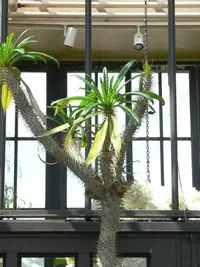
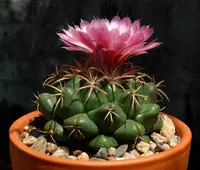
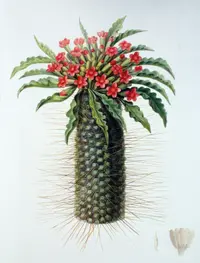
Pachypodium namaquanum, commonly called elephants trunk, is a succulent shrub-like plant with a tall, columnar stem and a spiny surface. It stores water in its thick trunk and carries a small crown of narrow leaves near the top.

This species comes from arid regions of Namibia and South Africa, where it grows slowly in rocky, well-drained habitats. Its slow growth, sensitivity to overwatering, and need for strong light make it more suitable for patient growers.

Those who care for elephants trunk successfully usually provide bright sun, minimal but consistent moisture, and very fast-draining, mineral-rich soil.

Main Plant Requirements

Care Difficulty

Hard Care

Light Preference

Full Sun

Water Requirements

Low Water

Temperature Preference

Tropical / Frost Sensitive

Hardiness Zone

10–11

Soil Texture

Sandy, Loamy, Rocky

Soil pH

Slightly acidic (6.5–7.0), Neutral (7.0)

Soil Drainage

Well-drained

Fertilization

Minimal (feed rarely)

Get Personalized Care Plan

Scan your plant to receive care tips personalized for your specific plant

Available on iOS and Android

How to Care for the elephants trunk

This desert succulent needs intense light to form a strong trunk and compact growth.

  • Provide 6–10 hours of direct sun daily; full, unobstructed exposure suits adult plants in arid, low-humidity climates.
  • Allow light afternoon shade in very hot regions to limit stem scorch and wrinkling of elephants trunk skin, especially in dark pots or against reflective walls.
  • In winter, keep the brightest possible position; insufficient light leads to stretched, weak growth and reduced spine and leaf density.

This species is highly drought tolerant and stores water in its swollen stem.

  • Water only when the top 3–5 cm of soil are completely dry; in hot active growth, this may mean deep watering every 2–4 weeks in very free-draining ground.
  • Use a gritty, fast-draining mineral mix so water runs through in seconds and the root zone dries quickly, reducing risk of rot and sour smells.
  • In cool or dormant periods, cut watering to light sips or none at all; yellowing, soft base tissue suggests overwatering, while deep wrinkling indicates prolonged drought.

This arid-climate shrub thrives in heat but reacts poorly to cold and frost.

  • Aim for 75–95°F (24–35°C) during active growth; it tolerates short spikes up to about 105°F (40°C) if soil is very well drained and air is dry.
  • Protect from temperatures below 40°F (4°C); damage often appears near 32°F (0°C) as blackened or mushy tissue on tips and younger growth.
  • Over winter, keep it cool and dry around 45–55°F (7–13°C) in frost-free conditions to encourage dormancy and reduce risk of root and stem rot.

Humidity is not a major factor for this arid-climate succulent.

This species needs a very fast-draining, mineral-based mix that mimics desert conditions.

  • Use a sandy, gritty mix with 60–80% inorganic material such as pumice, coarse perlite, and sharp sand.
  • Incorporate a small portion of lean cactus substrate or low-organic potting mix to provide structure without holding excess water.
  • Aim for slightly acidic to neutral pH, around 6.0–7.0, which suits Pachypodium namaquanum plant care.
  • Avoid peat-heavy, compacted, or moisture-retentive substrates that slow drainage or reduce aeration around the caudex and roots.

This species adapts well to container culture when given strong drainage and firm support.

  • Choose a pot just slightly wider than the caudex to limit unused, wet substrate while still allowing root extension.
  • Select a heavy clay or ceramic container to counterbalance the tall, top-heavy stem as the plant matures.
  • Fill the bottom with coarse gravel or large-grade pumice to keep the main root zone above any brief water accumulation.

Pachypodium namaquanum is a slow-growing succulent tree that needs modest feeding to maintain steady growth in cultivation.

  • Use a diluted balanced liquid fertilizer (around 10-10-10 or 20-20-20 at 25–50% strength) during active growth.
  • Apply every 4–6 weeks in spring and summer only, onto already moist soil to avoid root burn.
  • Avoid compost-heavy mixes; choose mineral, cactus-style soil and low-organic fertilizers for caring for elephants trunk.
  • Stop feeding entirely in fall and winter dormancy to prevent weak, elongated growth and root issues.

Pachypodium namaquanum usually needs minimal pruning, focused on health and safety rather than shaping.

  • Best time for any pruning is late spring to early summer, when growth is active and recovery is faster.
  • Remove only dead, damaged, diseased, or dangerously leaning branches using sharp, clean bypass pruners or a small saw.
  • Avoid cutting into healthy green trunk tissue; excessive removal can distort its natural columnar form and weaken the plant.
  • Wear gloves and eye protection, as the spines are sharp and the milky sap can irritate skin.

This species dislikes frequent disturbance, so repot or transplant only when clearly needed.

  • Repot container plants every 3–5 years, or when roots circle the pot, drainage slows, or growth declines despite good care.
  • Plan moves for late spring, once nights stay above 55°F, to reduce shock and support new root growth.
  • Choose a pot only 2–5 cm wider, with ample drainage holes and a very gritty cactus or succulent mix.
  • Lift the plant gently, keep the root ball as intact as possible, and water lightly after repotting, then allow thorough drying before the next watering.

New Pachypodium namaquanum plants are most reliably produced from seed rather than cuttings.

  • Sow fresh seeds in late spring to early summer, when temperatures stabilize around 70–80°F.
  • Use a sterile, gritty mix (for example 50% pumice or perlite, 50% well-draining cactus soil) in shallow trays or small pots.
  • Lightly cover seeds, keep the medium just barely moist, and provide bright light with good air movement to limit rot.
  • Maintain consistent warmth from below if possible, and transplant seedlings only after they develop a firm caudex and several true leaves.

This desert succulent is highly sensitive to frost and needs careful winter management in most climates.

  • Keep plants above 40°F; ideal winter range is 45–55°F with very bright light and low humidity.
  • Grow container specimens outdoors only in warm climates, then move them indoors or into a heated greenhouse before first frost.
  • Reduce or stop watering during winter dormancy, keeping the soil almost completely dry to prevent root rot.

Care Tips

Deep pot selection

Use a tall, heavy clay pot with a single large drain hole so the long taproot can extend downward and the plant stays stable as the trunk elongates and becomes top-heavy.

Calcium and minerals

Incorporate a small amount of crushed, untreated limestone or marble chips into the upper soil layer to mimic mineral-rich desert substrates and support strong trunk and spine formation over time.

Summer hardening outdoors

If climate allows, move the plant outdoors in late spring and gradually increase exposure to unfiltered sun and airflow over 2–3 weeks to build thicker epidermis and reduce risk of sunburn or rot during hot weather.

Winter light and rest

During winter dormancy, keep the plant very cool and almost dry but under as much bright light as possible so stored energy is conserved and the growth point remains compact rather than etiolated.

Safe handling routine

Use thick gloves and a folded towel or foam ring around the trunk when repotting or rotating the plant to avoid injury from spines and to prevent twisting or cracking the woody caudex when caring for elephants trunk.

Common Pests and Diseases

Mealybugs

This pest feeds on sap in leaf bases, areoles, and around the spines, often hiding in the plant’s woolly growth and branch junctions. Symptoms include white cottony clusters, sticky honeydew, and gradual yellowing or stunted new growth.

Solution

Remove visible colonies with a cotton swab dipped in 70% isopropyl alcohol, then rinse the plant gently with lukewarm water and allow it to dry in bright, airy conditions. For heavier infestations, use a ready-to-use neem oil or insecticidal soap spray directed into crevices every 7–10 days until no new pests appear, and isolate the plant during treatment.

Spider mites

These insects thrive in hot, very dry indoor air and can colonize the trunk and undersides of any small leaves, especially in low airflow. Symptoms include fine webbing, rusty stippling on tissue, and a dull, dusty look to the epidermis.

Solution

Shower the plant with a firm but gentle stream of lukewarm water, focusing on crevices, and then allow it to dry quickly in bright light. If mites persist, apply insecticidal soap or a horticultural oil labeled for mites in the evening, repeating every 7–10 days while also increasing air movement and slightly raising ambient humidity without overwatering the substrate.

Scale insects

This pest appears as hard, dome-shaped brown or tan bumps on the trunk, leaf bases, and around spines, often blending with the rough bark. Symptoms include sticky honeydew, sooty mold growth, and localized yellowing or patchy weakening of the stem surface.

Solution

Gently scrape or pry off individual scales with a fingernail or soft tool, then wipe affected areas with a cloth lightly moistened with 70% isopropyl alcohol. For larger populations, use repeated applications of neem oil or another systemic or contact product labeled for scale, taking care to keep the growing medium dry and the plant in bright, well-ventilated conditions during recovery.

Basal stem rot

This disease develops when the plant is kept in cool, wet substrates, leading to soft, discolored tissue at the base of the trunk. Symptoms include a dark, sunken, or mushy base, foul odor, and shrinking or wrinkling of upper stem segments despite moist soil.

Solution

Immediately remove the plant from its pot, cut away all soft, discolored tissue with a sterile blade, and allow the remaining healthy section to dry for several days before replanting in a very coarse, fast-draining mineral mix. After repotting, water sparingly, keep the plant in warm, high light with strong airflow, and consider a one-time drench with a fungicide labeled for stem or crown rots if significant tissue was affected.

Sunburn and epidermal scald

Symptoms include abrupt pale, beige, or brown patches on the sun-exposed side of the trunk, often after sudden transfer from low light to strong sun or through hot glass. This damage is mostly cosmetic but can weaken tissue if severe or repeated.

Solution

Move the plant to a bright position with filtered or gradually increasing direct sun, increasing exposure over 10–14 days to adapt the epidermis. Damaged areas will not turn green again, but maintaining stable high light, excellent drainage, and proper watering will support new healthy growth and reduce the risk of further scalding as part of long-term Pachypodium namaquanum care.

Interesting Facts

Night-opening flowers

This species opens its tubular, red to greenish flowers in the evening and night, which supports pollination by nocturnal moths and other night-active insects in its arid habitat.

Winter-growing habit

It is a winter-growing succulent from the winter-rainfall regions of southern Namibia and northwestern South Africa, becoming semi-dormant or fully dormant in the hot, dry summer months.

Natural desert armour

The tall, columnar stem is densely covered with sharp spines that help protect it from herbivores and also create small pockets of shade on the stem surface, reducing sun exposure and water loss.

Botan icon

Did you know?

In its native habitat, this species can form striking, tree-like columns that reportedly live for many decades and sometimes more than a century, becoming distinctive landmarks on rocky desert slopes where few other large plants can survive.

FAQs about elephants trunk

Growth is slow. In cultivation it often adds only a few cm of trunk per year, sometimes less. Seedlings grow faster at first, then slow as the caudex and trunk thicken rather than elongate quickly.

Grow Healthy Plants with Botan Care

Keep your plants happy and healthy with plant identification, disease detection, and easy care guidance.

Botan plant care app — identify plants on mobile

Explore More Plants