Lebombo Naboom Care (Euphorbia confinalis)

Also known as: Lebombo euphorbia
Lebombo Naboom

About Lebombo Naboom

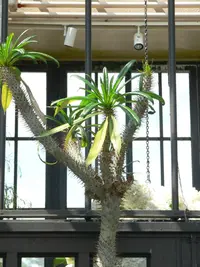
Lebombo naboom, Euphorbia confinalis, is a tree-form succulent from southern Africa, especially the Lebombo Mountains. It belongs to the spurge family and produces a milky sap. The plant forms tall, upright, many-branched columns with segmented, ridged stems that resemble a candelabra. Leaves are small and short-lived, so the plant relies mainly on its green stems for photosynthesis. In the wild it grows in rocky, arid habitats and tolerates intense sun and drought. These traits make it relatively low-maintenance in cultivation if given sharp-draining soil and bright light. Understanding how to care for Lebombo Naboom starts with respecting its need for dryness and avoiding cold, wet conditions.

Main Plant Requirements

Care Difficulty

Moderate Care

Light Preference

Full Sun

Water Requirements

Low Water

Temperature Preference

Tropical / Frost Sensitive

Hardiness Zone

10–11

Soil Texture

Sandy, Loamy, Rocky

Soil pH

Slightly acidic (6.5–7.0), Neutral (7.0)

Soil Drainage

Well-drained

Fertilization

Minimal (feed rarely)

Get Personalized Care Plan

Scan your plant to receive care tips personalized for your specific plant

Available on iOS and Android

How to Care for the Lebombo Naboom

This species prefers bright, intense light similar to its native rocky habitats.

  • Provide 6–10 hours of direct sun daily; full sun is ideal, especially morning and midday exposure in mild climates.
  • In very hot regions, give Lebombo Naboom light afternoon shade or filtered sun to prevent stem scorch and bleaching during peak summer heat.
  • Plants grown in too much shade develop weak, elongated stems; move gradually to stronger light over 2–3 weeks to avoid sudden sunburn.

Euphorbia confinalis is a drought-tolerant succulent that needs infrequent but thorough watering.

  • Allow the top 3–5 cm of soil to dry completely before watering; in hot, dry weather this may mean deep watering every 2–4 weeks in the ground.
  • Use very fast-draining, gritty soil so water runs through quickly and roots do not sit in soggy conditions, which encourages rot and foul odor at the base.
  • In cooler months, reduce watering sharply; shriveling ribs signal mild thirst, while yellowing, mushy stems indicate overwatering.

This succulent is adapted to warm, dry conditions and dislikes cold, damp weather.

  • Aim for 70–90°F (21–32°C) during active growth, with low humidity and good air movement around the stems.
  • Protect from temperatures below 40°F (4°C); brief dips to 32°F (0°C) may damage tissue, and hard frost can kill young or exposed plants.
  • In very hot spells above 100°F (38°C), it tolerates heat if soil is dry to slightly moist and the roots are insulated from reflected ground heat.

This species handles typical indoor humidity but prefers relatively dry to moderately dry air.

  • Aim for 30–50% humidity, similar to many heated homes or dry outdoor climates.
  • Dry air is usually tolerated; persistent humidity above 60% can promote stem rot and fungal spotting.
  • Humidity stress shows as soft, discolored stem patches; increase air movement and reduce nearby moisture sources rather than misting when caring for Lebombo Naboom.

Euphorbia confinalis needs very fast-draining, mineral-rich soil that mimics arid, rocky habitats.

  • Use a gritty mix such as 50–70% inorganic materials (pumice, coarse sand, small gravel, or perlite) with 30–50% cactus or succulent potting mix.
  • Aim for slightly acidic to neutral pH, around 6.0–7.2, which supports nutrient uptake without encouraging rot.
  • Ensure strong drainage by avoiding fine, compacting components like clay-heavy garden soil or peat-heavy mixes.
  • Improve aeration by using large-grain particles (3–6 mm) and a shallow layer of coarse gravel at the base, without creating a separate water-holding layer.

This species is suitable for container growing when the pot and substrate are chosen to prevent top-heavy tipping and root rot.

  • Choose a heavy clay or ceramic pot to counterbalance the tall, columnar stems and reduce tipping risk in wind or accidental bumps.
  • Select a pot just slightly wider than the root ball so the soil mass dries evenly instead of staying wet at the outer edges.
  • Elevate the container on pot feet or a low stand so drainage holes remain clear and runoff water does not reabsorb into the mix.

Euphorbia confinalis, or Lebombo Naboom, needs only light feeding in cultivation, as it is adapted to poor, rocky soils.

  • Use a diluted balanced liquid fertilizer (around 10-10-10) at 1/4–1/2 strength during active growth in spring–summer.
  • Feed every 6–8 weeks at most for container plants; in-ground plants often need no added fertilizer.
  • Avoid compost-rich mixes; excess organic matter can cause weak, elongated growth and root issues.
  • Do not feed in autumn–winter, when growth slows and the plant rests.

Euphorbia confinalis needs minimal pruning, mainly to maintain safety and a clean structure.

  • Carry out light pruning in late winter or early spring, before strong new growth begins.
  • Remove dead, damaged, crossing, or unstable branches, cutting back to a firm, healthy junction.
  • Use sharp, disinfected loppers or a pruning saw and wear eye and skin protection from the latex sap.
  • Limit cuts to shaping and hazard reduction, as heavy removal can distort the natural columnar form.

This species is usually landscape-grown; container plants or young specimens are transplanted only when clearly root-bound or outgrowing their space.

  • Check for roots circling the pot, pushing through drainage holes, or stalled growth as signs it needs attention.
  • Plan repotting or transplanting in late spring–early summer, once nights are warm and soil drains well.
  • Expect to move container plants only every 3–5 years, choosing a pot just 2–5 cm wider with gritty cactus mix.
  • Minimize root stress by watering a day before, handling the root ball gently, and shading briefly after transplanting.

Propagation of Euphorbia confinalis is possible but best attempted by careful, experienced growers.

  • Use semi-hardwood stem cuttings in late spring–summer, taken from healthy, disease-free branches.
  • Allow cut surfaces to stop bleeding, then dry and callus for several days before planting in a gritty, fast-draining mix.
  • Keep cuttings in bright, indirect light at 70–80°F with just lightly moist soil to discourage rot.
  • Seed propagation is less common; sow fresh seed warm and dry, in shallow trays with excellent drainage.

This species prefers warm, frost-free conditions and requires meaningful winter care in most temperate climates.

  • Keep outdoor plants above about 30–32°F; freezing can scar or kill stems.
  • Mulch the root zone of in-ground plants lightly with gravel or coarse mineral material, not water-holding bark.
  • Move container plants indoors to a bright, cool, dry spot before the first frost.
  • Water sparingly in winter, allowing the mix to dry almost completely between light waterings.

Care Tips

Root-zone protection

Top-dress the soil surface with 1–2 cm of coarse gravel or small rocks to keep the stem base dry, reduce splash-borne rot, and stabilize the plant in its pot or planting hole.

Safe sap handling

When pruning or taking cuttings, wear gloves and eye protection, keep the milky sap off skin and eyes, and briefly dip fresh cuts in clean water or dust with powdered sulfur to slow sap flow and reduce infection risk.

Structural support planning

Position the plant where it can mature without being bumped, and in windy or high-traffic areas use a discreet stake or wall anchor to brace tall columns and prevent them from snapping at the base.

Targeted pest checks

Inspect the ribs and areole-like points along the stems every few weeks for scale and mealybugs, and treat early with a cotton swab dipped in isopropyl alcohol before infestations spread along the plant’s ridges.

Cool-season resting

In cooler months give the plant maximum light but keep it on the dry side and avoid repotting or feeding, which supports a natural semi-dormant phase important for long-term Euphorbia confinalis plant care.

Common Pests and Diseases

Mealybugs

This pest feeds on succulent stems and joints, sucking sap and leaving cottony clusters in crevices along the columnar ribs. Symptoms include slowed growth, distorted new segments, and sticky honeydew that can lead to sooty mold on nearby surfaces.

Solution

Remove visible colonies with a cotton swab dipped in 70% isopropyl alcohol, then rinse the plant gently with a firm stream of water, keeping the soil as dry as possible. For larger infestations, use a ready-to-use insecticidal soap or neem oil spray applied in the cool part of the day, repeating every 7–10 days until no new insects appear, and isolate the plant from others during treatment.

Stem canker

This disease causes sunken, brown to black patches on the succulent stems, sometimes cracking or oozing and slowly girdling a rib. Symptoms include localized collapse of tissue and segment dieback, often starting at a wound or sunburned area.

Solution

Cut out affected tissue with a sterile, sharp knife, removing a margin of healthy-looking tissue around the canker, and allow the wound to dry and callus in bright, dry, shaded conditions. Improve air circulation, avoid overhead watering, and if multiple stems show early symptoms, apply a sulfur- or copper-based fungicide according to label directions, then monitor closely and discard severely affected plants to protect others.

Scale insects

These insects appear as small, hard, tan or brown bumps tightly attached along the ribs and branching points, feeding on sap. Symptoms include yellowing patches, weakened stems, and sticky honeydew that may attract ants.

Solution

Gently scrape or rub off individual scales with a soft toothbrush or cloth, then wipe stems with diluted isopropyl alcohol to remove remaining juveniles. For persistent problems on mature outdoor plants, apply a horticultural oil spray in mild weather, thoroughly coating all stem surfaces, and repeat after 10–14 days while also managing nearby ant activity that protects scale colonies.

Bacterial soft rot

This disease causes water-soaked, foul-smelling, mushy areas on stems, often starting in minor wounds or areas exposed to prolonged moisture. Symptoms include rapid collapse of tissue and spreading wet lesions that can destroy whole segments.

Solution

Immediately cut away all affected tissue well into firm, healthy stem using a disinfected knife, then discard infected material in the trash, not compost. Keep the plant completely dry on the wound area, increase airflow, avoid any water sitting on stems, and if rot has reached the base, take healthy cuttings from unaffected upper segments and root them in a clean, dry, gritty mix as a rescue measure.

Interesting Facts

Lobed, winged stems

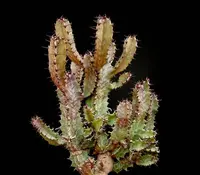
This species develops strongly 4‑ or 5‑angled stems with deep lobes and flaring, wing‑like ridges, giving mature plants a distinctly sculptural, candelabra form that is recognizable even at a distance in its native habitat.

Localized cliff specialist

It naturally occurs on rocky slopes and cliffs in the Lebombo Mountains region of southern Africa, where it roots in shallow rock crevices and tolerates intense sun and limited soil.

Highly toxic latex

Like many spurges, it produces a white, milky latex that is strongly irritating to skin and eyes and potentially harmful if ingested, a chemical defense that discourages many herbivores from feeding on it.

Botan icon

Did you know?

This species is considered near-endemic to the Lebombo Mountain range along the borders of South Africa, Eswatini, and Mozambique, meaning it has an unusually restricted natural distribution compared with many other shrubby euphorbias.

FAQs about Lebombo Naboom

Growth is slow to moderate. Young plants often add 5–15 cm per year, sometimes pausing in cooler seasons. In warm, bright, dry climates, established specimens gradually form tall, candelabra-like stems over many years.

Grow Healthy Plants with Botan Care

Keep your plants happy and healthy with plant identification, disease detection, and easy care guidance.

Botan plant care app — identify plants on mobile

Explore More Plants