Calcium-rich topdressing
Apply a thin topdressing of crushed limestone or marble chips around the base to mimic its limestone habitat, stabilize pH, and support firm spine and tissue development when growing Mammillaria johnstonii.

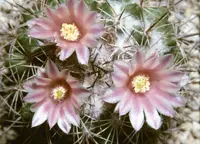
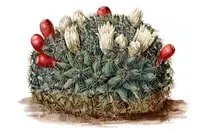
Mammillaria johnstonii is a small, globular cactus known for its dense clusters of short, white radial spines and contrasting central spines. It usually stays compact, forming tight clumps over time rather than tall columns.
This species is native to arid regions of Mexico, where it grows on rocky slopes with intense sun and very fast-draining soil. Its slow growth and drought tolerance make it suitable for containers and small indoor collections.
For those learning how to care for Mammillaria johnstonii, its main needs are bright light, minimal watering, and gritty soil that dries quickly between waterings. Under these conditions it is generally considered a manageable cactus for beginners and intermediate growers.

Care Difficulty
Moderate Care

Light Preference
Full Sun

Water Requirements
Low Water

Temperature Preference
Tropical / Frost Sensitive

Hardiness Zone
10–11

Soil Texture
Sandy, Rocky, Loamy

Soil pH
Slightly acidic (6.5–7.0), Neutral (7.0)

Soil Drainage
Well-drained

Fertilization
Minimal (feed rarely)
Scan your plant to receive care tips personalized for your specific plant
Available on iOS and Android
This compact cactus thrives in bright, mostly direct sun with some seasonal protection from extremes.
This desert species requires infrequent, careful watering and very fast-draining soil.
This cactus prefers warm, dry air and tolerates heat better than cold.
This cactus is adapted to dry air and rarely needs special humidity control.
Use a fast-draining, mineral-rich mix to prevent root rot and support compact growth.
This species is well suited to container growing due to its compact root system.
This desert cactus needs very light feeding to support slow, compact growth without forcing soft, weak tissue.
Pruning needs are minimal and focus mainly on hygiene rather than shaping.
This slow-growing cactus stays compact and needs infrequent repotting in a well-drained mix.
Propagation is usually done from seeds, with offsets used when available.
This cactus benefits from a cool, dry winter rest and is not suited to prolonged hard frost outdoors.

Plant Health Check
Not sure what's wrong with your plant? Check your plant's health inside the app.
This species has central spines with tiny hooked tips that can easily catch on fabric or skin, a trait that helps protect the stem from herbivores in its native habitat in northeastern Mexico.
Between its tubercles, this cactus often develops conspicuous white wool, which helps shade the stem surface and slightly reduces water loss under intense sun exposure in its arid environment.
It produces small magenta to pink flowers in a ring near the stem apex, creating a crown-like display that is important for attracting local pollinators in its natural range and is one reason many collectors enjoy growing Mammillaria johnstonii.
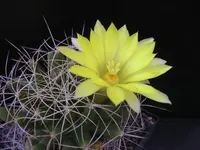
This species usually blooms in spring to early summer, producing small funnel-shaped flowers in a ring near the stem top. Colors are typically pink to magenta, sometimes with lighter centers, followed by small, elongated fruits.
Keep your plants happy and healthy with plant identification, disease detection, and easy care guidance.