green sotol Care (Dasylirion leiophyllum)

Also known as: Smooth Sotol
green sotol

About green sotol

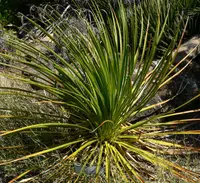
Green sotol, Dasylirion leiophyllum, is a desert shrub-like succulent native to northern Mexico and the southwestern United States. It forms a dense rosette of narrow, strap-like leaves with small teeth along the margins.

Mature plants develop a stout trunk and can produce tall flowering spikes that rise well above the foliage. The plant is adapted to harsh, dry environments and is generally slow-growing but long-lived.

Drought tolerance, heat resistance, and low nutrient needs make it easier to maintain than many other ornamental plants. In cultivation, it performs best in strong light, very well-drained soil, and with sparse watering, which shapes how to care for green sotol.

Main Plant Requirements

Care Difficulty

Easy Care

Light Preference

Full Sun

Water Requirements

Low Water

Temperature Preference

Warm Climate

Hardiness Zone

7–10

Soil Texture

Sandy, Loamy, Rocky

Soil pH

Neutral (7.0), Slightly alkaline (7.0–7.5)

Soil Drainage

Well-drained

Fertilization

Minimal (feed rarely)

Get Personalized Care Plan

Scan your plant to receive care tips personalized for your specific plant

Available on iOS and Android

How to Care for the green sotol

Dasylirion leiophyllum thrives in strong, direct sun typical of arid landscapes.

  • Provide 6–10 hours of full sun daily; open, south- or west-facing exposures are ideal in most climates.
  • Plant in a spot that tolerates intense midday and afternoon sun; light partial shade is acceptable only in very hot regions to reduce leaf scorch risk.
  • If grown as green sotol in cooler or cloudier areas, choose the brightest possible site, since prolonged shade leads to weak, sparse growth.

This desert species is highly drought-tolerant and prefers infrequent, deep watering.

  • Allow soil to dry completely between waterings; in most climates, wait until at least the top 5–8 cm feels dry and the planting area looks pale and loose.
  • In hot, dry summers, deep-soak only when leaves begin to look slightly less rigid; in cool or rainy seasons, skip watering unless soil is clearly dry.
  • Use sharply drained, gritty soil or a rocky slope to prevent waterlogging; yellowing, limp leaves and a soft crown indicate overwatering stress.

This desert-adapted plant handles heat very well but has defined cold limits.

  • Optimal growth occurs around 70–90°F (21–32°C), especially in dry air and full sun exposure during the growing season.
  • Mature plants can tolerate brief drops to about 0–10°F (-18 to -12°C) when soil is well drained, but young rosettes are safer above 20°F (-7°C).
  • In hot regions with summer highs above 100°F (38°C), heat is usually tolerated if roots stay dry; prolonged hard frost or freeze-thaw cycles can damage the crown.

This desert species is highly tolerant of dry air and rarely needs humidity adjustment indoors.

  • Maintain 20–40% relative humidity; typical heated or air-conditioned homes fall in this range.
  • Low humidity almost never harms green sotol; problems usually come from excess moisture at the roots instead.
  • If leaf tips brown while soil stays wet, reduce misting and improve air movement rather than raising humidity.

Dasylirion leiophyllum needs very fast-draining, mineral-heavy soil that dries quickly between waterings.

  • Use a gritty mix of 50–70% mineral material such as coarse sand, pumice, or small gravel, with only 30–50% cactus potting mix.
  • Aim for slightly acidic to slightly alkaline pH, roughly 6.0–7.8, which most cactus or succulent mixes provide.
  • Improve aeration by avoiding fine peat; choose chunky components that create large air spaces and prevent waterlogging.
  • Avoid dense, clay-rich, or moisture-retentive soils, which promote root rot and leaf yellowing, especially in cool conditions.

This species can be grown in containers if the pot is managed for drainage and stability.

  • Choose a wide, heavy container to counterbalance the top-heavy rosette and prevent tipping in strong wind.
  • Select unglazed clay if extra evaporation is needed in cooler or wetter climates, as it allows moisture to escape faster than plastic.
  • Elevate the pot slightly on feet or bricks so drainage holes stay clear and runoff moves away from the base.

This desert-adapted species needs only light feeding in containers or poor soils; in-ground plants in lean, well-drained sites often manage without extra fertilizer.

  • Use a low-dose, balanced slow-release fertilizer (around 10-10-10) or very thin compost layer for green sotol in spring.
  • Feed container plants once at the start of the growing season; avoid monthly or heavy applications.
  • Dilute liquid products to 25–50% strength to prevent salt buildup and root burn.
  • Skip feeding in fall and winter when growth slows, especially in cool conditions.

Pruning Dasylirion leiophyllum is mainly cosmetic and focused on removing dead tissue while preserving its natural rosette form.

  • Best time is late winter to early spring, before active growth starts.
  • Use clean, sharp hand pruners or loppers and sturdy gloves to avoid leaf spines.
  • Cut away dead, brown, or damaged leaves close to the base without nicking the stem center.
  • Avoid removing healthy green leaves, which slows growth and weakens the plant structure.

This species is slow-growing and usually stays in the same spot for many years, whether in the ground or a large container.

  • Check containers every 3–5 years; tight, circling roots or stalled growth indicate the need for a larger pot.
  • Transplant or up-pot in late spring to early summer, once soil is warm and the plant is actively growing.
  • Choose a slightly larger container with very fast-draining, gritty mix to limit root disturbance and prevent rot.
  • Handle the root ball gently, keep roots at the same depth, water once to settle soil, then let the mix partly dry.

Propagation of Dasylirion leiophyllum is usually done from seed and is relatively slow, making it less common in home settings.

  • Collect ripe seeds from mature flower stalks and sow in late spring or early summer.
  • Use a very well-drained sandy mix, keeping it just slightly moist and warm (70–80°F) for germination.
  • Provide bright light but avoid intense midday sun on seedlings to reduce stress and desiccation.
  • Division is rarely practical, as most plants form a single stem and resent heavy root disturbance.

This desert shrub is quite cold hardy when established and usually needs little winter care in mild to moderate climates.

  • Mature plants often tolerate brief drops near 0°F in dry conditions, but young plants are less hardy.
  • Apply a light gravel or coarse mulch around the root zone, keeping it off the stem base.
  • In very wet winters, improve drainage or slightly mound the planting area to limit crown rot.
  • Move container plants to an unheated, bright, frost-free area if extended hard freezes are expected.

Care Tips

Establish drainage berm

In heavy or compacted soils, plant on a raised mound 15–30 cm high made from coarse, gritty mix to keep the crown above any standing water and prevent rot over winter.

Maintain clear trunk

As lower leaves die back, remove them cleanly at the base with a sharp pruning saw, leaving a short stub to protect the stem and reduce pest and fungal shelter points.

Protect from roof runoff

Site plants away from roof drip lines and downspouts or install a shallow gravel swale so concentrated stormwater does not repeatedly saturate the root zone.

Use mineral mulch

Top-dress around the plant with a 3–5 cm layer of gravel or crushed rock instead of organic mulch to keep the crown dry, reflect light, and discourage fungal issues.

Plan for mature size

When caring for green sotol, allow at least a 1–1.5 m radius of open space around each plant so the leaf blades can fully arch without damage from foot traffic or nearby structures.

Common Pests and Diseases

Agave snout weevil

This pest bores into the base of the plant, causing internal tunneling and collapse of the rosette, often accompanied by foul-smelling rot. Symptoms include yellowing, wilting, and sudden toppling of the growing point.

Solution

Remove and destroy any infested plants, including as much of the root system as possible, to prevent spread. Avoid wounding the crown, keep plants in very well-drained soil, and in high-risk areas use a targeted systemic insecticide drench on surrounding healthy plants in late spring according to label directions.

Scale insects

These insects attach to leaves and stems, appearing as small, hard bumps that can cause yellowing and gradual decline. This pest feeds on plant sap and may produce sticky honeydew on nearby surfaces.

Solution

Physically remove light infestations by gently scraping or wiping with a cloth dipped in diluted alcohol, then rinse the foliage. For heavier infestations, apply a horticultural oil or insecticidal soap thoroughly to both sides of leaves on dry, mild days and repeat as needed according to product instructions.

Spider mites

These insects thrive in hot, dry conditions and feed on leaf tissue, leading to fine stippling, dull or bronzed foliage, and possible webbing in the leaf bases. Symptoms include slowed growth and an overall dusty or off-color appearance.

Solution

Increase humidity around the plant slightly if grown in very arid, sheltered spots, and spray the foliage forcefully with water to dislodge mites, focusing on leaf bases. If populations persist, use a miticide or insecticidal soap labeled for mites, applying in repeated intervals to break their life cycle.

Crown rot

This disease affects plants kept in poorly drained or frequently wet soil, causing the crown to soften, turn brown, and eventually collapse. Symptoms include stunted growth, yellowing outer leaves, and a mushy or foul-smelling center.

Solution

Remove and discard affected plants, as recovery is unlikely once the crown is compromised. For Dasylirion leiophyllum care in landscape settings, plant in sharply drained, gritty soil, avoid overhead irrigation, and water deeply but infrequently so the crown and upper root zone dry quickly between waterings.

Interesting Facts

Desert grassland specialist

This species is native to the Chihuahuan Desert, where it dominates arid grasslands and rocky slopes and helps stabilize soils with its deep, fibrous root system.

Defensive leaf architecture

Its long, narrow leaves have sharp, toothed margins and a tough, leathery surface that reduces water loss while deterring large herbivores in its harsh native habitat.

Towering bloom spikes

Mature plants can produce a tall flowering stalk bearing many small, creamy-white flowers that provide an important nectar source for desert insects and other pollinators.

Botan icon

Did you know?

Traditional use of this species in northern Mexico and the southwestern United States includes fermenting its carbohydrate-rich stem to make the distilled spirit known as sotol, giving the plant notable cultural and economic importance in the region.

FAQs about green sotol

Growth is slow. In good outdoor conditions, it usually adds only a few cm of leaf length per year and may take 10–15 years to form a noticeable trunk or large rosette.

Grow Healthy Plants with Botan Care

Keep your plants happy and healthy with plant identification, disease detection, and easy care guidance.

Botan plant care app — identify plants on mobile

Explore More Plants