


Deep pot choice
Use a clay or terracotta pot that is deeper than it is wide, with a large drainage hole, to give the long taproot room while also drying the mix quickly between waterings.

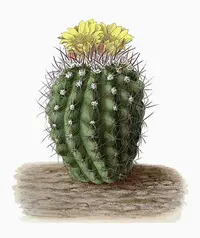
Copiapoa coquimbana is a slow-growing desert cactus native to the coastal hills of northern Chile. It forms clumping mounds of rounded, ribbed stems with dark spines and woolly areoles. Over time it can create an attractive, dome-shaped colony that stays relatively compact. Yellow flowers often appear at the stem tips, adding contrast to the gray-green body. This species comes from very dry, sunny habitats, so it prefers strong light, excellent drainage, and sparse watering. It suits growers who can provide stable, dry conditions and avoid overwatering. Understanding how to care for Copiapoa coquimbana makes it manageable even for patient beginners.

Care Difficulty
Moderate Care

Light Preference
Full Sun

Water Requirements
Low Water

Temperature Preference
Tropical / Frost Sensitive

Hardiness Zone
10–11

Soil Texture
Sandy, Rocky, Loamy

Soil pH
Slightly acidic (6.5–7.0), Neutral (7.0)

Soil Drainage
Well-drained

Fertilization
Minimal (feed rarely)
Scan your plant to receive care tips personalized for your specific plant
Available on iOS and Android
This desert cactus thrives with strong light that mimics its native Chilean coastal habitat.
This species is highly drought-tolerant and must dry thoroughly between waterings to avoid root problems.
This cactus prefers warm, arid conditions with a cool but mainly dry winter rest.
This cactus tolerates very dry air and usually does not need special humidity control indoors.
Copiapoa coquimbana prefers a very fast-draining, mineral, sandy substrate to prevent root rot.
This species is well suited to container growing when drainage and stability are controlled carefully.
This desert cactus grows on very poor soils, so Copiapoa coquimbana needs only light, careful feeding in containers.
Pruning needs are minimal and mainly hygienic for Copiapoa coquimbana.
Container-grown Copiapoa coquimbana benefits from infrequent, careful repotting to refresh its gritty substrate.
New Copiapoa coquimbana plants are most often produced from seeds, with offsets used when available.
Cold, wet conditions are the main winter risk for Copiapoa coquimbana, especially in containers.

Plant Health Check
Not sure what's wrong with your plant? Check your plant's health inside the app.
This species occurs naturally almost entirely along the Pacific coastal belt of north-central Chile, often within a narrow strip influenced by cool oceanic air, rather than spreading far inland like some related species.
Mature plants usually form large, dense clumps composed of many stems, sometimes covering sizable patches of rocky ground, which helps stabilize them on slopes and share limited water among connected heads.
In its native habitat, this cactus benefits significantly from coastal fogs known as camanchaca, collecting moisture that condenses on the plant and surrounding rocks in an area where direct rainfall is scarce and irregular.

Copiapoa coquimbana is part of a species complex that has been historically difficult for botanists to delimit, with multiple described varieties and local forms that blur the boundaries between species, making it an important example in ongoing studies of cactus evolution and taxonomy in the Atacama region.
In cultivation this cactus usually has one main blooming period in late spring or summer, producing yellow flowers from the crown. A second, lighter flush can occur if conditions stay warm, bright, and dry enough.
Keep your plants happy and healthy with plant identification, disease detection, and easy care guidance.

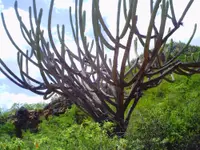
Pilosocereus pachycladus
Pilosocereus pachycladus
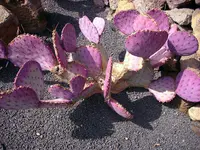
purple pricklypear
Opuntia macrocentra
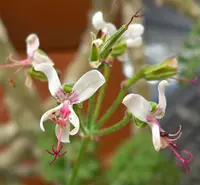
Meaty Storksbill
Pelargonium carnosum
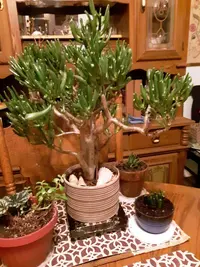
Finger Jade
Crassula ovata 'Gollum'
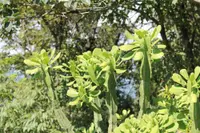
Sullu spurge
Euphorbia royleana
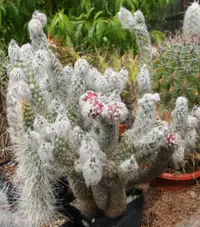
Austrocylindropuntia vestita
Austrocylindropuntia vestita
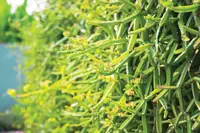
Veld Grape
Cissus quadrangularis
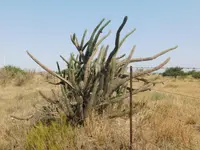
Cereus aethiops
Cereus aethiops