


Rotate for symmetry
Turn the pot 90° every 2–3 weeks during active growth so the stem receives even light and develops a balanced, upright form instead of leaning toward one direction.

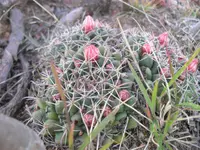
Mammillaria uncinata is a small, clustering cactus known for its rounded stems covered in neat rows of tubercles tipped with hooked spines. It often forms attractive mounds over time, making it suitable for containers and rock gardens.
This species is native to arid regions of Mexico, where it grows on rocky slopes with excellent drainage and strong sun. Its modest size, slow growth, and drought tolerance generally make it straightforward for beginners who want to learn how to care for Mammillaria uncinata.
It prefers bright light, low to moderate moisture, and a gritty, fast-draining soil mix that prevents water from sitting around the roots.

Care Difficulty
Easy Care

Light Preference
Full Sun

Water Requirements
Low Water

Temperature Preference
Warm Climate

Hardiness Zone
9–11

Soil Texture
Sandy, Loamy, Rocky

Soil pH
Slightly acidic (6.5–7.0), Neutral (7.0)

Soil Drainage
Well-drained

Fertilization
Minimal (feed rarely)
Scan your plant to receive care tips personalized for your specific plant
Available on iOS and Android
This small cactus thrives in bright, direct light that mimics an open, arid habitat.
This species prefers thorough but infrequent watering that allows the root zone to dry between soakings.
This cactus prefers warm, dry conditions with a noticeable difference between summer and winter temperatures.
This cactus handles typical indoor humidity well and rarely needs special adjustment.
Mammillaria uncinata requires a very fast-draining, mineral-rich substrate to prevent root rot.
This species is well suited to container growing when drainage and pot size are managed carefully.
This small cactus has low nutrient needs, so light feeding is enough for healthy growth.
Pruning needs are minimal and focus on hygiene rather than shaping.
This cactus prefers infrequent disturbance, but occasional repotting maintains root health and soil structure.
Propagation is usually done from offsets or seeds, both responding best to warm, bright conditions.
Winter care focuses on keeping the plant cool, very dry, and frost free to avoid tissue damage.

Plant Health Check
Not sure what's wrong with your plant? Check your plant's health inside the app.
This species develops small, strongly hooked central spines that can snag passing animals, a trait thought to help the plant gain slight shade and moisture benefits when debris and dry grass collect on its body.
The plant often produces a neat ring of pink to purplish flowers around the upper part of the stem, a typical pattern in this genus but especially noticeable in this compact species due to the contrast with its pale spines.
In its native Mexican habitats it commonly grows in rock crevices and on steep limestone slopes, anchoring itself in very shallow, mineral-rich soils with strong drainage.
This species usually blooms in spring to early summer, producing small funnel-shaped flowers in a ring near the stem top. Colors are often pink to purplish, sometimes white, and followed by elongated red fruits with seeds.
Keep your plants happy and healthy with plant identification, disease detection, and easy care guidance.

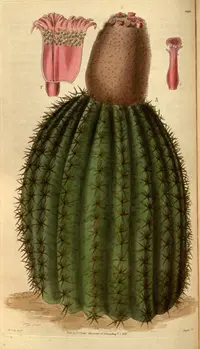
Turk's cap
Melocactus intortus
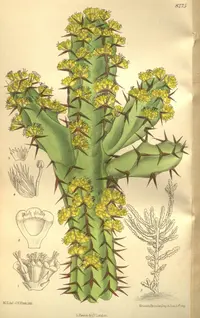
Euphorbia ledienii
Euphorbia ledienii
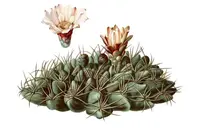
Gymnocalycium mostii
Gymnocalycium mostii
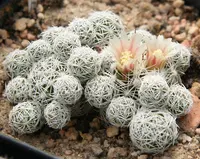
thimble cactus
Mammillaria vetula
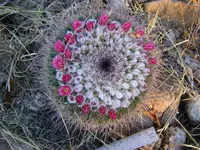
Mammillaria petterssonii
Mammillaria petterssonii
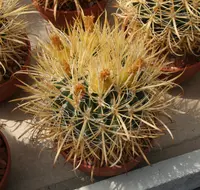
Ferocactus chrysacanthus
Ferocactus chrysacanthus
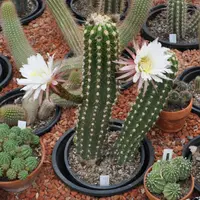
Soehrensia candicans
Soehrensia candicans
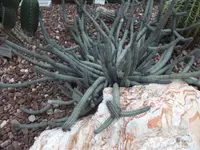
Euphorbia baioensis
Euphorbia baioensis