Rotate for symmetry
Rotate the pot 90° every 4–6 weeks during active growth so the stem thickens evenly and does not lean toward the brightest light source.

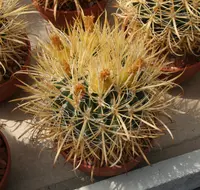
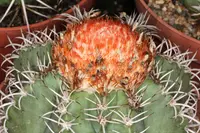
Ferocactus chrysacanthus is a slow-growing desert cactus forming a solitary, ribbed globe that becomes more cylindrical with age. It is known for its dense, golden, hooked spines that create a striking, armored look.
This species is native to arid regions of Mexico, where it grows in rocky, well-drained soils under strong sun and low rainfall. Its thick, succulent stem stores water, which makes it drought-tolerant and generally low-maintenance.
For most home growers, the main challenges are avoiding overwatering and providing enough light. With gritty soil, bright exposure, and careful watering, it is relatively straightforward to care for Ferocactus chrysacanthus.

Care Difficulty
Moderate Care

Light Preference
Full Sun

Water Requirements
Low Water

Temperature Preference
Tropical / Frost Sensitive

Hardiness Zone
9–11

Soil Texture
Sandy, Rocky, Loamy

Soil pH
Slightly acidic (6.5–7.0), Neutral (7.0)

Soil Drainage
Well-drained

Fertilization
Minimal (feed rarely)
Scan your plant to receive care tips personalized for your specific plant
Available on iOS and Android
This species thrives in high light and benefits from strong, direct sun in most climates.
This cactus is highly drought-tolerant and needs infrequent but thorough watering.
This desert cactus prefers warm, dry conditions with a cool but not freezing winter rest.
This cactus prefers dry air and typical indoor humidity around 30–40%.
This species needs a very fast-draining, gritty mineral mix to keep roots dry and aerated.
This species is well suited to container growing when stability and drainage are managed carefully.
This desert cactus has low nutrient needs, so use light feeding only during active growth to support healthy Ferocactus chrysacanthus care.
This species needs almost no structural pruning; focus on hygiene and safety when handling Ferocactus chrysacanthus.
Container-grown plants prefer slightly snug pots and only occasional repotting to limit stress.
This cactus is mainly propagated from seed, as offsets are rare on mature Ferocactus chrysacanthus plants.
This cactus prefers a cool, very dry winter rest and suffers in prolonged cold, especially in wet conditions.

Plant Health Check
Not sure what's wrong with your plant? Check your plant's health inside the app.
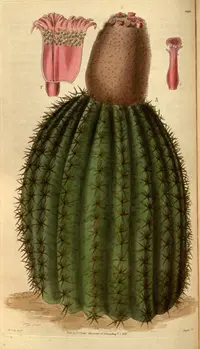
This species produces thick, strongly hooked central spines that are often bright golden-yellow in youth, a striking contrast against the blue-green ribs of the stem.
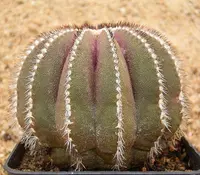
The stem combines deep, straight ribs with prominent tubercles along the edges, giving it a sculpted appearance that distinguishes it from many other barrel cacti.
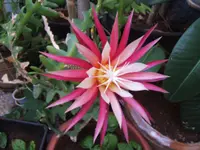
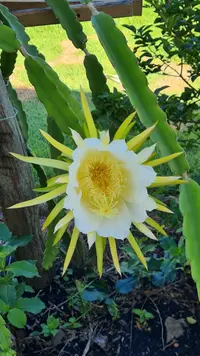
Mature plants form a ring of yellow to orange-yellow funnel-shaped flowers around the stem apex in summer, each emerging from a dense woolly crown of short hairs.

In its native habitat of northwestern Mexico, this species often grows on rocky slopes and volcanic substrates, where its deep root system anchors it securely and allows it to exploit brief pulses of rainfall in otherwise very dry conditions.
This species performs best outdoors in full sun and excellent drainage, especially in arid or Mediterranean climates. Indoors it usually grows slower and stays smaller, and needs very bright light, such as a south-facing window or strong grow lights.
Keep your plants happy and healthy with plant identification, disease detection, and easy care guidance.