Rotate for symmetry
Turn the pot 90° every 2–3 weeks during active growth so the cephalium develops evenly and the stem does not lean toward the light source.

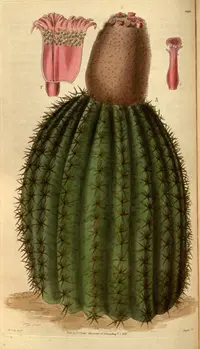
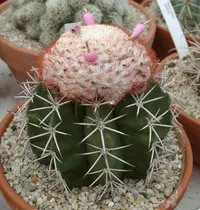
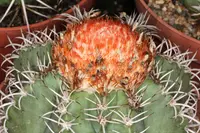
Melocactus intortus, commonly called Turk's cap, is a small, globe-shaped cactus known for its distinctive woolly, hat-like crown called a cephalium. This dense, bristly structure produces small flowers and later bright fruits, giving the plant a striking architectural look.
The species is native to dry, rocky habitats in the Caribbean, where it adapts to intense sun and limited rainfall. Its slow growth and sensitivity to overwatering make it slightly more demanding than many beginner cacti. Understanding how to care for Turk's cap starts with providing strong light, very well-drained mineral soil, and cautious watering that keeps the roots from staying wet for long periods.

Care Difficulty
Hard Care

Light Preference
Full Sun

Water Requirements
Low Water

Temperature Preference
Tropical / Frost Sensitive

Hardiness Zone
11–12

Soil Texture
Sandy, Rocky, Loamy

Soil pH
Slightly acidic (6.5–7.0), Neutral (7.0)

Soil Drainage
Well-drained

Fertilization
Minimal (feed rarely)
Scan your plant to receive care tips personalized for your specific plant
Available on iOS and Android
Melocactus intortus needs strong light to form a healthy cephalium and compact body.
Melocactus intortus prefers thorough but infrequent watering that allows the root zone to dry between soakings.
This cactus thrives in consistently warm, arid conditions with good air movement.
This cactus thrives in relatively dry air and rarely needs extra humidity attention.
This species needs a very fast-draining, mineral-rich substrate to prevent root and stem rot.
This species is well suited to container growing when the pot is chosen to control moisture and support its heavy crown.
Melocactus intortus benefits from light, carefully controlled feeding during its warm growing season.
Melocactus intortus needs almost no pruning, since its natural form and cephalium development are part of its character.
This cactus dislikes frequent root disturbance, so repot Melocactus intortus only when clearly necessary.
Propagation of Melocactus intortus is usually done from seed, as mature plants rarely offset and cuttings are not standard.
Melocactus intortus is highly frost-sensitive and needs warm, dry, bright conditions through winter, especially in containers.

Plant Health Check
Not sure what's wrong with your plant? Check your plant's health inside the app.
Unlike some related species, this cactus often develops its woolly, bristly cephalium while the green stem is still relatively small, signaling the start of flowering and a major shift in growth from stem expansion to reproduction.
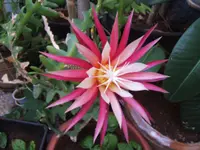
In its native Caribbean range, the tubular pink flowers are adapted for visits by specific bees and other insects that can navigate the dense cephalium bristles to reach nectar and transfer pollen between plants.
This species naturally occurs on dry, rocky coastal slopes and limestone outcrops in the Lesser Antilles, where it endures high light, seasonal drought, and salt-laden winds that many other cacti cannot tolerate.

Some populations of this cactus have been heavily collected for the ornamental trade and are now of conservation concern in parts of its Caribbean range, so wild plants in certain areas are legally protected and trade is regulated to prevent further decline.
This species usually begins forming its woolly, bristly cephalium only after reaching maturity, often after several years. Small pink tubular flowers then appear from the cephalium during warm months, blooming repeatedly in cycles rather than all at once.
Keep your plants happy and healthy with plant identification, disease detection, and easy care guidance.