Rotate for symmetry
Rotate the pot 90° every 2–3 weeks during active growth so the cephalium develops evenly and the stem does not lean permanently toward the strongest light source.

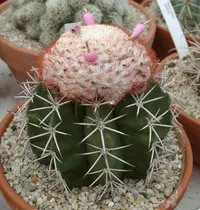
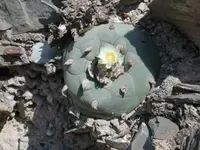
Melocactus violaceus is a small, slow-growing cactus known for its spherical green body lined with pronounced ribs and spines. With age, it develops a distinctive reddish cephalium, a woolly cap that produces small flowers and later bright fruits.
This species is native to rocky, sunny habitats in Brazil, where it grows in very well-drained, often poor soils. It is considered more demanding than many common cacti because it dislikes cold, prolonged dryness in the roots, and repotting.
Successful care for Melocactus violaceus depends on strong light, careful watering, and a gritty, fast-draining mix that prevents root rot while avoiding extended waterlogging.

Care Difficulty
Hard Care

Light Preference
Full Sun

Water Requirements
Low Water

Temperature Preference
Tropical / Frost Sensitive

Hardiness Zone
11–12

Soil Texture
Sandy, Rocky, Loamy

Soil pH
Slightly acidic (6.5–7.0), Neutral (7.0)

Soil Drainage
Well-drained

Fertilization
Minimal (feed rarely)
Scan your plant to receive care tips personalized for your specific plant
Available on iOS and Android
This cactus needs strong light but protection from harsh extremes for compact, healthy growth.
Watering should be infrequent and precise to avoid root rot in this desert-adapted cactus.
Stable warmth is essential for healthy growth and cephalium development in this species.
This cactus prefers dry, airy conditions and rarely needs extra humidity attention indoors.
Use a very fast-draining, mineral-heavy mix to protect the shallow roots of this cactus from rot.
This species is well suited to container growing when placed in a stable, shallow pot that sheds water quickly.
This cactus needs light feeding only to support slow, healthy growth.
This species requires almost no pruning, as it keeps a natural, compact form.
Handling this cactus gently during repotting is important to avoid root damage and setback.
Propagation of this species is slow and usually done only from seed by specialist growers.
Cool, very dry winter conditions are essential for this tropical cactus to stay healthy.

Plant Health Check
Not sure what's wrong with your plant? Check your plant's health inside the app.
This species is known for its short, stiff spines with a clear violet to purplish tint, a color combination that contrasts strongly with the green body and is much more pronounced than in many related Melocactus species.
It is naturally found on low, often sandy or rocky coastal sites in eastern Brazil, frequently near sea level, where it tolerates high light, strong wind, and saline air that would stress many other cacti.
Compared with several other Melocactus species, this plant often begins forming its woolly, bristly cephalium at a relatively small body size, marking an early switch from vegetative growth to flowering and fruiting.

Some wild populations show notable variation in spine color and density, and these naturally occurring differences have made particular local forms of this species especially sought after by cactus collectors and specialist growers.
Growth is slow. Seedlings often stay small for many years, adding only a few millimeters yearly. The woolly cephalium usually appears after several years, once the stem reaches mature size and growth has noticeably slowed.
Keep your plants happy and healthy with plant identification, disease detection, and easy care guidance.