Deep pot choice
Use a narrow, deep clay pot with a large drainage hole so the strong taproot can grow straight down and excess moisture evaporates quickly from the sides.

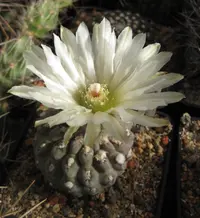
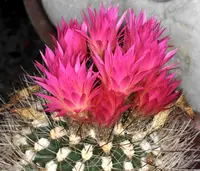
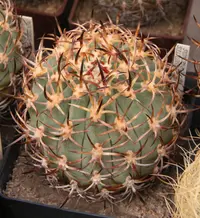
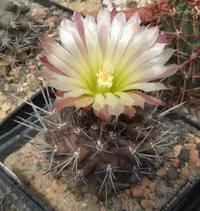
Eriosyce napina is a small, slow-growing cactus native to the arid coastal regions of Chile. It usually forms a low, rounded stem that often sits partly sunken in the soil surface. The plant has pronounced ribs with firm spines and can produce showy funnel-shaped flowers that create a strong contrast with its compact body. It is adapted to intense sun, poor mineral soils, and very limited rainfall, which makes overwatering the main challenge in cultivation. For those who want to care for Eriosyce napina successfully, it helps to provide bright light, sharply draining gritty soil, and careful, infrequent watering.

Care Difficulty
Moderate Care

Light Preference
Full Sun

Water Requirements
Low Water

Temperature Preference
Warm Climate

Hardiness Zone
10–11

Soil Texture
Sandy, Rocky, Loamy

Soil pH
Slightly acidic (6.5–7.0), Neutral (7.0)

Soil Drainage
Well-drained

Fertilization
Minimal (feed rarely)
Scan your plant to receive care tips personalized for your specific plant
Available on iOS and Android
This Chilean desert cactus thrives with bright, strong light but needs protection from extreme midday sun in hot summers.
This cactus prefers deep, infrequent watering that allows the root zone to dry well between soakings.
This species prefers warm, dry conditions and reacts poorly to prolonged cold and excess moisture together.
This species prefers dry air and typical indoor humidity is usually safe.
This cactus needs a very fast-draining, mineral-rich soil to prevent root rot.
This species is well suited to container growing when drainage and pot dimensions are carefully managed.
This slow-growing cactus needs minimal feeding, and light fertilization mainly supports container-grown Eriosyce napina during active growth.
This species needs almost no structural pruning, with attention focused on hygiene and safety for the plant and the grower.
This cactus prefers to stay slightly root-bound, so repotting is infrequent and should be done with minimal disturbance.
This species is mainly propagated from seeds, and success depends on providing stable warmth and excellent drainage.
This cactus needs cool, very dry winter conditions and is not suited to prolonged outdoor frost in most climates.

Plant Health Check
Not sure what's wrong with your plant? Check your plant's health inside the app.
This species develops a thick underground taproot that stores water and nutrients, allowing the small above-ground body to survive long, hyper-arid periods on the coastal deserts of northern Chile.
The plant often grows half-buried and colored in muted browns or grays that closely match surrounding gravel, making it difficult to spot and helping protect it from herbivores and intense solar radiation.
Natural populations occur in areas influenced by coastal fog (camanchaca), where moisture from fog provides an important water source in an otherwise extremely dry climate.
Growth is very slow. Seedlings often stay under 1 cm for several years, and mature size may take 8–15 years or more. Limited root systems and arid-climate adaptation naturally restrict growth rate, even in good cultivation.
Keep your plants happy and healthy with plant identification, disease detection, and easy care guidance.