Deep pot choice
Use a deep, heavy clay pot with a large center drainage hole so the strong taproot can develop fully and the plant stays stable as it elongates.

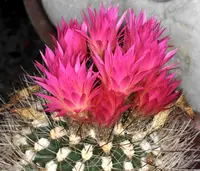
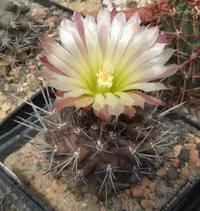
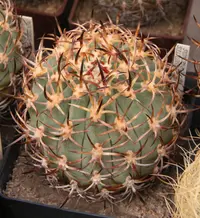
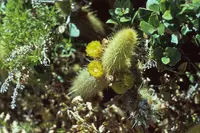
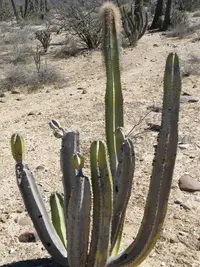
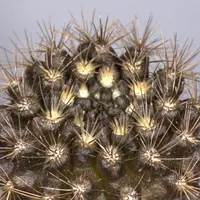
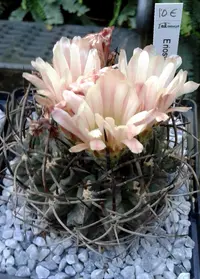
Eriosyce subgibbosa is a small, slow-growing cactus native to coastal and inland regions of central Chile. It usually forms a solitary, rounded to columnar stem with pronounced ribs and short, sturdy spines. In maturity it produces large, tubular flowers in shades of pink to red near the crown, creating a strong contrast with the dark green body. This species is adapted to bright, dry habitats with porous, rocky soils and good air movement. It is generally durable but grows slowly and dislikes excess moisture, which can make it a bit challenging for beginners. Understanding how to care for Eriosyce subgibbosa mainly involves controlling watering and providing strong light with sharply draining soil.

Care Difficulty
Moderate Care

Light Preference
Full Sun

Water Requirements
Low Water

Temperature Preference
Warm Climate

Hardiness Zone
9–11

Soil Texture
Sandy, Rocky, Loamy

Soil pH
Slightly acidic (6.5–7.0), Neutral (7.0)

Soil Drainage
Well-drained

Fertilization
Minimal (feed rarely)
Scan your plant to receive care tips personalized for your specific plant
Available on iOS and Android
This coastal Chilean cactus prefers bright, cool sun with some protection from extreme midday exposure.
This species prefers thorough but infrequent watering with fast drainage and a distinct dry period between soakings.
This cactus favors cool to warm, dry conditions with a pronounced cool rest period but no hard frost.
This cactus prefers dry air and seldom needs extra humidity attention indoors.
This species requires a very fast-draining, mineral-based mix to prevent root rot.
This species is well suited to container growing when drainage and stability are prioritized.
This cactus needs only light feeding to maintain steady growth in pots.
Pruning needs are minimal and focus on hygiene rather than shaping this cactus.
This slow-growing cactus stays in the same pot for years and dislikes frequent disturbance.
Propagation is most often done from seed and requires patience and strict dryness.
Winter care focuses on keeping the plant cold but very dry to avoid rot.

Plant Health Check
Not sure what's wrong with your plant? Check your plant's health inside the app.
This cactus naturally grows along the coastal slopes of central Chile, where it relies heavily on frequent sea fogs rather than regular rainfall to meet its moisture needs.
Populations occur on rocky, often saline coastal soils where few other cacti can thrive, showing a notable tolerance to salt spray and nutrient-poor substrates.
In its native range, the long, tubular, night-opening flowers are primarily pollinated by nectar-feeding bats, which are attracted by the flower shape and timing rather than bright color.

The fruits of this species are fleshy, often bright red to orange, and are readily eaten by coastal birds in Chile, which disperse the seeds across cliffs and rocky slopes through their droppings.
Flowering often fails when the plant lacks a cool, dry winter rest or enough high-intensity light. Slight root restriction, lean soil, and a gradual increase in water and warmth in spring usually improve bud formation and flowering.
Keep your plants happy and healthy with plant identification, disease detection, and easy care guidance.