Support And Training
Install a sturdy trellis or hoop and gently tie new stems with soft plant ties or strips of fabric, guiding them upward or outward to prevent breakage and create a stable, open framework for flowering.

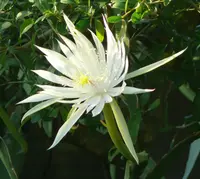
Epiphyllum hookeri, often called climbing cactus, is an epiphytic cactus that naturally grows on trees and rocks in tropical forests of Central and South America. It has long, flat, leaf-like stems that arch or hang, creating a cascading or climbing habit.
Large, fragrant white flowers open mainly at night, which makes it attractive as an ornamental plant for bright indoor spaces or sheltered patios. It is generally considered moderate in difficulty, as it prefers stable warmth, bright indirect light, and evenly moist but well-drained soil.
Those conditions are important to understand when learning how to care for climbing cactus and keep it growing reliably over time.

Care Difficulty
Moderate Care

Light Preference
Bright Indirect Light

Water Requirements
Moderate Water

Temperature Preference
Tropical / Frost Sensitive

Hardiness Zone
10–11

Soil Texture
Loamy, Sandy, Organic-rich

Soil pH
Acidic (5.5–6.5), Slightly acidic (6.5–7.0)

Soil Drainage
Moist but well-drained

Fertilization
Light (every 4–6 weeks)
Scan your plant to receive care tips personalized for your specific plant
Available on iOS and Android
Epiphyllum hookeri prefers bright, indirect light that mimics dappled forest conditions.
Epiphyllum hookeri prefers evenly moist but never waterlogged soil.
This species grows best in warm, frost-free conditions with only mild temperature swings.
This epiphytic cactus prefers moderately humid air but usually tolerates typical indoor levels.
This species needs a loose, airy, sharply draining mix that mimics leaf-litter in tree canopies.
This species grows very well in containers when its trailing, climbing habit is supported.
Epiphyllum hookeri benefits from modest feeding to support leafy growth and flowering in the growing season.
Pruning helps keep Epiphyllum hookeri manageable, healthy, and flowering well.
Container-grown Epiphyllum hookeri appreciates occasional repotting to refresh soil and manage root crowding.
New Epiphyllum hookeri plants are most commonly produced from stem cuttings taken in warm seasons.
Epiphyllum hookeri is frost-sensitive and requires cool, dry, sheltered winter conditions in most climates.

Plant Health Check
Not sure what's wrong with your plant? Check your plant's health inside the app.
This species opens its large white flowers at night and closes them by morning, an adaptation linked to pollination by nocturnal animals such as moths and bats in its native tropical forests.
In the wild, it often grows as an epiphyte on tree branches rather than in soil, using aerial roots to anchor itself while collecting moisture and nutrients from debris and rain.
The flowers produce a strong, sweet scent at night, which helps guide nocturnal pollinators to the plant over relatively long distances.

Wild populations of this species are native to tropical regions of Central and northern South America, where it contributes to forest canopy ecology by offering nectar resources high above the ground during hours when few other flowers are available.
Lack of blooms is often due to insufficient maturity, weak light, or no cool, dry rest period. Crowded roots and slightly lean conditions can encourage flower production more than constant repotting or heavy fertilizing.
Keep your plants happy and healthy with plant identification, disease detection, and easy care guidance.