Support heavy rosette
As the rosette enlarges and becomes top-heavy, stabilize the plant by potting it in a wide, heavy container and gently mounding mix around exposed roots to prevent wobbling and stem breakage.

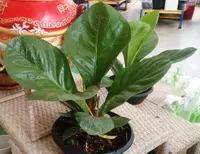
Anthurium jenmanii is a tropical aroid grown mainly for its bold rosette of thick, arching leaves that emerge from a short, trunk-like stem. It often has a sculptural, fountain-shaped form that suits indoor display or shaded outdoor spots in warm climates.
This species comes from humid tropical forests in northern South America, where it grows as a terrestrial or lithophytic plant on well-drained, organic-rich substrates. Its sturdy leaves and relatively slow, compact growth make it moderately easy to manage if light, warmth, and moisture are consistent.
It prefers bright, filtered light, evenly moist but airy soil, and good humidity, so learning how to care for Anthurium jenmanii focuses mainly on providing a stable, warm, humid environment.

Care Difficulty
Moderate Care

Light Preference
Bright Indirect Light

Water Requirements
Moderate Water

Temperature Preference
Tropical / Frost Sensitive

Hardiness Zone
11–12

Soil Texture
Loamy, Peaty, Organic-rich

Soil pH
Acidic (5.5–6.5), Slightly acidic (6.5–7.0)

Soil Drainage
Moist but well-drained

Fertilization
Light (every 4–6 weeks)
Scan your plant to receive care tips personalized for your specific plant
Available on iOS and Android
This plant prefers bright, filtered light that mimics a forest understory.
Watering should keep the root zone moist but never saturated.
Stable, warm conditions support steady growth and prevent stress.
This species prefers consistently humid air and reacts quickly to very dry conditions.
This species needs a loose, airy, organic-rich medium that drains quickly but holds some moisture.
This species is well suited to container growing when the pot supports its spreading, heavy rosette habit.
This species benefits from light, consistent feeding during active growth for stronger foliage and flowering.
Light pruning helps keep Anthurium jenmanii neat and reduces disease risk.
Container-grown Anthurium jenmanii prefers periodic repotting to maintain a loose, aerated root zone.
Division is the most reliable method for propagating Anthurium jenmanii in home conditions.
This tropical species is frost-sensitive and needs warm, stable conditions through winter.

Plant Health Check
Not sure what's wrong with your plant? Check your plant's health inside the app.
This species grows as a compact rosette that forms a bowl- or nest-shaped crown, which naturally traps leaf litter and organic debris that slowly break down and feed the plant.
The leaves are notably thick, stiff, and leathery (coriaceous), an adaptation that helps reduce water loss and provides mechanical support in exposed or drier tropical sites where it sometimes occurs.
Mature plants often show deep green upper leaf surfaces with purplish or reddish tones on the undersides and petioles, a color pattern linked to pigments that can help manage light exposure in their native habitats.
Brown, crispy leaf edges usually result from low humidity, excess fertilizer salts, or exposure to hot or cold drafts. Flush the potting mix occasionally, improve local humidity, and keep the plant away from vents and heaters.
Keep your plants happy and healthy with plant identification, disease detection, and easy care guidance.