Ivy Tree Care (Heptapleurum heptaphyllum)

Also known as: Common Schefflera
Ivy Tree

About Ivy Tree

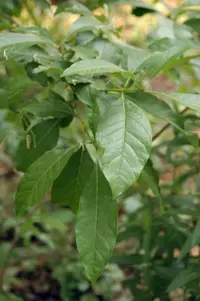
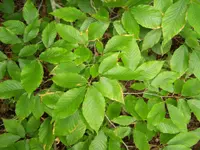
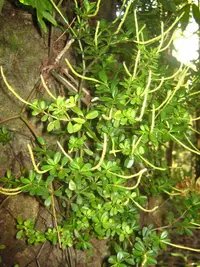
Ivy tree, Heptapleurum heptaphyllum, is an evergreen shrub or small tree grown mainly as a foliage ornamental. It typically develops multiple stems with an upright, bushy habit and whorls of glossy, divided leaves that give a light, tropical look.

In the wild it occurs in parts of East and Southeast Asia, where it grows in warm, humid, partially shaded forests. It adapts relatively well to indoor conditions but can become leggy or sparse in low light.

Stable temperatures, bright filtered light, and evenly moist but well-drained soil make it easier to care for Ivy Tree over the long term.

Main Plant Requirements

Care Difficulty

Moderate Care

Light Preference

Bright Indirect Light

Water Requirements

Moderate Water

Temperature Preference

Tropical / Frost Sensitive

Hardiness Zone

10–12

Soil Texture

Loamy, Sandy, Organic-rich

Soil pH

Acidic (5.5–6.5), Slightly acidic (6.5–7.0)

Soil Drainage

Moist but well-drained

Fertilization

Light (every 4–6 weeks)

Get Personalized Care Plan

Scan your plant to receive care tips personalized for your specific plant

Available on iOS and Android

How to Care for the Ivy Tree

This species prefers bright, indirect light with some protection from intense midday sun.

  • Provide 4–6 hours of bright, filtered light daily; light shade suits mature outdoor Ivy Tree in warm climates.
  • Allow gentle morning sun in east or south-facing exposure, but use sheer shade or dappled canopy to block strong afternoon sun.
  • If new growth is sparse or internodes stretch, increase light; if leaves bleach or develop crisp brown patches, reduce direct sun, especially in summer.

Heptapleurum heptaphyllum prefers evenly moist, well-drained soil rather than constant wetness.

  • Water when the top 3–5 cm of soil feels dry, allowing water to soak through freely and drain away completely.
  • Reduce watering in cooler months when growth slows, but never let soil stay bone dry for long periods during active growth.
  • Watch for yellowing, soft leaves or a sour soil smell as signs of overwatering, and for leaf droop or crisp edges as signs of underwatering.

This plant grows best in warm, frost-free conditions with stable temperatures.

  • Aim for 65–80°F (18–27°C) for active growth, with only brief dips outside this range.
  • Protect from cold; sustained exposure below 45°F (7°C) damages foliage, and frost can kill young shoots and tips.
  • In hotter regions, it tolerates short periods up to 90°F (32°C) if shaded and well hydrated, but avoid hot, drying winds and reflected heat from walls.

This species prefers moderate indoor-style humidity and tolerates typical home conditions.

  • Aim for 40–60% humidity; avoid placing the plant near heating vents or strong drafts that drop levels further.
  • Dry air can cause brown, crispy leaf edges and increased leaf drop, especially on newer foliage.
  • Increase humidity by grouping plants, placing the pot on a water-and-pebble tray, or running a small humidifier near the Ivy Tree.

This plant performs best in loose, airy, organic-rich soil that drains quickly but does not dry out instantly.

  • Use a mix of roughly 2 parts peat- or coco-based potting mix, 1 part perlite, and 1 part fine bark to create a chunky, well-aerated substrate.
  • Target slightly acidic to neutral pH around 6.0–7.0, which supports nutrient availability and root health for Heptapleurum heptaphyllum.
  • Ensure water drains freely through the entire root zone; compacted or heavy substrates that stay wet for more than 2–3 days promote root rot.
  • Improve drainage and aeration by incorporating coarse perlite or bark rather than sand, which can settle and reduce pore spaces over time.

This species adapts well to container culture when the pot supports its fast, upright growth.

  • Choose a relatively heavy or wide-based container to reduce tipping as the plant becomes tall and top-heavy.
  • Select a pot that allows 2–3 cm of lateral root expansion so roots can spread without circling tightly against the wall.
  • Use slightly porous materials like unglazed clay if extra evaporation is needed to offset moisture-retentive substrates and reduce waterlogging risk.

Heptapleurum heptaphyllum responds well to moderate feeding during active growth but does not need heavy fertilization for healthy foliage.

  • Use a balanced liquid fertilizer (for example 10-10-10 or 20-20-20) at 1/2 strength every 4–6 weeks in spring and summer.
  • Alternatively, apply a slow-release granular fertilizer at the start of spring, following label rates for container shrubs.
  • Pause or reduce feeding to 1/4 strength every 8–10 weeks in fall and winter, when growth slows indoors.
  • For Ivy Tree indoor care, water before feeding and avoid applying fertilizer to very dry or waterlogged soil.

Heptapleurum heptaphyllum benefits from light, periodic pruning to manage size and maintain a balanced canopy.

  • Carry out main pruning in late winter or early spring, before vigorous new growth starts.
  • Remove dead, diseased, crossing, or inward-growing stems with clean, sharp bypass pruners or loppers.
  • Shorten overly long shoots to an outward-facing node to keep a compact, tree-like form.
  • Step back frequently while cutting to maintain an even outline and avoid removing more than 20–25% of foliage at one time.

Container-grown plants and young specimens appreciate occasional repotting or transplanting to support steady growth.

  • Check for roots circling the pot, pushing through drainage holes, or slowed growth as signs that a larger container is needed.
  • Plan to repot every 2–3 years in late winter or early spring, just before new growth starts.
  • Increase pot size by 2–5 cm only, tease apart circling roots gently, and remove any dead or mushy sections.
  • Water thoroughly after repotting, keep in bright but indirect light for 1–2 weeks, and avoid heavy fertilization until new growth appears.

This species is commonly propagated from stem cuttings, with seeds used less often in home settings.

  • Take semi-ripe stem cuttings in late spring or early summer, 8–12 cm long with several leaves.
  • Remove lower leaves, dip the cut base in rooting hormone, and insert into a moist, well-draining mix such as perlite and peat or coco coir.
  • Maintain 70–80°F, high humidity, and bright, indirect light to encourage rooting over several weeks.
  • Sow fresh seeds on the surface of a sterile seed mix, keep lightly covered, evenly moist, and warm for gradual germination.

This subtropical species is frost tender and needs protection from freezing conditions, especially in containers.

  • In regions below 30–35°F, grow in containers so plants can be moved indoors or into a greenhouse before frost.
  • For in-ground plants in mild climates, apply a 5–8 cm mulch layer around the root zone, keeping mulch away from the trunk.
  • Shelter foliage from cold winds with a temporary screen or horticultural fleece during short cold spells.

Care Tips

Early structural training

Select 1–3 strongest stems as the main framework and stake them loosely while young so the plant develops a stable, tree-like form instead of a sprawling shrub.


Rotational grooming

Rotate the container 90° every 2–3 weeks and lightly pinch back only the longest outer shoots to keep the canopy balanced and reduce leaning toward the light source.

Targeted pest scouting

Inspect new growth, leaf undersides, and stem joints weekly with a hand lens and wipe early spider mites or scale with a soft cloth dipped in insecticidal soap before populations establish.

Controlled height management

To limit height without stressing the plant, remove only the uppermost growth tip at a node and allow a side shoot just below the cut to become the new leader, repeating every few months if needed.

Graduated repotting strategy

Move the plant into a pot only 2–5 cm wider when roots circle the base so that roots colonize fresh mix efficiently and growing Ivy Tree remains less prone to staying waterlogged after each watering.

Common Pests and Diseases

Scale insects

This pest attaches to stems and leaf undersides, sucking sap and causing yellowing, sticky honeydew, and sooty mold growth. Infestations can weaken the plant and lead to leaf drop if not controlled.

Solution

Remove heavily infested stems or leaves and wipe remaining scale with a cotton pad dipped in 70% isopropyl alcohol or insecticidal soap, repeating weekly until gone. Improve air circulation, avoid overfertilizing with high nitrogen, and monitor new growth closely as part of ongoing Heptapleurum heptaphyllum plant care.

Spider mites

These insects are tiny sap-feeding arachnids that thrive in warm, dry indoor air, causing fine webbing, stippled leaves, and general leaf fade. Symptoms include dull, dusty-looking foliage and premature leaf drop on stressed plants.

Solution

Shower the plant with lukewarm water to physically remove mites, then use insecticidal soap or a ready-to-use horticultural oil on both leaf surfaces, repeating every 5–7 days for several cycles. Raise humidity slightly, keep the plant out of hot, drying drafts, and inspect regularly with a hand lens to catch early reinfestation.

Mealybugs

This pest appears as white, cottony clusters in leaf axils, along stems, and on roots, where they suck sap and excrete sticky honeydew. Affected plants may show distorted new growth and gradual decline if the population builds up.

Solution

Isolate the plant, then dab visible mealybugs with 70% isopropyl alcohol and follow with thorough applications of insecticidal soap on all aboveground parts. Check the root ball for root mealybugs when repotting, remove infested soil, and maintain good light and moderate watering so the plant can recover.

Bacterial leaf spot

This disease causes small water-soaked spots that turn brown or black with yellow halos, often merging into larger dead patches on leaf blades. High humidity with poor air movement increases the risk on dense, leafy heptapleurum plants.

Solution

Remove and discard affected leaves, avoiding overhead watering so foliage stays dry, and improve spacing and airflow around the plant. Disinfect pruning tools between cuts, keep leaves free of standing water, and avoid misting if spotting is active to limit spread.

Sooty mold

This disease is a superficial black fungal growth that develops on leaves and stems where honeydew from sap-feeding insects accumulates. Symptoms include dark, sooty coatings that block light and reduce photosynthesis, though leaf tissue is not directly infected.

Solution

Control the underlying honeydew-producing pests such as scale, mealybugs, or aphids, then gently wash leaves with a soft cloth and lukewarm water to remove fungal residue. Ensure bright, indirect light and good air circulation so foliage dries quickly after cleaning and new mold growth is discouraged.

Interesting Facts

Natural understory shrub

This species typically grows as a multi-stemmed shrub or small tree in the shaded understory of subtropical forests in southern China and nearby regions, rather than in fully exposed sites. Its growth form and branching pattern are adapted to capture scattered light filtering through taller canopy trees.

Palm-like leaf clusters

Its leaves are palmately compound, meaning several leaflets radiate from a single point like fingers from a hand, usually in clusters of 7 on mature specimens. This radiating arrangement increases light interception efficiency in low to medium light forest conditions.

Bird-dispersed seeds

In its native range, the small fleshy fruits are eaten by birds, which then disperse the seeds through their droppings. This bird-assisted dispersal helps the species colonize forest gaps and disturbed edges over time.

Botan icon

Did you know?

In some parts of its introduced range in tropical and subtropical regions, this species has naturalized and can behave as an invasive shrub, forming dense thickets that outcompete local understory plants and alter forest regeneration patterns.

FAQs about Ivy Tree

Yellowing leaves usually result from overwatering, poor drainage, or low light. Check that the pot drains freely, let the top soil layer partly dry between waterings, and remove affected foliage to reduce stress and fungal risk.

Grow Healthy Plants with Botan Care

Keep your plants happy and healthy with plant identification, disease detection, and easy care guidance.

Botan plant care app — identify plants on mobile

Explore More Plants