


Provide firm trellis
Install a rigid trellis, wire grid, or mesh close to the pot and gently guide new vines onto it while they are still soft, as this species climbs with tendrils and anchors best on thin supports (5–10 mm).

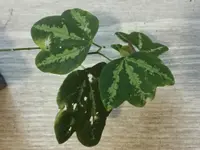
Passiflora trifasciata is a small, twining vine in the passionflower family, valued mainly for its striking foliage rather than its blooms. The leaves are usually narrow with three bands or zones of color, giving a delicate, patterned appearance on slender stems.
This species is thought to originate from tropical or subtropical regions of South America, where it climbs through shrubs and low trees. In cultivation it is grown as an ornamental vine that stays relatively compact compared with many other passionflowers.
Its main care demands come from its need for consistent warmth, bright light, and moderate humidity, which can make it a bit challenging in cooler homes. Light, well‑drained soil and regular but not excessive moisture support healthy growth and make it easier to care for Passiflora trifasciata.

Care Difficulty
Moderate Care

Light Preference
Partial Shade

Water Requirements
Moderate Water

Temperature Preference
Warm Climate

Hardiness Zone
Unknown

Soil Texture
Loamy, Organic-rich

Soil pH
Acidic (5.5–6.5), Slightly acidic (6.5–7.0)

Soil Drainage
Moist but well-drained

Fertilization
Light (every 4–6 weeks)
Scan your plant to receive care tips personalized for your specific plant
Available on iOS and Android
This species prefers bright conditions with some protection from harsh midday sun.
This vine prefers consistently moist but not waterlogged soil.
This plant grows best in warm, frost-free conditions throughout the year.
This species prefers moderately humid air but copes briefly with drier indoor conditions.
Passiflora trifasciata grows best in loose, airy, organic-rich soil that drains quickly.
This species is suitable for container growing when the pot supports its vining, sometimes top-heavy habit.
This species responds well to moderate feeding during active growth.
Thoughtful pruning keeps this vine manageable and encourages healthy new growth.
This vine appreciates room for its roots but dislikes severe disturbance.
This species is most commonly propagated from stem cuttings under warm, humid conditions.
This plant is frost-sensitive and needs protection in cooler climates.

Plant Health Check
Not sure what's wrong with your plant? Check your plant's health inside the app.
This species is grown mainly for its foliage, which shows three distinct bands of color across each leaf, creating a marbled silver, green, and often purplish pattern that is uncommon among passionflowers.
Unlike many vigorous Passiflora vines, this species has a relatively small, fine-textured growth habit and is often used as an ornamental climber in containers or small spaces rather than as a large garden screen.
Its flowers are much smaller and less showy than the large ornamental blooms of many other passionflowers, so it is usually valued as a foliage plant rather than a flowering feature in collections focused on Passiflora trifasciata plant care.
This species is a twining vine that climbs rather than creeping along the ground. It wraps its slender stems around nearby supports. Without something to climb, it tends to tangle, flop, and become more prone to physical damage.
Keep your plants happy and healthy with plant identification, disease detection, and easy care guidance.

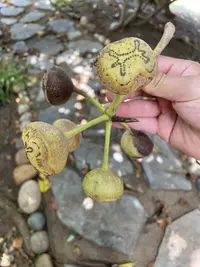
Heptapleurum calyptratum
Heptapleurum calyptratum
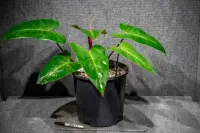 POPULAR
Blushing Philodendron
Philodendron erubescens
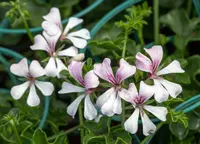
Ivy geranium
Pelargonium peltatum
Angraecum calceolus
Angraecum calceolus
%20-%20Copy-200x143.webp)
Parrot Flower
Papilionanthe teres
showy chalicevine
Solandra grandiflora
Sweet Dattock
Detarium microcarpum
Prayer Pepper
Peperomia dolabriformis