


Mounting technique
Use a rough-barked hardwood slab or cork mount with a thin pad of long-fiber sphagnum only around the roots, then secure the plant loosely with plastic-coated wire or soft ties so new roots can attach without being constricted.

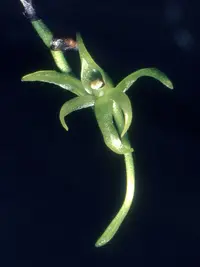
Angraecum calceolus is a small epiphytic orchid that grows on trees rather than in regular soil. It forms compact clumps with firm leaves and elegant, usually pale flowers held on short stems.
This species is native to Madagascar, where it experiences warm, humid forest conditions with good air movement. Its need for stable warmth, high humidity, and a very airy orchid substrate makes it more suitable for growers with some orchid experience.
Understanding how to care for Angraecum calceolus starts with providing bright, filtered light, consistent light moisture around the roots, and excellent drainage to prevent rot.

Care Difficulty
Hard Care

Light Preference
Bright Indirect Light

Water Requirements
Keep Soil Moist

Temperature Preference
Tropical / Frost Sensitive

Hardiness Zone
Unknown

Soil Texture
Sandy, Organic-rich

Soil pH
Acidic (5.5–6.5)

Soil Drainage
Well-drained

Fertilization
Light (every 4–6 weeks)
Scan your plant to receive care tips personalized for your specific plant
Available on iOS and Android
This orchid prefers bright but softened light that mimics dappled forest conditions.
Watering should balance consistent moisture with excellent drainage to protect the roots.
This species prefers intermediate to warm conditions with minimal temperature extremes.
This orchid prefers consistently moist air to maintain firm, healthy leaves and roots.
Angraecum calceolus grows best in a very airy, fast-draining orchid medium rather than dense potting soil.
This species is well suited to container growing when the pot supports its epiphytic root system.
This orchid benefits from light, regular feeding during active growth but is sensitive to excess salts.
This species needs only minimal pruning focused on cleanliness rather than shaping.
Repotting focuses on renewing the orchid medium rather than giving a much larger pot.
Propagation of this orchid is specialized and usually left to experienced growers or labs.
This orchid is not frost hardy and needs consistent warmth and protection in winter.

Plant Health Check
Not sure what's wrong with your plant? Check your plant's health inside the app.
This orchid is native to a very restricted area in eastern Madagascar, where it grows as an epiphyte on trees in humid evergreen forest at mid elevations.
The flowers are reported to be most fragrant at night, an adaptation linked to pollination by nocturnal moths that use scent to locate blooms in low light.
The species name calceolus refers to its distinctive pouch or slipper-shaped labellum, a modified petal that helps guide pollinators toward the nectar source.

Angraecum calceolus is considered a rare and locally threatened orchid in its native Malagasy forests, where habitat loss and fragmentation have significantly reduced the extent of suitable epiphytic host trees.
This species usually flowers once a year in the cooler, drier season, producing waxy, pale blossoms with a long nectar spur. Flowers are often fragrant at night, adapted for moth pollination in its native habitat.
Keep your plants happy and healthy with plant identification, disease detection, and easy care guidance.

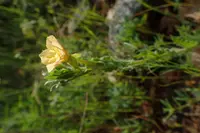
Evening Primrose
Oenothera indecora
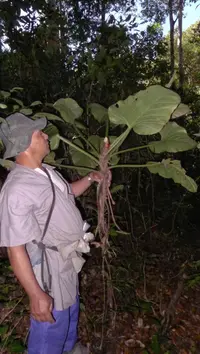
shortstem philodendron
Philodendron fragrantissimum
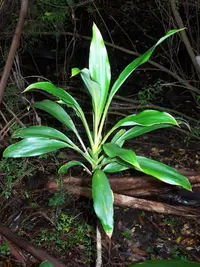
palm lily
Cordyline rubra

southern raintree
Brunfelsia australis

Chrysothemis friedrichsthaliana
Chrysothemis friedrichsthaliana
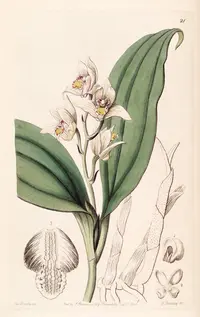
Eria coronaria
Eria coronaria
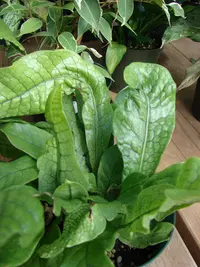
Microsorum musifolium
Microsorum musifolium
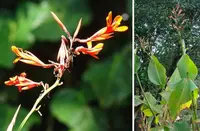
Canna tuerckheimii
Canna tuerckheimii