Medinilla sedifolia Care

Medinilla sedifolia

About Medinilla sedifolia

Medinilla sedifolia is a compact evergreen shrub in the melastome family, valued as an ornamental for its delicate foliage and unusual flowers. It often forms low, trailing or slightly arching stems, making it suitable for small pots, hanging containers, or terrarium-style displays.

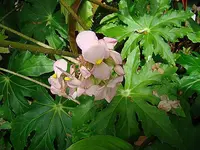
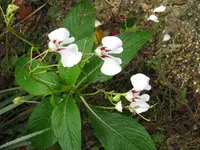
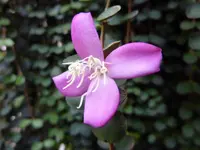
In the wild, it is native to Madagascar, where it typically grows in warm, humid, and partially shaded habitats. The plant produces small, waxy, pink to purple bell-shaped flowers that stand out against its fleshy, dark green leaves.

Its need for steady warmth, high humidity, and free-draining but moisture-retentive substrate makes it more suitable for growers who already understand how to care for Medinilla sedifolia, rather than complete beginners.

Main Plant Requirements

Care Difficulty

Moderate Care

Light Preference

Bright Indirect Light

Water Requirements

Moderate Water

Temperature Preference

Tropical / Frost Sensitive

Hardiness Zone

11–12

Soil Texture

Loamy, Peaty, Organic-rich

Soil pH

Acidic (5.5–6.5), Slightly acidic (6.5–7.0)

Soil Drainage

Moist but well-drained

Fertilization

Light (every 4–6 weeks)

Get Personalized Care Plan

Scan your plant to receive care tips personalized for your specific plant

Available on iOS and Android

How to Care for the Medinilla sedifolia

This species prefers bright, gentle light that mimics a forest edge or lightly shaded veranda.

  • Provide 4–6 hours of bright, indirect light daily, such as an east-facing window or dappled shade under taller plants outdoors.
  • Allow only soft morning sun; protect from strong midday and afternoon sun, which can scorch leaves and fade flowers on Medinilla sedifolia.
  • In winter, move the plant to a brighter position or supplement with grow lights if stems stretch or leaves lose color.

Watering should keep the root zone lightly moist but never saturated for long periods.

  • Water thoroughly when the top 2–3 cm of soil feels dry, allowing excess to drain away to prevent root rot.
  • Reduce watering in cooler, darker months, letting the top 3–4 cm dry, and increase slightly during active growth and flowering.
  • Watch for dull, limp leaves and dry mix as signs of underwatering, and for yellowing leaves, mushy stems, or sour-smelling soil as signs of overwatering.

Stable, warm conditions support compact growth and reliable flowering.

  • Aim for 65–80°F (18–27°C) for active growth, avoiding sudden swings that stress roots and foliage.
  • Protect from cold; growth slows below 60°F (16°C) and tissue damage can occur below 50°F (10°C), with frost quickly killing exposed parts.
  • In hot spells above 86°F (30°C), increase shade and airflow, and avoid placing the plant near heat vents, radiators, or cold drafts.

This species prefers consistently moist air and responds clearly to humidity levels.

  • Aim for 60–80% humidity; it tolerates brief dips to 40–50% but growth may slow.
  • Crisping leaf edges, bud drop, and dull foliage indicate air that is too dry.
  • Increase humidity with a nearby humidifier, grouped plants, or a pebble tray rather than misting leaves directly.

This epiphyte-like shrub needs a very airy, fast-draining mix that still retains some moisture.

  • Use a loose mix such as 40% fine orchid bark, 30% peat or coco coir, 20% perlite, and 10% compost for structure and nutrients.
  • Aim for slightly acidic to neutral pH around 5.5–6.5, avoiding strongly alkaline mixes that can lock out nutrients.
  • Ensure large, open pores in the mix so roots receive oxygen; increase bark or perlite if water lingers more than 2–3 days.
  • Avoid heavy garden soil, clay-based mixes, or compacted peat that stay wet and cause root rot in Medinilla sedifolia.

This plant is well suited to container growing when the pot controls excess moisture and supports its arching growth.

  • Choose a wide, relatively shallow pot to match its fine, spreading roots rather than an overly deep container that holds cold, unused mix.
  • Opt for a slightly heavier material such as ceramic to stabilize the plant as flowering stems extend and shift the center of gravity.
  • Elevate the pot on feet or a stand so drainage holes stay clear and runoff can escape quickly from the saucer.

This plant benefits from light, consistent feeding during active growth for compact, flowering growth.

  • Use a balanced liquid fertilizer (around 10-10-10) at 1/4–1/2 strength every 4–6 weeks in spring and summer.
  • Apply to moist soil, never to dry roots, to limit fertilizer burn on Medinilla sedifolia.
  • Organic options like dilute compost tea are suitable if the potting mix drains very well.
  • Stop or reduce feeding to once in 8–10 weeks in fall and winter when growth slows.

Thoughtful pruning helps maintain a neat outline and supports flowering on this compact shrub.

  • Carry out light pruning in late winter or just after main flowering finishes.
  • Remove dead, damaged, or crossing stems to improve airflow and reduce disease risk.
  • Shorten overly long or leggy shoots to shape the plant and encourage branching.
  • Use clean, sharp scissors or bypass pruners, cutting just above a leaf node at a slight angle.

Careful repotting maintains root health and stable growth without overpotting this slow to moderate grower.

  • Check for roots circling the pot base, crowding drainage holes, or unexplained slow growth as signs to repot.
  • Plan to move up 1 pot size every 2–3 years in early spring, before strong new growth starts.
  • Use a shallow, wide container with a very free-draining mix, handling the root ball gently to avoid damage.
  • Water lightly after repotting, keep in bright, indirect light, and avoid heavy feeding for 3–4 weeks to reduce stress.

Propagation is usually done from stem cuttings under warm, humid conditions rather than from seed.

  • Take 7–10 cm semi-ripe stem cuttings in late spring or early summer with at least 2–3 nodes.
  • Remove lower leaves and insert cut ends into a moist, airy mix of fine bark and perlite or similar.
  • Maintain 70–80°F warmth, high humidity, and bright, indirect light to support rooting.
  • Optional use of a rooting hormone on the cut surface can improve success and speed rooting.

This tropical species is frost tender and needs mild, stable conditions through winter.

  • Keep indoor temperatures ideally above 60°F and avoid cold drafts or sudden temperature shifts.
  • For outdoor containers, move plants indoors before nights drop below 50°F.
  • Provide bright, indirect light and slightly drier soil, but do not allow the root ball to fully dry.
  • Maintain moderate humidity with a tray of moist pebbles rather than frequent misting in cool rooms.

Care Tips

Mounting on slabs

Grow this epiphyte on a cork or fern slab with a thin layer of sphagnum moss around the roots to mimic its natural habitat and improve air flow around the root zone.

Controlled root binding

Use a relatively small, shallow pot and only upsize by 2–3 cm when roots circle the pot, as a slightly root-bound plant tends to flower more reliably than one in an oversized container.

Gentle flower support

Install discreet bamboo skewers or a small hoop support before buds enlarge so the arching, brittle flowering stems are supported without cracking under their own weight.

Targeted pest scouting

Inspect the undersides of leaves and where stems join once a week with a hand lens, since mealybugs and scale often hide in these joints and are easiest to control when detected early.

Seasonal rest adjustment

In late fall and winter, slightly reduce watering and avoid repotting or heavy feeding, as a short rest period encourages stronger budding and more compact growth in the next cycle when caring for Medinilla sedifolia.

Common Pests and Diseases

Mealybugs

This pest often hides in leaf joints, along stems, and on the undersides of the fleshy leaves, feeding on sap and causing distortion, yellowing, and sticky honeydew. Symptoms include slowed growth and a general decline, especially in warm, dry indoor conditions.

Solution

Isolate the plant, then dab visible insects with cotton swabs dipped in 70% isopropyl alcohol and gently wipe crevices. Follow with a thorough wash of the foliage and stems, then repeat alcohol treatments weekly and use a light horticultural soap spray to break the life cycle, while improving air circulation and avoiding excess nitrogen fertilization.

Scale insects

These insects attach firmly to stems and leaf veins, appearing as small, brown or tan bumps that do not move. Symptoms include sticky honeydew, sooty mold on leaves, and gradual weakening of the plant.

Solution

Manually remove scale with a soft cloth or toothbrush dipped in diluted alcohol or insecticidal soap, focusing on stems and leaf midribs. Repeat inspections weekly, removing new individuals, and maintain slightly higher humidity and moderate light to reduce plant stress while following label directions for any systemic insecticide if infestations are heavy.

Spider mites

This pest thrives in dry indoor air and bright positions, leading to fine webbing on leaf undersides and between stems, along with stippled, dull foliage. Symptoms include leaf edge browning and premature leaf drop when populations are high.

Solution

Rinse the plant thoroughly with lukewarm water, focusing on leaf undersides, then apply an insecticidal soap or neem oil spray and repeat every 5–7 days for several cycles. Increase ambient humidity to 50–60%, avoid placing the plant over heaters or vents, and regularly mist or shower the foliage to make conditions less favorable for mites while still following general Medinilla sedifolia care instructions.

Botrytis blight

This disease appears in cool, humid, and poorly ventilated conditions, causing soft, water-soaked spots on leaves and flowers that soon develop fuzzy gray mold. Symptoms include flower bud drop, browning petals, and collapse of affected tissues.

Solution

Remove and discard all infected flowers and leaves, avoid overhead watering, and improve air movement around the plant without exposing it to cold drafts. Allow the top of the potting mix to dry slightly between waterings and, in persistent cases, apply a fungicide labeled for ornamental botrytis, following the product instructions carefully.

Leaf spot

This disease causes small, dark, often circular spots on leaves that may expand and merge, sometimes with a yellow halo around each lesion. Symptoms include premature leaf yellowing and drop, especially on crowded or constantly wet foliage.

Solution

Prune off and discard affected leaves, then water at the base of the plant so leaves dry quickly and avoid crowding with other plants to improve airflow. Keep the plant in stable, warm conditions and, if new spots continue to appear, use a copper-based or broad-spectrum fungicide suitable for ornamentals according to label directions.

Interesting Facts

Miniature epiphyte shrub

This species naturally forms a very small, shrubby epiphyte, often growing on trees or rocks in Madagascar rather than in soil, which keeps its roots more aerated than those of typical terrestrial shrubs.

Thick succulent-like leaves

Its tiny, opposite leaves are unusually thick and fleshy for the genus, an adaptation that helps it store water and tolerate short dry periods in exposed, bright habitats.

Nodding waxy flowers

The plant produces disproportionately large, waxy, bell-shaped pink to magenta flowers that hang on short peduncles, creating a strong contrast to its miniature leaves and compact growth.

Botan icon

Did you know?

Unlike the large, cascading-flowered ornamental Medinilla species, Medinilla sedifolia is valued in specialist collections as a true miniature that can be grown in small terrarium-style displays, allowing close observation of its epiphytic growth and delicate floral structure.

FAQs about Medinilla sedifolia

This species usually performs better indoors or in sheltered patios in most US climates, because it needs stable warmth, high humidity, and protection from direct sun, cold drafts, and sudden temperature swings that are common outdoors.

Grow Healthy Plants with Botan Care

Keep your plants happy and healthy with plant identification, disease detection, and easy care guidance.


Botan plant care app — identify plants on mobile

Explore More Plants