Northern Wolfsbane Care (Aconitum septentrionale)

Also known as: Northern Monkshood
Northern Wolfsbane

About Northern Wolfsbane

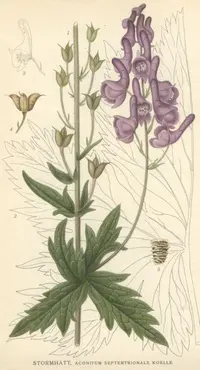
Northern wolfsbane, Aconitum septentrionale, is a perennial herbaceous plant grown mainly for its tall spikes of hooded, blue to violet flowers. It forms clumps of deeply divided, dark green leaves and upright stems that give a strong vertical accent in cool-climate gardens.

This species occurs naturally in northern and eastern Europe, often in moist mountain or forest habitats. It can be challenging to care for Northern Wolfsbane because it dislikes heat, needs consistently moist but not waterlogged soil, and prefers partial shade.

Gardeners value it for late-season color and its ability to thrive in cooler, damp sites with humus-rich soil.

Main Plant Requirements

Care Difficulty

Moderate Care

Light Preference

Partial Shade

Water Requirements

Regular Water

Temperature Preference

Cold Hardy

Hardiness Zone

3–7

Soil Texture

Loamy, Silty, Organic-rich

Soil pH

Acidic (5.5–6.5), Slightly acidic (6.5–7.0)

Soil Drainage

Moist but well-drained

Fertilization

Minimal (feed rarely)

Get Personalized Care Plan

Scan your plant to receive care tips personalized for your specific plant

Available on iOS and Android

How to Care for the Northern Wolfsbane

This hardy perennial prefers cool, bright conditions with protection from harsh midday sun.

  • Provide 3–5 hours of morning sun with light or dappled shade in the afternoon, especially in warmer regions where Northern Wolfsbane can scorch.
  • Site the plant in partial shade under open trees or on an east or north-facing aspect to mimic woodland edge light levels.
  • In hotter months, increase shade or use filtered light; in cooler climates, allow a bit more direct morning sun to support flowering.

This species prefers consistently moist, cool soil without waterlogging.

  • Water when the top 2–4 cm of soil feels slightly dry, aiming to keep the root zone evenly damp rather than wet or bone dry.
  • Use deep, slow watering on well-drained, humus-rich soil; add organic matter if water pools on the surface for more than 10–15 minutes.
  • In hot, dry weather, monitor for wilting or crisp leaf edges (too dry), and watch for yellowing, soft stems or a sour smell as signs of overwatering.

This cold-hardy perennial thrives in cool to mild climates and tolerates significant winter chill.

  • Optimal growth occurs around 55–70°F (13–21°C), matching cool summer conditions often found in higher latitudes or elevations.
  • Dormant roots typically survive down to about -20°F (-29°C) with mulch, but emerging spring shoots need protection from late hard frosts.
  • Heat above 80–85°F (27–29°C) stresses the plant; provide extra shade and moisture during hot spells to prevent premature dieback.

This species tolerates a wide range of outdoor humidity and usually does not need special humidity management.

This plant prefers consistently moist, cool, humus-rich soil with strong drainage.

  • Use a deep, loamy soil rich in organic matter, such as garden loam mixed with leaf mold or compost at about 40–50%.
  • Ensure drainage by avoiding heavy, compacted clay; incorporate coarse sand or fine grit at 10–20% to prevent waterlogging around the roots.
  • Keep soil evenly moist but never saturated; wet, airless conditions strongly increase the risk of root and crown rot for Aconitum septentrionale.
  • Maintain a slightly acidic to neutral pH (6.0–7.0); if soil is very alkaline, add peat-free acidic compost or pine needle mold to adjust.

This species can be grown in containers, but it performs best in large, cool, stable outdoor pots.

  • Choose a tall, heavy container that resists tipping, since the vertical flower spikes can become top‑heavy in wind.
  • Use a thick-walled ceramic or clay pot to buffer temperature swings and slow evaporation in summer heat.
  • Fill the pot with a high-volume, moisture-retentive mix and leave 3–5 cm below the rim to allow deep watering without overflow.

This perennial benefits from light, balanced feeding during the active growing season but does not require heavy fertilization.

  • Apply a balanced, slow-release fertilizer (around 10-10-10) in early spring as new shoots of Northern Wolfsbane emerge.
  • Supplement with a light top-dressing of compost once in spring to support steady growth and flowering.
  • During late spring to midsummer, use a half-strength balanced liquid feed every 4–6 weeks if soil is poor.
  • Stop feeding in late summer and do not fertilize during fall and winter dormancy.

Pruning needs for Aconitum septentrionale are modest and focus on tidiness and flower performance rather than reshaping the plant.

  • In late winter or very early spring, remove dead, damaged, or weak stems with clean bypass pruners.
  • After flowering, deadhead spent flower spikes down to a strong leaf joint to encourage a neater clump.
  • Cut back yellowing or collapsing foliage in late fall once it has fully died back to ground level.
  • Avoid hard shaping cuts; maintain the plant’s natural upright habit by only thinning congested stems.

This species is usually grown in the ground and prefers minimal disturbance once established, so transplant only when necessary.

  • Choose early spring or early fall for transplanting, when temperatures are mild and soil moisture is even.
  • Move clumps only if overcrowded, flowering declines, or growth is weak despite good care.
  • Dig a wide hole, lift the clump carefully to keep roots and soil intact, and replant at the same depth.
  • Water thoroughly after transplanting, then keep soil evenly moist and mulch lightly to reduce root stress.

Propagation of this plant is possible but should be approached carefully due to its toxicity and dislike of heavy disturbance.

  • Use division of established clumps in early spring or early fall as the most reliable method.
  • Lift the clump gently, then separate into large sections with several buds and healthy roots.
  • Replant divisions immediately into moist, well-drained soil and water to settle out air pockets.
  • Seed propagation is possible but slow; provide cool stratification and evenly moist, shaded conditions for germination.

This hardy perennial tolerates cold winters well and generally needs only minimal winter care in most temperate climates.

  • Allow top growth to die back naturally after frost, then cut to ground level once stems are fully brown.
  • Apply a 5–7 cm layer of organic mulch over the root zone to buffer freeze–thaw cycles.
  • Container-grown plants in very cold regions can be moved to a sheltered, unheated but frost-free area.

Care Tips

Safe handling routine

Wear gloves and long sleeves when planting, dividing, or cutting back stems, and keep tools and hands washed afterward, because all parts are toxic and sap can irritate skin.

Sturdy staking system

Install discreet stakes or a low plant support ring early in the season and loosely tie stems with soft ties so tall flower spikes stay upright in wind and rain without kinking.

Mulch for cool roots

Apply a 5–7 cm layer of leaf mold or shredded bark around the base each spring, keeping it a few cm away from stems, to keep roots cool, conserve moisture, and suppress weeds.

Planned clump division

Divide crowded clumps every 4–6 years in early spring, replanting outer, vigorous sections at the same depth, which maintains flowering performance and reduces disease build‑up.

Slug and snail management

Protect emerging shoots from slugs and snails with barriers, traps, or targeted pellets labeled for ornamental beds, as early chewing damage can distort the season’s growth when growing Northern Wolfsbane.

Common Pests and Diseases

Aconitum aphid

This pest feeds on young stems, undersides of leaves, and flower spikes, sucking sap and weakening growth. Symptoms include distorted shoots, sticky honeydew, and sooty mold on foliage.

Solution

Spray plants with a strong jet of water to dislodge colonies, then treat remaining clusters with insecticidal soap or a ready-to-use horticultural oil, coating stems and leaf undersides. Encourage natural predators such as lady beetles by avoiding broad-spectrum insecticides in the surrounding garden.

Aconitum mosaic virus

This disease causes mottled, streaked, or distorted leaves and can stunt overall growth and flowering over time. Symptoms include irregular yellow or light green patterns that do not follow the veins.

Solution

Remove and destroy symptomatic plants promptly, including roots, to limit spread, and disinfect cutting tools with 70% alcohol between plants. Control sap-feeding insects such as aphids nearby, and avoid propagating from any plant that shows mosaic-like patterns.

Powdery mildew

This disease appears as white to gray powdery patches on upper leaf surfaces, especially during warm days and cool, humid nights. Symptoms include yellowing leaves, reduced vigor, and premature leaf drop if severe.

Solution

Increase spacing and airflow around plants, avoid overhead watering, and remove heavily infected leaves to reduce spore load. If needed, apply a labeled fungicide such as a sulfur or potassium bicarbonate product, coating both upper and lower leaf surfaces according to label directions.

Leaf spot

This disease produces small brown, purple, or tan spots on leaves that may merge into larger blotches, starting on lower foliage. Symptoms include premature yellowing and shedding of affected leaves, especially in dense, damp plantings.

Solution

Remove and discard affected leaves as soon as spots appear and keep foliage as dry as possible by watering at soil level. Improve spacing and airflow, clean up fallen plant debris in autumn, and if outbreaks recur, use a preventative fungicide in early spring on emerging foliage.

Interesting Facts

Northern boreal specialist

This species is native to northern Europe and western Siberia, occurring mainly in cool, moist boreal and subalpine forests, often along shaded stream banks and forest edges.

Tallest northern monkshood

Among the northern monkshoods, it is notable for its height, often forming loose clumps with flowering stems that can exceed many related species in stature under favorable conditions.

Bee-pollinated helmet flowers

Its dark violet, helmet-shaped flowers are adapted to bumblebee pollination; the bees must force their way under the hood to reach hidden nectaries, ensuring efficient pollen transfer.

Botan icon

Did you know?

The species has a notably disjunct native range, with populations scattered from Scandinavia through the Baltic region to the Ural Mountains and western Siberia, making it a useful taxon in biogeographic studies of post-glacial plant migration in northern Eurasia.

FAQs about Northern Wolfsbane

All parts of this species are highly poisonous to humans and animals if eaten, and sap can irritate skin. Always wear gloves when handling, avoid ingestion, and prevent children and pets from accessing planting areas.

Grow Healthy Plants with Botan Care

Keep your plants happy and healthy with plant identification, disease detection, and easy care guidance.

Botan plant care app — identify plants on mobile

Explore More Plants