beetleweed Care (Galax urceolata)

Also known as: galax
beetleweed

About beetleweed

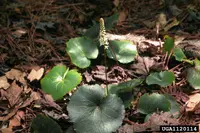
Beetleweed, Galax urceolata, is a low-growing evergreen perennial valued for its glossy, round leaves that form dense ground-hugging clumps. It often develops attractive reddish tones in colder weather.

This plant naturally occurs in woodland habitats of the southeastern United States, typically on cool, moist, acidic forest floors. It spreads slowly by rhizomes, creating a tidy, long-lived groundcover where conditions suit it.

Its relatively slow growth and need for consistent moisture make it moderately easy but not carefree, especially in hotter or drier climates. Partial shade, humus-rich soil, and steady moisture simplify how to care for beetleweed in home gardens.

Main Plant Requirements

Care Difficulty

Moderate Care

Light Preference

Partial Shade

Water Requirements

Keep Soil Moist

Temperature Preference

Cold Hardy

Hardiness Zone

5–9

Soil Texture

Loamy, Peaty, Organic-rich

Soil pH

Strongly acidic (4.5–5.5), Acidic (5.5–6.5)

Soil Drainage

Moist but well-drained

Fertilization

Minimal (feed rarely)

Get Personalized Care Plan

Scan your plant to receive care tips personalized for your specific plant

Available on iOS and Android

How to Care for the beetleweed

Galax urceolata prefers cool, shaded woodland light conditions similar to its native forest habitat.

  • Provide dappled or filtered light with 1–3 hours of gentle morning sun and full shade in the afternoon to prevent leaf scorch.
  • Plant beetleweed on the north or east side of buildings or under open-canopy trees where it receives bright shade most of the day.
  • In hotter months, increase shade or use mulch to protect roots; in cooler seasons, slightly more indirect light helps maintain leaf color.

Galax urceolata thrives in consistently moist but not waterlogged soil.

  • Check soil often and water when the top 2–3 cm feel barely damp, aiming for evenly moist soil, especially during dry spells.
  • Use humus-rich, well-drained soil so excess water can move through; standing water around the crowns increases crown and root rot risk.
  • In summer heat, monitor for wilting or crispy leaf edges as signs of underwatering; in cooler seasons, reduce frequency but never let soil fully dry.

This woodland perennial prefers cool, stable temperatures and tolerates considerable cold once established.

  • Optimal growth occurs around 55–70°F (13–21°C), especially in spring and fall with consistent soil moisture.
  • Plants are hardy to about 0°F (−18°C) or lower with mulch protection, tolerating typical winters in USDA zones 4–8.
  • In summer, protect from prolonged heat above 85°F (29°C) with shade and soil moisture; high heat plus dry soil can cause leaf scorch and decline.

This woodland perennial prefers consistently moist air but adapts to typical home humidity if soil moisture is stable.

  • Aim for 50–70% humidity, especially for young or freshly planted beetleweed.
  • Crisping leaf edges or dull, browning patches often indicate air that is too dry or irregular watering.
  • Increase humidity outdoors with mulch over the root zone; indoors use a pebble tray or group plants rather than misting leaves.

Galax urceolata thrives in cool, moist, humus-rich soil that mimics acidic woodland conditions.

  • Use a loose, fine-textured mix based on composted bark, leaf mold, and peat or coco coir, with 20–30% perlite for drainage.
  • Maintain slightly acidic soil, ideally pH 5.0–6.5, to support nutrient uptake and healthy foliage color.
  • Ensure steady moisture with soil that drains freely but never dries out completely or stays waterlogged.
  • Avoid heavy clay, chalky or limy soils, and any mix that forms hard clods or compacts after watering.

This species can be grown in containers if its moist, cool root conditions are carefully maintained.

  • Choose a deep, insulated pot (thick plastic or glazed ceramic) to buffer roots from rapid temperature swings and drying.
  • Use a broad, low container to accommodate its shallow, spreading root system and keep the plant stable.
  • Elevate the pot on feet or bricks so drainage holes stay clear and runoff leaves the container quickly after each watering.

Galax urceolata is a slow-growing woodland perennial that needs only light feeding in moderately rich soil.

  • Use a balanced, dilute liquid fertilizer (around 10-10-10) at 1/4–1/2 strength for container plants in spring and early summer.
  • Feed every 4–6 weeks during active growth if soil is low in organic matter; skip feeding in fertile beds.
  • Apply a thin layer of compost around outdoor beetleweed once in spring instead of frequent liquid feeds.
  • Stop fertilizing in late summer and avoid feeding in winter dormancy to prevent weak, tender growth.

Galax urceolata needs minimal pruning, mainly to keep the foliage clean and the clump tidy.

  • Best time for light pruning is late winter to early spring before strong new growth starts.
  • Snip off dead, diseased, or badly damaged leaves at the base using clean, sharp scissors or pruners.
  • Remove crowded or overlapping leaves to improve air flow and maintain a compact rosette shape.
  • Spent flower stalks can be cut down after seed set to reduce self-seeding and keep the planting neat.

This species is more often transplanted in the ground than grown in containers, as it prefers cool, humus-rich woodland soil.

  • Plan transplanting or repotting in early spring or early fall, when temperatures are mild and soil stays evenly moist.
  • Look for signs such as roots circling the pot, water running off quickly, or slowed growth in otherwise good conditions.
  • Transplant every 3–4 years, lifting small clumps with a wide soil ball to keep the shallow root system intact.
  • Water thoroughly before and after moving, shade the plant for 1–2 weeks, and maintain consistent moisture to limit root stress.

Galax urceolata is usually propagated slowly and carefully, as wild populations are sensitive and seeds are slow.

  • Division of established clumps in early spring is the most practical method for home gardeners.
  • Lift a small section with a generous soil ball and gently tease apart into pieces with several leaves and roots.
  • Replant divisions at the same depth in moist, acidic, organic soil, then water well and provide light shade.
  • Seed propagation is possible but slow; sow fresh seed on the surface of cool, consistently moist, shaded soil.

Galax urceolata is cold hardy in much of its native range and generally needs little special winter care in the ground.

  • In climates colder than USDA zone 5, add a 5–8 cm layer of leaf mold or bark mulch around the root zone.
  • Keep mulch slightly away from the crowns to reduce rot while still buffering freeze–thaw cycles.
  • Move containers into a sheltered, unheated but frost-free area or heel pots into the ground and mulch heavily.

Care Tips

Leaf-for-Soil Mulch

Leave a 3–5 cm layer of chopped deciduous leaves around plants year-round to mimic their native forest duff, stabilize soil moisture, and slowly enrich the shallow root zone without synthetic fertilizers.

Summer Shade Netting

In hotter regions, use 30–40% shade cloth over beds during the brightest summer weeks to prevent leaf scorch and color fade while still allowing enough light for dense rosette growth.

Gentle Root Division

When clumps thin out in the center, lift and divide in early spring using a serrated knife to cut firm sections with several rosettes each, then replant at the same depth and water thoroughly to re-establish the shallow rhizomes.

Slug and Snail Barriers

Because the leathery foliage is attractive to slugs in damp shade, set low-profile iron phosphate bait stations just outside the planting area and maintain a clean edge of coarse gravel or pine needles as a physical deterrent.

Ornamental Leaf Harvest

If cutting leaves for floral work, remove no more than 25–30% of the foliage from any clump at one time and always cut with clean, sharp scissors at the leaf base to preserve vigor while growing beetleweed for decorative use.

Common Pests and Diseases

Leaf spot complex

This disease causes irregular brown to black spots on older leaves, sometimes with yellow halos and a thin papery center. Symptoms include gradual breakdown of the decorative winter foliage and premature leaf drop in humid, shaded conditions.

Solution

Remove and discard heavily spotted leaves to reduce spore spread, and avoid overhead watering so foliage dries quickly. Improve air circulation by thinning overcrowded clumps, and if needed apply a copper- or chlorothalonil-based fungicide labeled for ornamentals, following local regulations and label directions.

Anthracnose

This disease creates tan to dark brown blotches that follow leaf veins, leading to distorted, scorched-looking foliage. Symptoms include faster decline of leaves during warm, wet periods and a patchy appearance in groundcover plantings.

Solution

Prune out and dispose of infected leaves and any severely affected rosettes, keeping debris away from the planting area. Reduce leaf wetness by watering at soil level and spacing plants correctly, and consider a registered foliar fungicide during persistently wet weather if infection is severe or recurring.

Rhizoctonia crown rot

This disease affects the crown and upper roots, causing wilting, reddish-brown lesions at the crown, and collapse of whole rosettes, especially in poorly drained, warm soils. Symptoms include sudden death of patches within an otherwise healthy beetleweed bed.

Solution

Promptly dig out and discard affected plants along with surrounding soil, and avoid replanting Galax in the same exact spot for several seasons. Improve drainage with organic matter and raised planting areas, keep mulch thin around crowns, and source only healthy, disease-free divisions to re-establish the planting for reliable Galax urceolata plant care.

Slugs and snails

These pests chew irregular holes and notches in the leathery leaves, often starting at the edges and leaving a tattered appearance. This pest is most active at night and in cool, moist weather, sometimes leaving slime trails on or near foliage.

Solution

Hand-pick slugs and snails in the evening, and reduce hiding places by removing dense mulch, boards, or debris near the plants. Use iron phosphate-based slug baits or beer traps placed around, not on, the crowns, and keep foliage slightly drier by avoiding unnecessary overhead watering.

Root-knot nematodes

These microscopic roundworms damage roots, causing small galls or swelling and leading to reduced vigor, stunting, and poor groundcover fill. Symptoms include plants that fail to spread well, show pale foliage, and decline despite adequate moisture and nutrients.

Solution

Discard severely affected plants and avoid moving contaminated soil or roots to new areas. Replant into nematode-free soil amended with organic matter, consider solarizing infested beds in sunny climates, and rotate with non-host groundcovers for several years before trying to grow Galax urceolata again in the same location.

Interesting Facts

Evergreen leaf longevity

Individual leaves can persist on the plant for several years, slowly thickening and becoming more leathery as they age, which helps the plant conserve water and nutrients in its native forest floor habitat.

Specialist pollinator link

Its small, urn-shaped white flowers are an important nectar source for certain native solitary bees and small flies in Appalachian forests, supporting early summer pollinator communities in shaded understories.

Soil crust formation

Dense colonies form a living groundcover that traps leaf litter and fine soil particles, gradually building a thin organic soil layer on otherwise rocky or compacted forest substrates.

Botan icon

Did you know?

This species is so effective at forming persistent, cohesive mats of roots and rhizomes that it has been used in ecological restoration projects to stabilize steep, eroding Appalachian slopes and protect fragile forest soils.

FAQs about beetleweed

This species spreads slowly by short rhizomes, forming tight clumps or small patches rather than running widely. It is generally easy to contain and is suitable for edging paths or defining small shade areas without becoming troublesome.

Grow Healthy Plants with Botan Care

Keep your plants happy and healthy with plant identification, disease detection, and easy care guidance.


Botan plant care app — identify plants on mobile

Explore More Plants