Seed scarification
Lightly nick or rub the hard seed coat with sandpaper before sowing to improve germination uniformity and establish a more even stand when growing Texas lupine in garden beds or meadows.

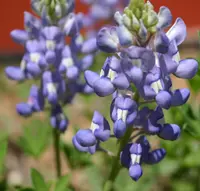
Texas lupine (Lupinus texensis) is an annual flowering plant known for its dense spikes of blue flowers topped with small white flags. It forms low clumps of palmate, gray-green leaves that create a soft mound beneath the flower spikes.
This species is native to Texas, where it grows in open fields, roadsides, and other sunny, well-drained sites. It is adapted to poor, rocky, or sandy soils and does not tolerate heavy, waterlogged ground.
Texas lupine can be moderately challenging outside its natural range because it dislikes disturbance, excess watering, and rich soil. Gardeners who learn how to care for Texas lupine usually focus on providing full sun, good drainage, and minimal fertilizer.

Care Difficulty
Moderate Care

Light Preference
Full Sun

Water Requirements
Low Water

Temperature Preference
Warm Climate

Hardiness Zone
4–8

Soil Texture
Sandy, Loamy, Rocky

Soil pH
Slightly acidic (6.5–7.0), Neutral (7.0)

Soil Drainage
Well-drained

Fertilization
Minimal (feed rarely)
Scan your plant to receive care tips personalized for your specific plant
Available on iOS and Android
This sun-loving annual thrives in bright, open sites with mild protection from extreme heat.
This drought-tolerant wildflower prefers infrequent, deep watering in fast-draining soil.
This species is adapted to mild winters and warm, not scorching, spring conditions.
This species prefers relatively dry air and does not usually need humidity adjustment outdoors.
This species prefers lean, sandy, sharply drained soil and declines in heavy, wet conditions.
This species can be grown in containers, but the setup must emphasize drainage and root depth.
Native Lupinus texensis usually needs little fertilization on reasonably healthy soil.
Pruning Lupinus texensis is simple and mainly focuses on spent flowers and end-of-season cleanup.
This species dislikes root disturbance, so transplant Lupinus texensis only when clearly necessary.
Lupinus texensis is most reliably propagated from seed rather than cuttings or division.
Established plants are fairly cold hardy and usually need minimal winter care in mild climates.

Plant Health Check
Not sure what's wrong with your plant? Check your plant's health inside the app.
This species is the official state flower of Texas and has been central to large-scale roadside wildflower seeding programs begun in the 20th century, which dramatically increased its visibility along highways each spring.
Seeds of this species often remain dormant until exposed to winter chilling followed by warming soil in late winter, a pattern that synchronizes mass germination and blooming in early to mid-spring on the central Texas plains.
The flowers are adapted for pollination mainly by medium to large native bees that are heavy enough to depress the keel petals, which exposes the reproductive parts and deposits pollen efficiently with each visit.

Early lawmakers in Texas originally named a different blue lupine as the state flower in 1901, but as taxonomic understanding changed, the law was broadened so that the name now formally covers Lupinus texensis and several closely related bluebonnet species found in the state.
This species behaves as a short-lived annual in most gardens. It sprouts from seed in cool weather, grows quickly, flowers in spring, then sets seed and dies back, relying on self-sown seeds for future displays.
Keep your plants happy and healthy with plant identification, disease detection, and easy care guidance.