Deep root establishment
During the first growing season, water less often but for longer sessions so moisture penetrates 15–20 cm deep, which trains the roots to anchor firmly and helps the tall stems resist lodging in wind and rain.

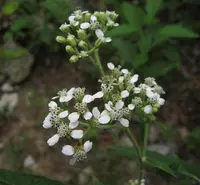
White crownbeard (Verbesina virginica) is a perennial wildflower in the aster family, known for its tall upright stems and flat-topped clusters of small white blooms. It often forms loose colonies in sunny openings.
In nature it occurs mainly in the eastern and southern United States, growing along woodland edges, roadsides, and stream banks. Stems may develop striking ice formations in winter, sometimes called frost flowers.
This species is generally sturdy and adapts to average garden soils, especially where the ground stays slightly moist. Once established, it needs little attention, so basic knowledge of how to care for white crownbeard is usually enough for reliable growth.

Care Difficulty
Easy Care

Light Preference
Full Sun

Water Requirements
Regular Water

Temperature Preference
Cold Hardy

Hardiness Zone
3–9

Soil Texture
Sandy, Loamy, Clay

Soil pH
Slightly acidic (6.5–7.0), Neutral (7.0)

Soil Drainage
Moist but well-drained

Fertilization
Minimal (feed rarely)
Scan your plant to receive care tips personalized for your specific plant
Available on iOS and Android
Verbesina virginica grows best in sites that mimic its open woodland and meadow habitats.
This species prefers consistent moisture but tolerates brief dry spells once established.
This hardy perennial tolerates a wide temperature range typical of temperate climates.
Humidity is not a critical factor for Verbesina virginica, which thrives in typical outdoor air conditions.
Verbesina virginica prefers moderately fertile, well-drained but moisture-retentive soil for reliable growth and flowering.
This tall prairie species is possible but not ideal for container growing, and needs careful attention to stability and moisture balance.
This native perennial usually needs minimal feeding, especially in-ground plantings of white crownbeard in average garden soil.
Pruning Verbesina virginica is mainly done to maintain structure and encourage sturdy, floriferous stems.
This species is usually grown in the ground, so transplanting is more relevant than container repotting.
New plants are most often raised from seed, with division used for established clumps as needed.
This cold-hardy perennial generally needs little winter care in its outdoor range.

Plant Health Check
Not sure what's wrong with your plant? Check your plant's health inside the app.
This species is one of the classic plants that form “frost flowers,” ribbons of extruded ice that appear at the stem base when moist soil is above freezing but air temperatures drop below 32°F, as water is drawn up and freezes outside the stem.
It naturally occurs in moist, partially shaded habitats such as stream banks, bottomland forests, and woodland edges across the southeastern and central United States, where it helps stabilize soil and support understory plant communities.
Blooming in late summer to fall, it provides nectar and pollen for a wide range of native bees, butterflies, and other insects when many earlier wildflowers have finished flowering.

Historically, indigenous and early European-American observers in the eastern United States noted and described the striking ice ribbons that form on this species’ stems in early winter, which helped make it one of the best-known examples used by scientists to illustrate the frost flower phenomenon in plant ecology discussions.
This species self-seeds readily and can form dense colonies if conditions suit it. Deadhead spent flower heads before seeds mature, or thin seedlings each spring, to keep it from dominating mixed borders or smaller native plantings.
Keep your plants happy and healthy with plant identification, disease detection, and easy care guidance.