


Staggered Clump Planting
Plant 3–5 crowns in a loose triangle or drift at slightly different spacings to create a fuller visual mass and to help taller stems support each other against wind.

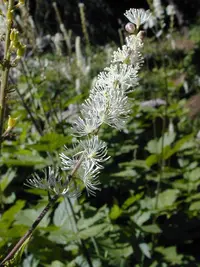
Tall bugbane (Actaea elata) is a hardy perennial grown mainly for its tall, airy flower spikes and graceful foliage. It forms clumps of divided, fern-like leaves that create a soft, layered look in shaded borders and woodland-style gardens.
In summer, it sends up slender stems topped with narrow, white bottlebrush flowers that attract pollinators and add vertical interest. This species is native to moist mountain woodlands in East Asia, so it naturally prefers cool, damp, shaded conditions.
Its preference for consistent moisture and shade makes it moderately demanding in hot or dry climates. Gardeners who understand how to care for tall bugbane usually find it reliable as long as soil stays cool, humus-rich, and not allowed to dry out completely.

Care Difficulty
Moderate Care

Light Preference
Partial Shade

Water Requirements
Keep Soil Moist

Temperature Preference
Cold Hardy

Hardiness Zone
4–7

Soil Texture
Loamy, Silty, Organic-rich

Soil pH
Acidic (5.5–6.5), Slightly acidic (6.5–7.0)

Soil Drainage
Moist but well-drained

Fertilization
Minimal (feed rarely)
Scan your plant to receive care tips personalized for your specific plant
Available on iOS and Android
This woodland perennial prefers cool, shaded conditions with only gentle sun exposure.
This species thrives in consistently moist, humus-rich soil that never fully dries out.
This plant is a hardy woodland perennial adapted to cool, temperate climates.
This woodland perennial prefers consistently moist air but usually manages in typical outdoor garden humidity.
Actaea elata grows best in deep, cool, humus-rich soil that mimics a shaded forest floor.
This species can be grown in containers, but success is greater in large, cool, shaded outdoor pots.
Tall bugbane is a woodland perennial that benefits from modest, steady nutrition rather than heavy feeding.
Actaea elata needs only light, targeted pruning to stay healthy and tidy.
This species is usually grown in the ground, so focus on careful transplanting rather than frequent repotting.
Actaea elata is most reliably propagated by careful division, with seed used mainly for patient growers.
This plant is cold hardy in most temperate gardens and usually needs minimal winter attention.

Plant Health Check
Not sure what's wrong with your plant? Check your plant's health inside the app.
This species is native to cool, moist montane forests of China, Korea, and Japan, where it grows in deep shade along forest edges and stream banks in humus‑rich soils.
Unlike many woodland perennials, it flowers in late summer to early autumn, providing nectar and pollen to late-season pollinators when many other shade plants have finished blooming.
Its tissues contain ranunculaceae-type toxins that make the foliage and berries unpalatable to most mammals, so it is generally avoided by deer and rabbits in its natural range.

In parts of East Asia, this species is used as an indicator of relatively undisturbed, long-established woodland, since it tends to persist in stable, cool, and moist forest microhabitats and declines where canopy cover or soil conditions are heavily altered.
This species spreads slowly by short rhizomes and self-seeding. It can form clumps over time but is not typically aggressive. Unwanted seedlings are easy to remove, and clumps can be divided if space becomes limited.
Keep your plants happy and healthy with plant identification, disease detection, and easy care guidance.

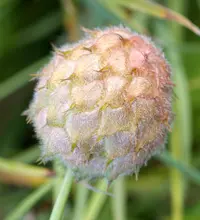
strawberry clover
Trifolium fragiferum
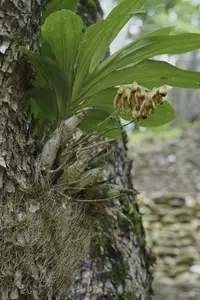
intact catasetum
Catasetum integerrimum
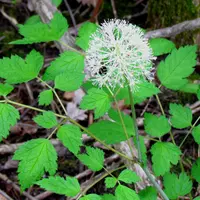
white baneberry
Actaea pachypoda
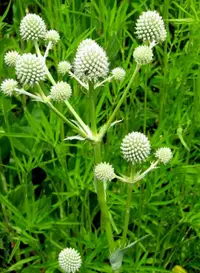
rattlesnake master
Eryngium yuccifolium
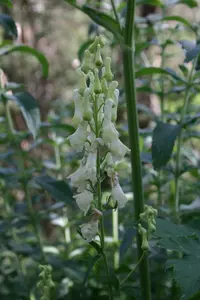
wolfsbane
Aconitum vulparia
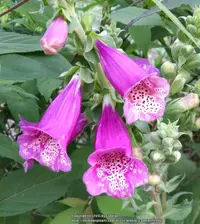
Foxglove
Digitalis purpurea Camelot Rose
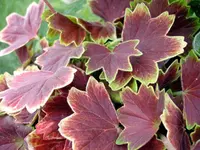
Zonal Geranium
Pelargonium x hortorum 'Vancouver Centennial'
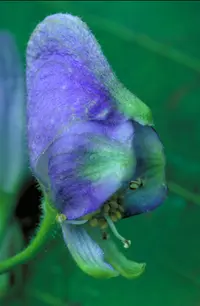
southern blue monkshood
Aconitum uncinatum