Install sturdy supports
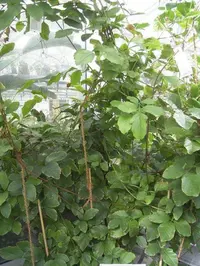
Provide a low, rigid trellis or mesh panel 45–90 cm high and loosely tie stems with soft ties as they lengthen so the vines stay upright and the heavy flower spikes do not flop or snap in wind or rain.

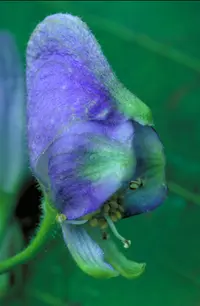
Southern blue monkshood (Aconitum uncinatum) is a perennial wildflower in the buttercup family, valued for its tall spires of hooded, bluish-purple flowers. It typically grows in partial shade along woodland edges and moist slopes in the southeastern United States, often scrambling through low shrubs or supported by nearby vegetation.
Its distinctive “monk’s hood” blooms appear in late summer to early fall and attract pollinators, especially bumblebees. Sturdy but slow to establish, it prefers cool roots, consistently moist soil, and protection from harsh afternoon sun.
Because all parts are highly poisonous, gardeners should handle it with care and site it away from children and pets. These traits make it important to learn how to care for southern blue monkshood before planting.

Care Difficulty
Moderate Care

Light Preference
Partial Shade

Water Requirements
Regular Water

Temperature Preference
Cold Hardy

Hardiness Zone
5–8

Soil Texture
Loamy, Silty, Organic-rich

Soil pH
Acidic (5.5–6.5), Slightly acidic (6.5–7.0)

Soil Drainage
Moist but well-drained

Fertilization
Minimal (feed rarely)
Scan your plant to receive care tips personalized for your specific plant
Available on iOS and Android
This woodland perennial prefers bright but gentle light levels that mimic dappled forest conditions.
This species prefers consistently moist, cool soil without becoming waterlogged.
This hardy perennial grows best in cool to mild conditions typical of temperate woodland climates.
This species grows well in typical outdoor humidity and rarely needs special humidity management.
This woodland perennial prefers cool, moist, well-structured soil that stays evenly damp but never waterlogged.
This species can be grown in containers if the pot is large, stable, and managed to stay cool and evenly moist.
This woodland perennial generally needs modest feeding, especially in richer garden soils.
Pruning Aconitum uncinatum focuses on safety, tidiness, and encouraging sturdy flowering stems.
This species is usually grown in the ground and dislikes frequent disturbance of its root system.
Propagation of Aconitum uncinatum is possible but should be done with care due to its toxicity.
This hardy perennial tolerates typical winters in much of its range and usually needs minimal intervention.

Plant Health Check
Not sure what's wrong with your plant? Check your plant's health inside the app.
This species is native to the southeastern and central Appalachian region of the US, where it grows in moist, partially shaded forest edges, thickets, and streamside habitats rather than in open alpine or meadow sites like many other monkshoods.
Its species name uncinatum refers to the hooked tips of its seed follicles, a distinctive fruit shape that helps botanists separate it from closely related North American monkshood species.
Unlike some upright monkshoods, this plant has long, twining stems that lean and scramble through surrounding vegetation, often using neighboring shrubs and perennials for support in its native woodland habitat.

Southern blue monkshood is part of a small group of North American Aconitum species that can hybridize where their ranges overlap, and these natural hybrids have been documented by botanists studying plant diversity in the Appalachian region.
This species forms clumps and can slowly expand by short rhizomes, but it is not usually aggressive in typical garden settings. It may self-seed lightly. Occasional thinning or division keeps it within its allotted space.
Keep your plants happy and healthy with plant identification, disease detection, and easy care guidance.