Provide climbing support
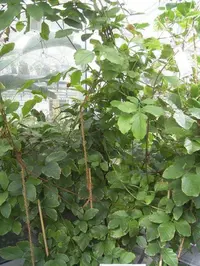
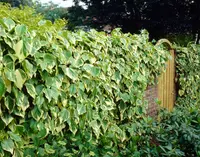
Install a light trellis, netting, or fence as soon as young vines start to run so they can climb freely and avoid damage from foot traffic or mowing.

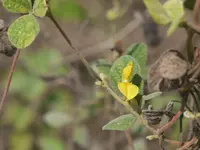
Showy pigeonpea (Cajanus scarabaeoides) is a twining, herbaceous legume often found scrambling over shrubs or low vegetation. It produces small, pea-like yellow flowers with darker markings and slender seed pods.
This species occurs mainly in tropical and subtropical regions of Asia and Africa, often in grasslands, field margins, and disturbed soils. It grows fast and can self-seed, which makes it resilient but sometimes a bit weedy.
As a legume, it helps enrich soil by fixing nitrogen, which supports surrounding plants. It prefers sunny, open sites with well-drained soil and moderate moisture, and understanding these basic needs is the key to how to care for showy pigeonpea.

Care Difficulty
Easy Care

Light Preference
Full Sun

Water Requirements
Moderate Water

Temperature Preference
Tropical / Frost Sensitive

Hardiness Zone
10–13

Soil Texture
Sandy, Loamy, Organic-rich

Soil pH
Acidic (5.5–6.5), Slightly acidic (6.5–7.0)

Soil Drainage
Well-drained

Fertilization
Minimal (feed rarely)
Scan your plant to receive care tips personalized for your specific plant
Available on iOS and Android
This species prefers bright outdoor exposure with several hours of direct sun for strong growth and flowering.
This drought-tolerant legume prefers deep, infrequent watering once established rather than constant surface moisture.
This warm-season species grows best in consistently mild to hot conditions without exposure to frost.
This species handles a wide humidity range and rarely needs special humidity management outdoors.
Cajanus scarabaeoides grows best in light, well-drained mineral soils that do not stay wet after rain or watering.
This species can be grown in containers if the pot is chosen and managed for strong, spreading roots.
This wild legume needs only light feeding in most garden soils, but modest nutrition supports steady growth in cultivation when growing showy pigeonpea.
Cajanus scarabaeoides responds well to light structural pruning to maintain a compact, flowering form.
This species is more often grown in the ground than in pots, so care focuses on gentle transplanting rather than frequent repotting.
This plant is most commonly propagated from seed, which allows quick production of many Cajanus scarabaeoides plants.
This warm-season legume lacks strong frost tolerance and benefits from basic winter protection in cooler climates.

Plant Health Check
Not sure what's wrong with your plant? Check your plant's health inside the app.
This species is a wild relative of the cultivated pigeonpea (Cajanus cajan) and is important in breeding programs because it carries useful traits such as tolerance to some pests and environmental stresses.
The plant typically grows as a slender, twining or trailing legume, using nearby vegetation for support and helping to stabilize ground cover in its native habitats.
Like many members of the Fabaceae, it forms root nodules with symbiotic bacteria that fix atmospheric nitrogen, improving soil fertility around its root zone.

Genetic studies show that this species belongs to a small cluster of wild Cajanus taxa that help clarify the evolutionary origin and domestication history of the cultivated pigeonpea, making it a reference point in legume evolution research.
The flowers produce nectar and pollen that attract a wide range of bees and small butterflies. Planting it near other flowering species creates a varied food source and supports beneficial insects in low-input, pollinator-friendly gardens.
Keep your plants happy and healthy with plant identification, disease detection, and easy care guidance.