Persian Ivy Care (Hedera colchica 'Dentata Variegata')

Also known as: Bullock's Heart Ivy

About Persian Ivy

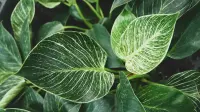
Persian ivy, Hedera colchica 'Dentata Variegata', is a vigorous evergreen climbing vine grown for its large, leathery leaves with creamy white margins. The foliage forms dense coverage that suits walls, fences, and large containers.

This species comes from regions around the Caucasus and northern Iran, where it naturally creeps over rocks and tree trunks. It can become quite robust, so regular pruning helps manage its strong growth.

The plant adapts to a range of light levels from bright shade to partial sun and prefers evenly moist, well-drained soil. Understanding these traits makes it easier to care for Persian Ivy in home gardens and larger spaces.


Main Plant Requirements

Care Difficulty

Easy Care

Light Preference

Partial Shade

Water Requirements

Moderate Water

Temperature Preference

Cold Hardy

Hardiness Zone

6–9

Soil Texture

Loamy, Clay, Organic-rich

Soil pH

Acidic (5.5–6.5), Slightly acidic (6.5–7.0)

Soil Drainage

Moist but well-drained

Fertilization

Minimal (feed rarely)

Get Personalized Care Plan

Scan your plant to receive care tips personalized for your specific plant

Available on iOS and Android

How to Care for the Persian Ivy

This variegated ivy prefers bright, indirect light with limited direct sun for best color and growth.

  • Provide 3–5 hours of gentle morning sun or bright filtered light; protect from strong afternoon sun that can scorch the variegated leaves.
  • Tolerates partial shade, but in very deep shade the cream margins fade and stems stretch toward light, reducing density.
  • Outdoors, give dappled light under trees; in bright, exposed sites use a light shade cloth, especially in summer, for stable Hedera colchica 'Dentata Variegata' performance.

This ivy prefers evenly moist but not saturated soil that dries slightly between waterings.

  • Before watering, let the top 2–4 cm of soil dry; the surface should feel dry while deeper soil is still slightly cool and moist.
  • Increase watering in active growth when weather is warm and dry; in cool or rainy seasons, water less often to avoid prolonged saturation.
  • Signs of overwatering include yellowing leaves, soft stems, and musty odor; underwatering shows as dull, drooping foliage that recovers after a thorough soak for Hedera colchica 'Dentata Variegata'.

This species is a cool-tolerant ivy that handles a wide outdoor temperature range once established.

  • Optimal growth occurs around 55–75°F (13–24°C), with steady growth in mild spring and fall conditions.
  • Mature plants tolerate short drops to about 10–15°F (-12 to -9°C); new plantings benefit from mulch to buffer soil temperature in winter.
  • In hot climates, plants handle summer highs to about 90°F (32°C) if soil stays moist and roots are shaded; extended heat plus dry soil can cause leaf scorch and tip dieback.

This ivy handles typical indoor humidity but benefits from slightly moist air.

  • Aim for 40–60% humidity to keep foliage full and reduce brown leaf edges.
  • Tolerates brief dry air, but prolonged levels below 30% can cause crispy tips and marginal browning.
  • Increase humidity with a nearby pebble tray or clustered plants rather than misting, which adds little long-term moisture.

Hedera colchica 'Dentata Variegata' grows best in loose, moist, well-draining soil with moderate organic content.

  • Use a loamy mix combining roughly 2 parts all-purpose potting mix, 1 part compost, and 1 part perlite or fine bark for structure and aeration.
  • Target slightly acidic to neutral pH around 6.0–7.0 to support nutrient availability and stable growth.
  • Ensure rapid drainage so water does not pool; water should flow freely through the mix within a few seconds of watering.
  • Avoid heavy clay, compacted ground, or peat-only mixes that stay soggy and exclude air from the roots.

This species suits container growing for patios, balconies, or as a controlled groundcover alternative.

  • Choose a wide, stable pot so trailing or climbing growth does not tip the container in wind or when vines are wet.
  • Select a slightly heavier material, such as ceramic or clay, to counterbalance vigorous, top-heavy growth.
  • Fill the pot with a free-draining mix and leave a 2–3 cm gap below the rim so irrigation water does not overflow before it can soak in.

Hedera colchica 'Dentata Variegata' benefits from light, balanced feeding during active growth but tolerates lean conditions.

  • Use a balanced liquid fertilizer (for example 10-10-10) at 1/2 strength every 4–6 weeks in spring and summer for Persian Ivy.
  • Apply to moist soil, never to dry roots, to minimize fertilizer burn risk.
  • Skip feeding in late fall and winter when growth slows.
  • For outdoor plants, a thin layer of compost in spring can replace liquid feeds.

Pruning keeps Hedera colchica 'Dentata Variegata' controlled, dense, and healthy in both ground and container plantings.

  • Carry out main pruning in late winter or early spring before strong new growth starts.
  • Remove dead, damaged, or diseased stems first, then thin crowded shoots to improve light and air flow.
  • Shorten overly long runners to maintain desired shape and prevent unwanted spread.
  • Use clean, sharp hand pruners and make cuts just above a leaf node to encourage branching.

This vigorous ivy sometimes needs transplanting or repotting to manage spread and maintain root health.

  • Look for roots circling the pot, emerging from drainage holes, or slowed growth as signs it needs more space.
  • Plan to repot container plants every 2–3 years in early spring, stepping up only 1 pot size with well-drained potting mix.
  • For garden plants, transplant small sections in spring or early fall, keeping a solid root ball intact.
  • Water thoroughly before and after moving, keep roots shaded, and avoid strong sun or drought stress for 1–2 weeks.

Hedera colchica 'Dentata Variegata' is commonly propagated from stem cuttings and simple layering.

  • Take 8–12 cm semi-ripe stem cuttings in late spring or summer, each with several leaf nodes.
  • Remove lower leaves and insert nodes into a moist, well-drained mix, keeping humidity high and light bright but indirect.
  • For layering, pin a flexible stem to soil so a node is buried, then sever and pot once roots form.
  • Seeds are seldom used; vegetative methods keep variegation and parent traits consistent.

This ivy is generally cold hardy in many temperate climates and usually needs only minimal winter care outdoors.

  • In the ground, a 5–8 cm mulch layer around the root zone helps moderate soil temperature and moisture.
  • In very exposed sites, windbreaks or partial shelter reduce leaf scorch and desiccation.
  • Move containers to a frost-free but cool, bright location, or wrap pots with insulating material to protect roots.

Care Tips

Early support training

Install sturdy trellis or wire supports while the plant is still young, then loosely tie new vines with soft plant ties every 15–20 cm to direct growth and keep the variegated foliage displayed rather than tangled or ground-hugging.

Root-run containment

In the ground, bury deep-root barriers or plant in large containers sunk into the soil to limit spread, checking edges annually and cutting back any stems that jump the barrier to prevent invasive rooting.

Winter wind protection

In exposed sites, create a simple windbreak with mesh or slatted panels on the prevailing-wind side so foliage is less likely to scorch, dry, or tear during cold, drying winter winds.

Variegation maintenance

Regularly remove any solid-green or heavily reversion-prone shoots right at their point of origin so more energy supports the variegated stems and the plant keeps its patterned look over time.

Targeted pest scouting

Once or twice a month, especially during warm, dry periods, inspect the undersides of leaves and stem nodes with a hand lens for early signs of spider mites or scale, then hose down foliage or use an appropriate horticultural soap at the first sign of infestation when caring for Persian Ivy.

Common Pests and Diseases

Spider mites

This pest thrives on the dense, leathery foliage and webbing can form along veins and stems, especially on sheltered outdoor walls or indoor plants in dry air. Symptoms include fine mottling, dulling of variegation, and very fine webbing on the undersides of leaves.

Solution

Rinse foliage thoroughly with a firm stream of lukewarm water, focusing on leaf undersides, and repeat every few days for several cycles; for heavier infestations, use insecticidal soap or a horticultural oil labeled for spider mites, applied in the evening. Increase humidity slightly for indoor plants and avoid hot, stagnant air, as this discourages new outbreaks and supports long-term Hedera colchica 'Dentata Variegata' plant care.

Scale insects

These insects attach along stems and leaf undersides, where the thick, woody growth of mature vines provides shelter. Symptoms include sticky honeydew, sooty mold growth on leaves, and small, dome-shaped or flat bumps that do not move when touched.

Solution

Prune out heavily infested stems and wipe remaining colonies with cotton pads dipped in 70% isopropyl alcohol to remove adults and nymphs. Follow with 2–3 applications of horticultural oil or insecticidal soap at 7–10 day intervals, ensuring thorough coverage of stems and the underside of leaves, and improve light and airflow to reduce future pressure.

Leaf spot (Xanthomonas)

This disease is encouraged by dense, shaded plantings and prolonged leaf wetness, which are common when this ivy is used as a groundcover or wall climber. Symptoms include small, dark, water-soaked spots with yellow halos that may enlarge, coalesce, and cause leaf drop, especially on lower, shaded foliage.

Solution

Remove and discard affected leaves and any fallen debris around the plant, then water at soil level to keep foliage as dry as possible. Improve air circulation by thinning overly dense sections, avoid overhead watering, and if spreading continues, use a copper-based bactericide according to label directions, targeting several repeat sprays during wet periods.

Anthracnose

This disease affects ivy grown on cool, damp, shaded walls, where moisture lingers on leaves and stems. Symptoms include irregular brown lesions along veins, dieback of shoot tips, and sometimes blighting of entire sections of the vine, especially after prolonged rainy or cool, wet weather.

Solution

Cut back and dispose of blighted shoots well into healthy tissue, and clean up fallen leaves to remove sources of spores. Promote faster drying by improving light and airflow, avoid wetting foliage, and in areas with recurrent issues, apply a labeled ornamental fungicide preventively in early spring and during extended wet spells.

Aphids

These insects favor tender new shoots and variegated growth, feeding in clusters on tips and undersides of young leaves. Symptoms include curling or distortion of new foliage, sticky honeydew, and sometimes sooty mold, with heavy infestations attracting ants that farm the aphids for honeydew.

Solution

Pinch or prune off heavily infested shoot tips, then wash remaining stems and leaves with a strong but controlled stream of water to dislodge insects. For persistent colonies, apply insecticidal soap or a light horticultural oil to young growth every 5–7 days until populations collapse, and manage nearby ant activity to reduce re-infestation.

Interesting Facts

Origin of variegation

The cream-edged variegation in this cultivar is the result of a stable genetic mutation that reduces chlorophyll along the leaf margins, which is why the pale areas grow slightly more slowly than the solid green centers.

Notable leaf size

Compared with most cultivated ivies, this form develops unusually large, thick leaves, often 10–15 cm across, inherited from Hedera colchica, which is one of the largest-leaved ivy species.

Cold-hardy variegated ivy

This cultivar combines bold variegated foliage with notable cold tolerance for an ivy, as it originates from a species native to the milder, humid regions around the Caucasus, allowing it to cope with cool temperate climates better than many tropical variegated vines.

FAQs about Persian Ivy

This species spreads vigorously through long, trailing stems and can root where they touch soil. In mild climates it may become difficult to control outdoors, so use barriers, regular pruning, or containers to limit spread and protect nearby plantings.

Grow Healthy Plants with Botan Care

Keep your plants happy and healthy with plant identification, disease detection, and easy care guidance.

Botan plant care app — identify plants on mobile

Explore More Plants