Tree ivy Care (× Fatshedera lizei)

Also known as: Aralia ivy
Tree ivy

About Tree ivy

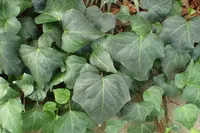
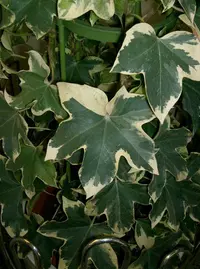
Tree ivy (× Fatshedera lizei) is an evergreen shrub created by crossing hedera (ivy) and fatsia. It combines woody stems with large, glossy, ivy-shaped leaves. Plants are usually grown as upright shrubs or trained on supports, making them useful for containers, small gardens, and bright indoor spaces. In the wild it does not occur naturally, as it is a man-made hybrid. Growth is generally moderate and manageable, which simplifies pruning and shaping. Its tolerance of cooler indoor temperatures and variable humidity makes it relatively forgiving. To care for Tree ivy, provide bright, indirect light, evenly moist but not waterlogged soil, and protection from harsh sun or deep shade.

Main Plant Requirements

Care Difficulty

Moderate Care

Light Preference

Partial Shade

Water Requirements

Moderate Water

Temperature Preference

Warm Climate

Hardiness Zone

8–10

Soil Texture

Loamy, Sandy, Organic-rich

Soil pH

Acidic (5.5–6.5), Slightly acidic (6.5–7.0)

Soil Drainage

Moist but well-drained

Fertilization

Light (every 4–6 weeks)

Get Personalized Care Plan

Scan your plant to receive care tips personalized for your specific plant

Available on iOS and Android

How to Care for the Tree ivy

This hybrid shrub-vine prefers bright, indirect light with some gentle direct sun.

  • Provide 4–6 hours of bright, filtered light daily, such as morning sun with afternoon shade, especially in warmer regions.
  • Outdoors, give Tree ivy dappled shade under trees or on an east-facing wall; indoors, place near an east or bright north window.
  • Avoid strong midday or late-afternoon sun, which can scorch leaves, and increase light gradually in spring to prevent leaf burn.

This plant prefers evenly moist but not saturated soil.

  • Water when the top 2–4 cm of soil feels dry, allowing excess to drain freely so roots are not left standing in water.
  • In spring and summer, expect to water more often as growth and evaporation increase; reduce frequency in autumn and winter.
  • Watch for yellowing, soft leaves as a sign of overwatering, and crisp edges or drooping, dry leaves as signs of underwatering in × Fatshedera lizei.

This plant prefers mild, stable temperatures and dislikes extremes of heat or cold.

  • Aim for 60–75°F (16–24°C) for active growth, whether grown outdoors in sheltered spots or indoors near stable microclimates.
  • It tolerates short dips to about 25–28°F (-4 to -2°C) once established, but repeated hard frosts can damage foliage and young shoots.
  • Protect from hot, reflected sun and drying winds during heat above 85°F (29°C), and avoid placing near freezing drafty doors or unheated spaces in winter.

This hybrid tolerates typical indoor humidity but benefits from slightly moist air.

  • Aim for 40–60% humidity to reduce leaf edge browning and maintain steady growth.
  • Tolerates short periods of drier air, but persistent levels below 30% can cause crispy tips and dull foliage.
  • Increase humidity with a nearby humidifier or grouped plants rather than misting, which offers only brief surface moisture for Tree ivy.

This plant prefers a loose, airy, moisture-retentive yet free-draining substrate.

  • Use a mix such as 50–60% peat- or coir-based potting mix with 20–30% perlite plus 10–20% fine bark for structure and aeration.
  • Ensure fast drainage so water does not sit around roots; avoid heavy garden soil or mixes dominated by clay or fine sand.
  • A slightly acidic to neutral pH around 6.0–7.0 supports nutrient uptake and stable foliage color in × Fatshedera lizei.
  • Improve aeration for large containers by blending in chunky bark near the bottom rather than adding a gravel layer, which can trap excess water.

This species grows very well in containers when given stable support and consistent drainage.

  • Choose a wide, heavy pot to counterbalance top growth and any support stakes so the container does not tip in wind or when soil is wet.
  • Select a pot depth that allows some vertical root exploration, as cramped shallow pots tend to dry unevenly and stress the plant.
  • Opt for porous materials like unglazed terracotta if the site is shaded and cool, and non-porous pots in hotter spots to reduce overly fast moisture loss.

This hybrid shrub-vine responds well to modest, consistent feeding during the active growing season.

  • Use a balanced liquid fertilizer (such as 10-10-10 or 20-20-20) at 1/2 strength every 4–6 weeks from spring to early fall for healthy Tree ivy growth.
  • Alternatively, apply a slow-release balanced fertilizer or a thin layer of mature compost on the soil surface in spring.
  • Always water before and after feeding to reduce root burn and distribute nutrients evenly through the root zone.
  • Stop or greatly reduce fertilizing in late fall and winter to allow natural semi-dormancy and prevent weak, soft growth.

× Fatshedera lizei benefits from periodic shaping and cleanup to maintain a compact, balanced form.

  • Plan main pruning in late winter or very early spring before vigorous new growth starts.
  • Use clean, sharp hand pruners to remove dead, damaged, or crossing stems back to healthy tissue.
  • Shorten overly long shoots to an outward-facing bud or side stem to control size and encourage bushier branching.
  • Light thinning through the canopy improves air flow and light penetration, which supports overall vigor and reduces disease risk.

Container-grown plants appreciate thoughtful repotting to support root health and stable growth.

  • Check for roots circling the pot, emerging from drainage holes, or noticeably slower growth as signs that a larger container is needed.
  • Plan to move the plant into a pot 1–2 in wider every 2–3 years, ideally in early spring as new growth begins.
  • Use a well-drained, high-quality potting mix and position the crown at the same depth, gently loosening circling roots without tearing heavily.
  • Water thoroughly after repotting, keep in bright but indirect light for 1–2 weeks, and avoid heavy feeding until new growth resumes strongly.

New plants are most commonly produced from stem cuttings taken during the active growing season.

  • Take 8–12 in semi-ripe stem cuttings in late spring or summer, each with several nodes, and remove lower leaves.
  • Dip the cut base in rooting hormone to improve root formation and place in a free-draining mix such as 50% perlite and 50% peat or coco coir.
  • Maintain high humidity around cuttings with a loose plastic cover, bright indirect light, and a stable temperature of 68–75°F.
  • Bottom heat and careful watering, keeping the medium just lightly moist, help cuttings root steadily over several weeks.

This shrub-vine is moderately cold hardy but benefits from basic winter care in colder regions.

  • In USDA zones 7–8, plants in the ground usually overwinter well with minimal intervention once established.
  • Apply a 5–8 cm layer of organic mulch around the root zone in late fall, keeping it slightly away from the stems.
  • In colder areas or exposed sites, grow × Fatshedera lizei in containers and move them into a cool, bright, frost-free space before hard freezes.

Care Tips

Support And Training

Provide a sturdy moss pole, trellis, or grid and loosely tie new shoots with soft plant ties so the semi-climbing stems stay upright and develop a stronger, more symmetrical framework over time.

Encourage Bushy Growth

Pinch or lightly prune the tips of fast-growing shoots in spring to stimulate side branching and create a denser, fuller plant instead of long, bare stems.

Stem Propagation Renewal

Every few years, take 10–15 cm semi-ripe stem cuttings from healthy, non-flowering shoots and root them, then replant several together in the original pot to refresh an older, leggy specimen.

Prevent Leaf Spot

Water at the soil level and increase air movement around the foliage so leaves dry quickly after misting or washing, which helps reduce bacterial and fungal leaf spot issues.

Scale And Mite Checks

Inspect stems and leaf undersides monthly for scale insects and spider mites, and if found, isolate the plant and wipe affected areas with a cloth dampened in insecticidal soap, repeating weekly until pests are gone when caring for Tree ivy.

Common Pests and Diseases

Scale insects

This pest feeds on sap and appears as small, bump-like shells on stems and the undersides of leaves. Symptoms include sticky honeydew, sooty mold growth, and gradual yellowing or weakening of foliage.

Solution

Isolate the plant, then wipe stems and leaves with a cotton pad dipped in isopropyl alcohol or insecticidal soap to remove scales manually. Repeat every 7–10 days until no new scales appear, and improve light and airflow to reduce stress that favors infestations when caring for Tree ivy.

Spider mites

These insects are tiny sap-feeders that thrive in warm, dry indoor air, causing fine stippling on leaves, dull color, and fine webbing between petioles and stems. Heavy infestations lead to leaf drop and overall decline.

Solution

Rinse foliage thoroughly with lukewarm water, including leaf undersides, then apply insecticidal soap or a horticultural oil spray. Increase humidity slightly and avoid very dry, hot spots near heaters to make conditions less favorable for mites.

Leaf spot

This disease causes irregular brown or dark purple spots on leaves, sometimes with yellow halos. Symptoms include spotting that may merge into larger dead patches, leading to premature leaf drop on older foliage.

Solution

Remove and discard affected leaves and avoid overhead watering that keeps foliage wet for long periods. Improve air circulation, water at the soil level, and if the problem persists, use a copper-based or other labeled fungicide according to × Fatshedera lizei plant care guidelines.

Bacterial leaf blight

This disease produces water-soaked, angular or irregular lesions that turn dark and may follow the veins of the leaf. Symptoms include rapid spread in warm, humid conditions and leaf edges turning brown and crisp.

Solution

Promptly remove heavily affected leaves and avoid splashing water between plants, especially in greenhouses or crowded indoor groupings. Keep foliage dry, disinfect cutting tools with alcohol, and discard severely infected plants if symptoms continue to spread despite cultural corrections.

Aphids

These insects are soft-bodied sap feeders that cluster on tender shoot tips and new leaves, causing curling, distortion, and sticky honeydew deposits. Ants may appear to feed on honeydew, and leaves can develop sooty mold on the sticky surfaces.

Solution

Spray the plant with a firm stream of water to dislodge aphids, then treat remaining clusters with insecticidal soap or a light horticultural oil, coating all growing tips and leaf undersides. Repeat applications every 5–7 days until populations drop, and pinch back heavily infested soft shoots if needed.

Interesting Facts

Hybrid of two genera

This plant is an intergeneric hybrid between Fatsia japonica and Hedera helix, combining the shrubby structure of Fatsia with the vining habit and leaf texture of ivy.

Unusual leaf shape

Its leaves are typically 5–7 lobed and leathery, visually intermediate between the broad palmate leaves of Fatsia and the smaller lobed leaves of English ivy, making it easy to distinguish from either parent.

Limited flowering and fruiting

Although it can produce small, creamy-white, umbel-like flower clusters and dark berries, it flowers less reliably than its parent species and often does not set much viable seed in cultivation.

Botan icon

Did you know?

The original hybrid arose in a French nursery in the early 20th century, and because it is largely sterile, most plants in cultivation today are propagated vegetatively, making them clones of a small number of original hybrid lines.

FAQs about Tree ivy

Flowering is often sparse or absent indoors because light is moderate and temperatures are stable. This hybrid also blooms more reliably on mature outdoor plants with seasonal temperature changes and short autumn days, so lack of seasonal cues reduces blooms.

Grow Healthy Plants with Botan Care

Keep your plants happy and healthy with plant identification, disease detection, and easy care guidance.

Botan plant care app — identify plants on mobile

Explore More Plants