


Pinch for bushiness
Regularly pinch out the soft shoot tips every 2–3 weeks during active growth to keep plants compact, increase branching, and produce a denser display of foliage.

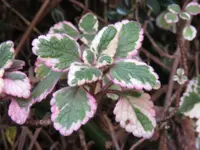
Coleus forsteri is a tender, fast-growing ornamental plant valued for its colorful, often patterned foliage rather than its flowers. It is usually grown as a small shrub or bushy bedding plant with soft, branching stems.
In the wild it occurs in tropical regions of the Southwest Pacific, where it grows in warm, humid conditions with filtered light. Its vigorous growth and forgiving nature make it relatively easy to manage, especially for those learning how to care for Coleus forsteri.
This species prefers bright, indirect light, evenly moist but not waterlogged soil, and protection from cold or drying winds when grown outdoors or indoors.

Care Difficulty
Moderate Care

Light Preference
Partial Shade

Water Requirements
Keep Soil Moist

Temperature Preference
Tropical / Frost Sensitive

Hardiness Zone
10–11

Soil Texture
Loamy, Organic-rich

Soil pH
Acidic (5.5–6.5), Slightly acidic (6.5–7.0)

Soil Drainage
Moist but well-drained

Fertilization
Moderate (every 2–4 weeks)
Scan your plant to receive care tips personalized for your specific plant
Available on iOS and Android
This plant needs bright, indirect light to keep foliage dense and colorful.
This plant prefers evenly moist but not waterlogged soil during active growth.
Stable warmth supports strong growth and foliage quality for this species.
This plant benefits from moderate humidity but tolerates typical indoor levels.
Coleus forsteri prefers a light, well-aerated potting medium that drains quickly yet holds some moisture.
This species grows very well in containers and is often used in pots and mixed planters.
Balanced nutrition supports strong foliage color and steady growth in Coleus forsteri.
Thoughtful pruning keeps Coleus forsteri dense, colorful, and well-shaped.
Timely repotting or transplanting maintains healthy root function and vigorous top growth.
New plants are most often produced from soft stem cuttings taken from healthy growth.
Coleus forsteri is sensitive to frost and needs protection in regions with cold winters.

Plant Health Check
Not sure what's wrong with your plant? Check your plant's health inside the app.
Coleus forsteri is native to Vanuatu and nearby Pacific islands, where it grows as a low, spreading understory plant in warm, humid coastal forests.
Unlike many upright coleus types, this species naturally forms long, flexible, trailing stems that can cascade over rocks, walls, or container edges, which is why it is often used as a spiller plant in mixed plantings.
In its native range, Coleus forsteri is often found near coastal areas and shows good tolerance to salt-laden winds compared with many other ornamental foliage plants, which supports its use in seaside landscapes.
Brown, crispy edges usually result from low humidity, underwatering, or excess fertilizer salts in the potting mix. Check soil moisture, flush the substrate with clean water occasionally, and keep foliage away from hot, dry air or direct heater drafts.
Keep your plants happy and healthy with plant identification, disease detection, and easy care guidance.


Croton
Codiaeum variegatum 'Aureo Maculatum'
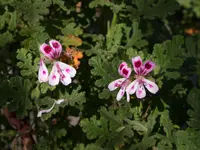
oakleaf geranium
Pelargonium quercifolium
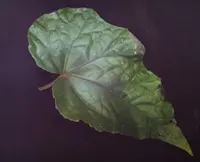
Begonia handelii
Begonia handelii
 POPULAR
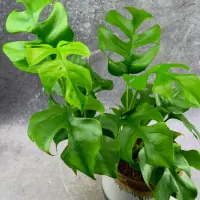
Monstera minima
Monstera minima
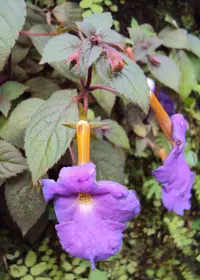
Achimenes longiflora
Achimenes longiflora
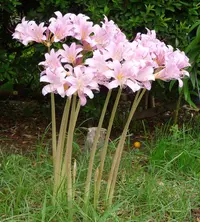
resurrection lily
Lycoris squamigera
Elephant's Ear
Colocasia esculenta Royal Hawaiian® Blue Hawaii

Peperomia macrostachyos
Peperomia macrostachyos